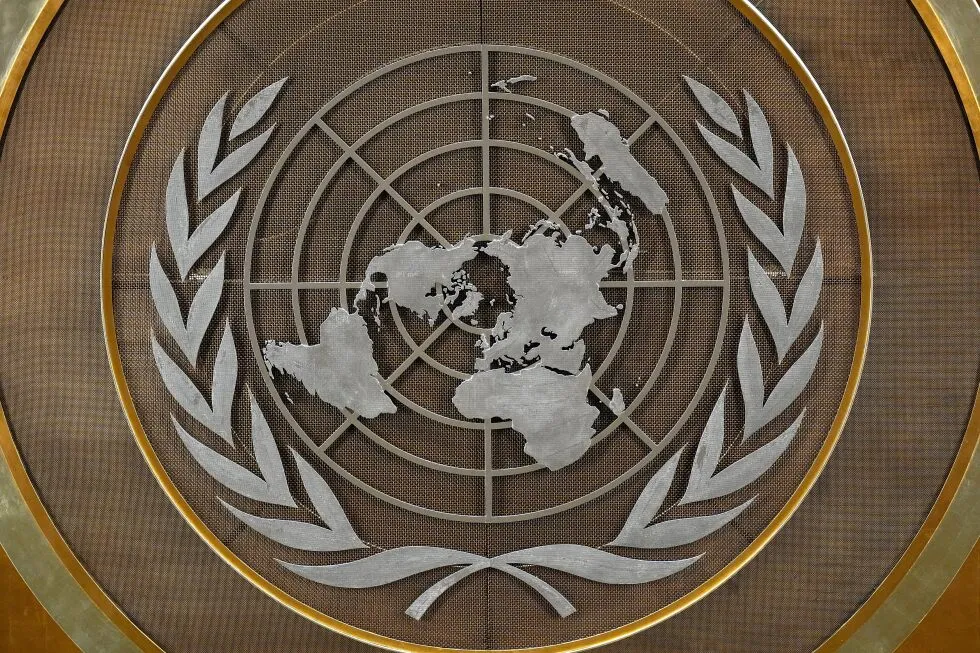
Russia and China veto watered-down UN resolution aimed at reopening the Strait of Hormuz 1 of 3 | The United Nations logo is seen inside the 79th session of the United Nations General Assembly, Tuesday, Sept. 24, 2024. (AP Photo/Pamela Smith, File) 2 of 3 | The Damavand power station is seen from a nearby road on the outskirts of Tehran, Iran, Tuesday, April 7, 2026. (AP Photo/Francisco Seco) 3 of 3 | An excavator removes rubble at the site of a strike that, according to a security official at the scene, destroyed half of the Khorasaniha Synagogue and nearby residential buildings in Tehran, Iran, Tuesday, April 7, 2026. (AP Photo/Francisco Seco) 1 of 3 The United Nations logo is seen inside the 79th session of the United Nations General Assembly, Tuesday, Sept. 24, 2024. (AP Photo/Pamela Smith, File) Add AP News on Google Add AP News as your preferred source to see more of our stories on Google. 2 of 3 The Damavand power station is seen from a nearby road on the outskirts of Tehran, Iran, Tuesday, April 7, 2026. (AP Photo/Francisco Seco) Add AP News on Google Add AP News as your preferred source to see more of our stories on Google. 3 of 3 An excavator removes rubble at the site of a strike that, according to a security official at the scene, destroyed half of the Khorasaniha Synagogue and nearby residential buildings in Tehran, Iran, Tuesday, April 7, 2026. (AP Photo/Francisco Seco) Add AP News on Google Add AP News as your preferred source to see more of our stories on Google. Updated [hour]:[minute] [AMPM] [timezone], [monthFull] [day], [year] UNITED NATIONS (AP) — Russia and China on Tuesday vetoed a U.N. Security Council resolution aimed at reopening the Strait of Hormuz that had been repeatedly watered down in hopes those two countries would abstain.The vote — 11-2, with two abstentions from Pakistan and Colombia— took place just hours before an 8 p.m. Eastern deadline set by U.S. President Donald Trump for Iran to open the strategic waterway or face attacks on its power plants and bridges. One-fifth of the world’s oil typically passes through the strait, and Iran’s stranglehold during the war has sent energy prices soaring. “Failing to adopt this resolution sends the wrong signal to the world, to the people of the world,” Abdullatif bin Rashid Al Zayani, Bahrain’s foreign minister, said after the vote — “the signal that the threat to international waterways can pass without any decisive action by the international organization responsible for the maintenance of international peace and security.” It’s doubtful the resolution introduced by Bahrain, even if it had been adopted, would have impacted the war, now in its fifth week, because it was been significantly weakened to try to get Russia and China to abstain rather than veto it. The initial Gulf proposal would have authorized countries to use “all necessary means” — U.N. wording that would include military action — to ensure transit through the Strait of Hormuz and deter attempts to close it. After Russia, China and France, all veto-wielding countries on the 15-member Security Council, expressed opposition to approving the use of force, the resolution was revised to eliminate all references to offensive action. It would have authorized only “all defensive means necessary.” A vote had been expected on Saturday.But instead the resolution was further weakened to eliminate any reference to Security Council authorization — which is an order for action — and limit its provisions to the Strait of Hormuz. Previous drafts had included adjacent waters. The resolution vetoed Tuesday “strongly encourages states interested in the use of commercial maritime routes in the Strait of Hormuz to coordinate efforts, defensive in nature, commensurate with the circumstances, to contribute to ensuring the safety and security of navigation across the Strait of Hormuz.”This should include escorting merchant and commercial vessels, and deterring attempts to close, obstruct or interfere with international navigation through the strait, it says.The resolution also demanded that Iran immediately halt attacks on merchant and commercial vessels and stop impeding their freedom of navigation through the Strait of Hormuz and attacking civilian infrastructure.In response to the U.S. and Israeli attacks beginning on Feb. 28, Iran has targeted hotels, airports, residential buildings and other civilian infrastructure in more than 10 countries, including the Islamic Republic’s Gulf neighbors, some of the world’s major exporters of oil and natural gas.Iran’s blockade in the strait is seen by Gulf nations as an existential threat. Bahrain, a Gulf nation that hosts the U.S. Fifth Fleet and is the Security Council’s Arab representative and its president this month, has been pressing for U.N. action. At the same time, Trump on Monday demanded again that Iran reopen the Strait of Hormuz after heaping praise on the U.S. military for the daring rescue of two crewmen of a fighter jet shot down in Iran. The Republican president warned Iran that the “entire country can be taken out in one night, and that might be tomorrow night.”He repeated the warning on Tuesday, saying a “whole civilization will die tonight” if Tehran does not meet his deadline to agree to a deal that includes reopening the Strait of Hormuz.Russia’s U.N. Ambassador Vassily Nebenzia and China’s U.N. Ambassador Fu Cong have blamed the U.S. and Israel for starting the war and sparking an expanding global crisis. They told the Security Council last week that the most urgent priority now is to end military operations immediately.In response to Iran’s strikes against its Gulf neighbors, the Security Council adopted a Bahrain-sponsored resolution on March 11 condemning the “egregious attacks” and calling for Tehran to immediately halt its strikes.That resolution, adopted by a vote of 13-0 with Russia and China abstaining, also condemned Iran’s actions in the Strait of Hormuz as a threat to international peace and security and called for an immediate end to all actions blocking shipping. Amiri covers foreign policy and the United Nations as a correspondent for The Associated Press, based in New York.
SRCAssociated Press (AP)
LANGEN
LEANCenter
WORDS1 001
ENT11
TUE · 2026-04-07 · 15:53 GMTBRIEF NSR-2026-0407-56747
NSR-2026-0407-56747News Report·EN·Diplomatic
Russia and China veto watered-down UN resolution aimed at reopening the Strain of Hormuz
Russia and China vetoed a UN Security Council resolution on Tuesday intended to reopen the Strait of Hormuz. The vote, held at the UN, was 11-2 with two abstentions.
By
EDITH M. LEDERER and FARNOUSH AMIRIAssociated Press (AP)Filed 2026-04-07 · 15:53 GMTLean · CenterRead · 5 min
Associated Press (AP)FIG 01
Reading time
5min
Word count
1 001words
Sources cited
2cited
Entities identified
11entities
Quality score
100%
§ 01
Briefing Summary
AI-generatedNEWSAR · AI
Russia and China vetoed a UN Security Council resolution on Tuesday intended to reopen the Strait of Hormuz. The vote, held at the UN, was 11-2 with two abstentions. The resolution had been weakened in an attempt to gain Russian and Chinese support. The vote occurred hours before a deadline set by the U.S. President for Iran to open the waterway or face attacks. The Strait of Hormuz is a critical passage for approximately one-fifth of the world's oil supply, and its closure has caused energy prices to increase. The Bahrain foreign minister expressed disappointment, stating the failed resolution signals that threats to international waterways can go unchecked.
Confidence 0.90Sources 2Claims 5Entities 11
§ 02
Article analysis
Model · rule-basedFraming
Diplomatic
National Security
Tone
Measured
AI-assessed
CalmNeutralAlarmist
Factuality
0.80 / 1.00
Factual
LowHigh
Sources cited
2
Limited
FewMany
§ 03
Key claims
5 extracted01
Failing to adopt this resolution sends the wrong signal to the world.
quoteAbdullatif bin Rashid Al Zayani, Bahrain’s foreign minister
Confidence
1.00
02
One-fifth of the world’s oil typically passes through the Strait of Hormuz.
statisticAP
Confidence
1.00
03
U.S. President Donald Trump set an 8 p.m. Eastern deadline for Iran to open the Strait of Hormuz or face attacks.
factualAP
Confidence
1.00
04
The vote was 11-2, with two abstentions from Pakistan and Colombia.
factualAP
Confidence
1.00
05
Russia and China vetoed a U.N. Security Council resolution aimed at reopening the Strait of Hormuz.
factualAP
Confidence
1.00
§ 04
Full report
5 min read · 1 001 words§ 05
Entities
11 identifiedKey playerOppositionContextPositiveNeutralNegative
§ 06
Keywords & salience
10 termsstrait of hormuz
1.00
veto
0.90
un resolution
0.90
russia
0.80
china
0.80
u.n. security council
0.70
international waterways
0.70
iran
0.60
energy prices
0.50
donald trump
0.40
§ 07
Topic connections
Interactive graph Network visualization showing 51 related topics
View Full Graph Person Organization Location Event|Click node to navigate|Edge numbers = shared articles