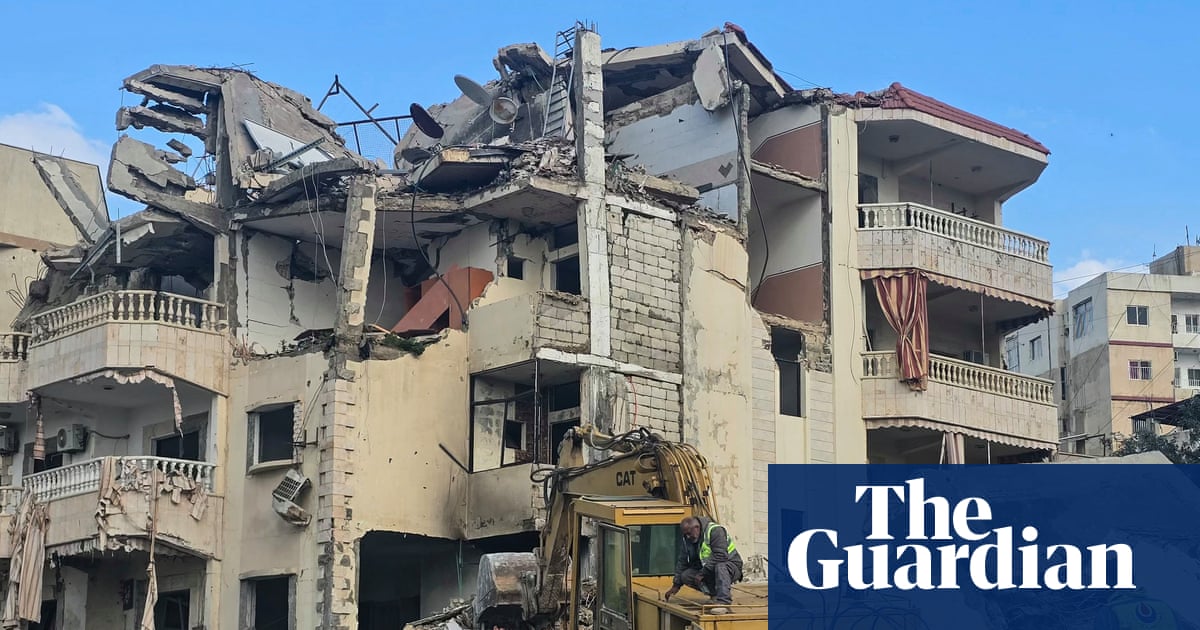
Israel has said its military operations in Lebanon will continue despite Donald Trump’s ceasefire announcement, with Israeli forces carrying out strikes and telling civilians in the south of the country to leave the areas they are targeting.The office of the Israeli prime minister, Benjamin Netanyahu, said that Trump’s two-week pause “does not include Lebanon” amid reports of continued artillery and drone strikes, directly contradicting statements made by Iran and Pakistan, which has been mediating in the conflict.Strike hits Tyre in Lebanon after Israeli evacuation orderShehbaz Sharif, the prime minister of Pakistan, said that Iran, the US and their allies had “agreed to an immediate ceasefire everywhere including Lebanon and elsewhere” as he announced the ceasefire overnight.Israel said it supported Trump’s decision to suspend strikes against Iran for two weeks provided Tehran opened the strait of Hormuz and stopped attacks on all countries in the region – but had emphasised for days that it considered Lebanon to be a separate conflict.An Israeli airstrike hits the Abbasiyeh neighbourhood of Tyre in Lebanon on Wednesday. Photograph: Adnan Abidi/ReutersOn Wednesday morning, a spokesperson for the Israeli military said it was “continuing its operations” against Hezbollah and told people in southern Lebanon to move north of the Zahrani River.According to leaks, Iran’s 10-point peace plan, nominally accepted as a basis for negotiations by Trump, calls for an end of the war against “all components of the ‘axis of resistance’,” which, for Tehran, includes the pro-Iranian Lebanese group Hezbollah.Trump did not refer to Lebanon in his ceasefire statements, which focused on Iran, leaving it unsettled whether Israel’s attacks on Lebanon, which have killed more than 1,500 people, many of them civilians, would come to a halt.On Sunday night, Netanyahu told a meeting of Israel’s security cabinet that there would be no situation in which a ceasefire with Iran would be carried over into Lebanon. Political and military leaders agreed the war should continue.But there were signs that on Tuesday that the wider diplomatic conversation, mediated in Pakistan between the US and Iran, had come to a conclusion without Israel’s immediate input. Trump called Netanyahu to inform the Israeli leader of his decision shortly before making his ceasefire announcement.The Israeli opposition leader Yair Lapid said that Netanyahu had failed politically and strategically. “There has never been such a political disaster in all of our history. Israel wasn’t even at the table when decisions were made concerning the core of our national security,” he posted in the morning.An hour before the Iran ceasefire was announced, Israel bombed a car in front of a row of beachside cafes in Saida, Lebanon, killing eight people and wounding 22, according to the Lebanese ministry of health.First responders gather at the site of an Israeli airstrike that targeted a vehicle in Saida, Lebanon. Photograph: Mahmoud Zayyat/AFP/Getty ImagesIsrael continued striking Lebanon into the morning, hitting the south with artillery fire and carrying out two separate drone strikes on the town of Qana and al-Qleileh. Hezbollah said it had not responded overnight.Israel’s military also issued a warning in Arabic to people in Tyre shortly after 9am to move away from a building, statements that typically come before an airstrike in a populated area.Lebanese sources told Reuters that Hezbollah was expected to issue a statement outlining its formal position on the ceasefire and on Netanyahu’s assertion that Lebanon was not included in the agreement.Highways leading south in Lebanon were choked with traffic as dawn broke. Residents were attempting to return to their homes, though Hezbollah urged people not to return to certain villages because Israeli troops remained there.WhatsApp chats were filled with anxious and hopeful messages between people in Lebanon as they tried to parse whether or not the country would be included in the Iran ceasefire.The almost five weeks of war in Lebanon has brought the country to its breaking point, with more than 1.1 million people forcibly displaced, many of whom are living on the streets.Several air raids on Israel took place in the first part of the night but stopped shortly before 3.30am, about 40 minutes after the Pakistani prime minister’s announcement. No incoming attacks have been reported since.
SRCThe Guardian - World News
LANGEN
LEANCenter-Left
WORDS687
ENT12
WED · 2026-04-08 · 08:44 GMTBRIEF NSR-2026-0408-57977
NSR-2026-0408-57977News Report·EN·Conflict
Israel says operations in Lebanon to continue despite Trump’s ceasefire
Despite a ceasefire announcement brokered by Donald Trump between the US and Iran, Israel has stated it will continue its military operations in Lebanon. The Israeli Prime Minister's office clarified that the ceasefire, intended to pause strikes against Iran for two weeks, does not extend to Lebanon.
Dan Sabbagh in Jerusalem and William Christou in BeirutThe Guardian - World NewsFiled 2026-04-08 · 08:44 GMTLean · Center-LeftRead · 3 min
The Guardian - World NewsFIG 01
Reading time
3min
Word count
687words
Sources cited
7cited
Entities identified
12entities
Quality score
100%
§ 01
Briefing Summary
AI-generatedNEWSAR · AI
Despite a ceasefire announcement brokered by Donald Trump between the US and Iran, Israel has stated it will continue its military operations in Lebanon. The Israeli Prime Minister's office clarified that the ceasefire, intended to pause strikes against Iran for two weeks, does not extend to Lebanon. This contradicts claims from Pakistan, which mediated the agreement, that the ceasefire included Lebanon. The Israeli military is continuing operations against Hezbollah and has ordered civilians in southern Lebanon to evacuate. While Trump's ceasefire announcement focused on Iran, it did not mention Lebanon, leaving the status of Israeli attacks there uncertain. Israel maintains that the conflict in Lebanon is separate and will continue despite any agreements with Iran.
Confidence 0.90Sources 7Claims 5Entities 12
§ 02
Article analysis
Model · rule-basedFraming
Conflict
Diplomatic
Tone
Measured
AI-assessed
CalmNeutralAlarmist
Factuality
0.70 / 1.00
Factual
LowHigh
Sources cited
7
Well sourced
FewMany
§ 03
Key claims
5 extracted01
Israel bombed a car in Saida, Lebanon, killing eight people and wounding 22.
factualLebanese ministry of health
Confidence
1.00
02
Iran, the US and their allies had “agreed to an immediate ceasefire everywhere including Lebanon and elsewhere”.
quoteShehbaz Sharif
Confidence
1.00
03
Trump’s two-week pause “does not include Lebanon”.
quoteBenjamin Netanyahu's office
Confidence
1.00
04
Israel said its military operations in Lebanon will continue despite Donald Trump’s ceasefire announcement.
factualIsrael
Confidence
1.00
05
Attacks on Lebanon have killed more than 1,500 people, many of them civilians.
factualnull
Confidence
0.90
§ 04
Full report
3 min read · 687 words§ 05
Entities
12 identifiedKey playerOppositionContextPositiveNeutralNegative
People4
Organizations1
§ 06
Keywords & salience
9 termsceasefire
1.00
lebanon
0.90
israel
0.90
military operations
0.80
iran
0.70
strikes
0.70
hezbollah
0.60
negotiations
0.50
diplomatic conversation
0.40
§ 07
Topic connections
Interactive graph Network visualization showing 51 related topics
View Full Graph Person Organization Location Event|Click node to navigate|Edge numbers = shared articles