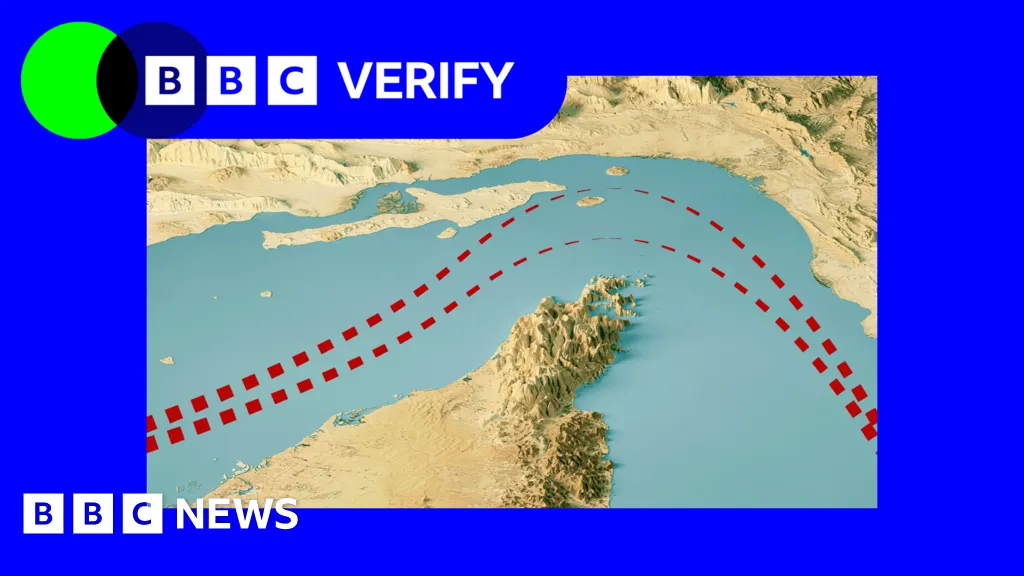
Ships in the Gulf have received a warning from Iran's navy that any vessels seeking to cross the Strait of Hormuz without permission "will be targeted and destroyed", the shipping brokerage firm SSY has confirmed to BBC Verify.A two-week ceasefire was agreed on Tuesday evening on the condition that "safe passage" through the narrow waterway is guaranteed - but only a few vessels have since crossed.The strait has become a focal point of the US-Israel war with Iran after Tehran effectively choked off one of the world's most important shipping lanes, carrying about a fifth of the world's oil and liquefied natural gas.The disruption, over the past five weeks, has sent shock waves across the world economy, pushing up energy prices and exposing just how reliant international supply chains are on the strait, which is only about 33km (21 miles) wide at its narrowest point.As well as energy, the Gulf is also vital for transporting chemicals needed to process products like microchips, pharmaceuticals and fertiliser.While the price of oil has fallen on news of the ceasefire, shipping analysts are warning to expect only a trickle of crossings for now."Most shipping lines would want to get details and reassurances on what it actually takes to transit and those details are not available," Lars Jensen from Vespucci Maritime told the BBC.
SRCBBC News - World
LANGEN
LEANCenter
WORDS219
ENT10
WED · 2026-04-08 · 17:21 GMTBRIEF NSR-2026-0408-59043
NSR-2026-0408-59043News Report·EN·Economic Impact
Iran Strait of Hormuz warning adds to shipping uncertainty
Iran's navy issued a warning to ships seeking to cross the Strait of Hormuz without permission, threatening to target and destroy unauthorized vessels. This action follows a five-week disruption that choked off the vital shipping lane, which carries a fifth of the world's oil and liquefied natural gas.
BBC News - WorldFiled 2026-04-08 · 17:21 GMTLean · CenterRead · 1 min
BBC News - WorldFIG 01
Reading time
1min
Word count
219words
Sources cited
2cited
Entities identified
10entities
Quality score
100%
§ 01
Briefing Summary
AI-generatedNEWSAR · AI
Iran's navy issued a warning to ships seeking to cross the Strait of Hormuz without permission, threatening to target and destroy unauthorized vessels. This action follows a five-week disruption that choked off the vital shipping lane, which carries a fifth of the world's oil and liquefied natural gas. A ceasefire agreement was reached on Tuesday evening, guaranteeing "safe passage," but few vessels have crossed since. The disruption has impacted the global economy, raising energy prices and highlighting the reliance on the Strait for transporting energy and chemicals. While oil prices have fallen due to the ceasefire, shipping analysts anticipate only a slow resumption of crossings, pending further details and reassurances regarding transit procedures.
Confidence 0.90Sources 2Claims 5Entities 10
§ 02
Article analysis
Model · rule-basedFraming
Economic Impact
Conflict
Tone
Mixed Tone
AI-assessed
CalmNeutralAlarmist
Factuality
0.70 / 1.00
Factual
LowHigh
Sources cited
2
Limited
FewMany
§ 03
Key claims
5 extracted01
"Most shipping lines would want to get details and reassurances on what it actually takes to transit and those details are not available."
quoteLars Jensen (Vespucci Maritime)
Confidence
1.00
02
The strait carries about a fifth of the world's oil and liquefied natural gas.
statisticnull
Confidence
1.00
03
A two-week ceasefire was agreed on Tuesday evening on the condition that "safe passage" through the narrow waterway is guaranteed.
factualnull
Confidence
1.00
04
Ships in the Gulf have received a warning from Iran's navy that any vessels seeking to cross the Strait of Hormuz without permission "will be targeted and destroyed".
quoteSSY (shipping brokerage firm)
Confidence
1.00
05
The strait has become a focal point of the US-Israel war with Iran after Tehran effectively choked off one of the world's most important shipping lanes.
factualnull
Confidence
0.80
§ 04
Full report
1 min read · 219 words§ 05
Entities
10 identifiedKey playerOppositionContextPositiveNeutralNegative
People1
§ 06
Keywords & salience
9 termsstrait of hormuz
1.00
shipping
0.90
iran
0.80
ceasefire
0.70
shipping lanes
0.70
oil prices
0.60
supply chains
0.60
energy
0.50
us-israel war
0.40
§ 07
Topic connections
Interactive graph Network visualization showing 51 related topics
View Full Graph Person Organization Location Event|Click node to navigate|Edge numbers = shared articles