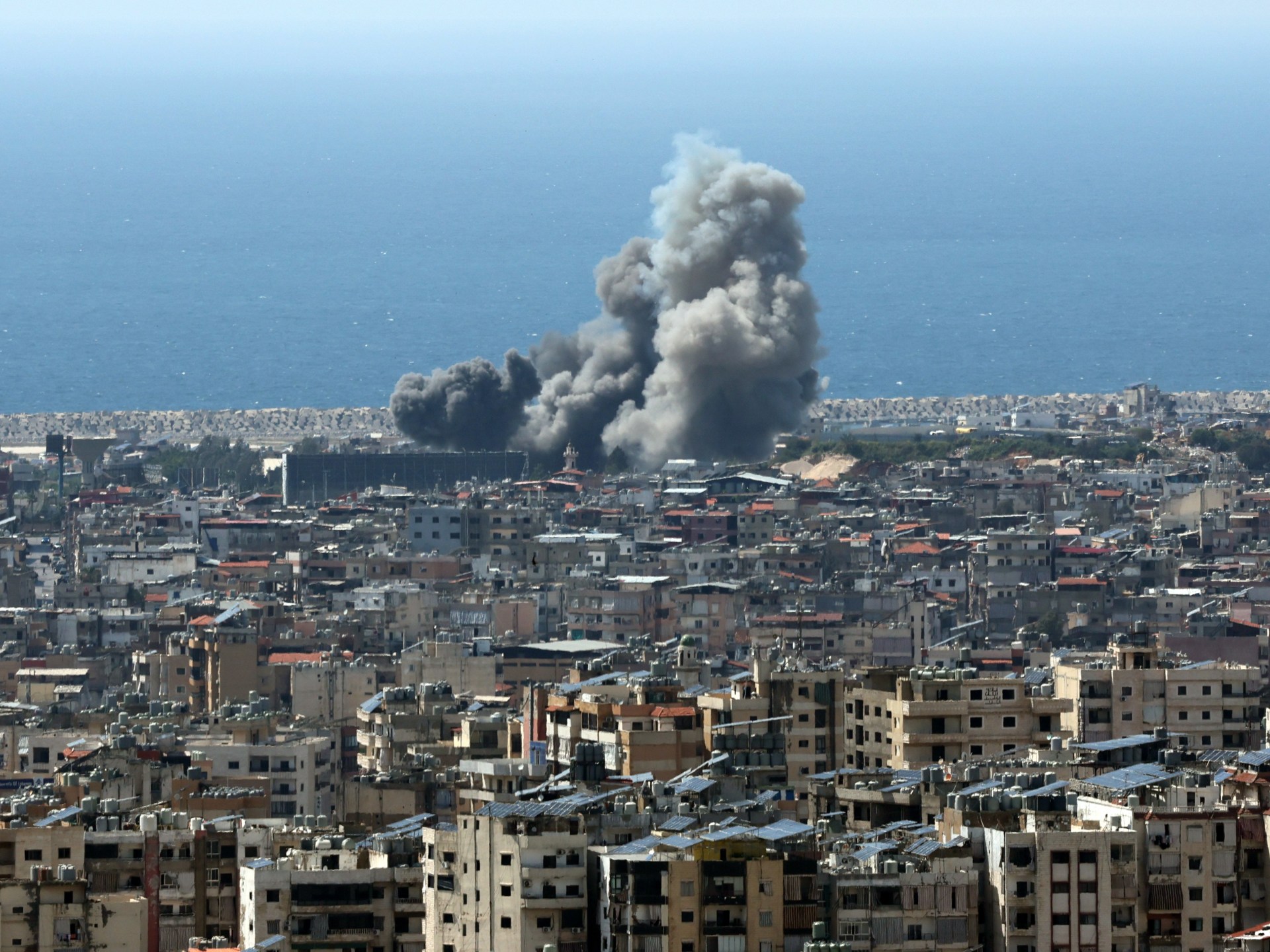
‘People are afraid’: Lebanese reeling after Israel’s devastating attacksFear and confusion grip Lebanon as Israeli strikes devastate the country and its place in the ceasefire is contested.Published On 8 Apr 2026Beirut, Lebanon – Em Walid was in the clothing shop she owns in central Beirut when the sound of explosions rang out.“Even the street cats outside started running,” she said, after Israel carried out its heaviest and deadliest air attacks on Lebanon in years.Recommended Stories list of 4 itemslist 1 of 4Israeli attacks across Lebanon kill at least 254 after Iran-US ceasefirelist 2 of 4Photos: Israel strikes central Beirut without warninglist 3 of 4Israel launches 100 air strikes in 10 minutes across Lebanonlist 4 of 4Trump says Lebanon not included in US-Iran ceasefire amid Israeli assaultend of listAt least 254 people were killed and more than 1,160 were injured in dozens of attacks on Beirut, its suburbs, the south of the country and the eastern Bekaa Valley. There are fears the toll could rise as more victims are recovered from the rubble following the strikes – a sharp escalation since Israel ramped up its attacks on Lebanon early last month amid its joint war with the United States against Iran.The strikes came hours after a Pakistani-negotiated ceasefire between the US and Iran took effect. There was initial confusion about Lebanon’s place in the two-week truce, with Pakistan and Iran insisting it was part of the agreement.Israel and the US, however, argued otherwise. Speaking to US media, US President Donald Trump said Lebanon was a “separate skirmish”, while Israeli Prime Minister Benjamin Netanyahu claimed the ceasefire “does not include Lebanon”.“Netanyahu wants to take advantage of the fluid situation to maximise operational achievements in Lebanon,” Dania Arayssi, a senior analyst at New Lines Institute for Strategy and Policy, told Al Jazeera.“He must take into account that a US-Iran deal might include ceasing the war on Iranian proxies, which would greatly complicate the Israeli war effort against Hezbollah in Lebanon.”A damaged apartment building after an Israeli air strike in Caracas near the Raouche district in Beirut, Lebanon, on April 8, 2026 [Wael Hamzeh/EPA]Israel intensified its war on Lebanon for the second time in less than two years in early March following a salvo of rockets launched by the Lebanese group Hezbollah. A ceasefire between Israel and Hezbollah had ostensibly been in place since November 27, 2024, but Israel continued carrying out near-daily attacks that killed hundreds of Lebanese.The Iran-backed group claimed its March 2 attack – its first response to more than a year of Israeli ceasefire violations – was retaliation for the US and Israeli assassination of Iran’s Supreme Leader Ayatollah Ali Khamenei two days earlier, on the first day of the US-Israel war on Iran.Since then, relentless Israeli bombardment and a ground invasion have killed some 1,700 people in Lebanon and forced more than 1.2 million from their homes.In a statement, Hezbollah said it has a “right” to respond to the attacks, affirming “that the blood of the martyrs and the wounded will not be shed in vain, and that today’s massacres, like all acts of aggression and savage crimes, confirm our natural and legal right to resist the occupation and respond to its aggression”.‘Just way too many of them’The wave of attacks came as some of those displaced attempted to return to their homes in the south amid confusion over Lebanon’s inclusion in the ceasefire. Strikes happened across the country, including in parts of Beirut that had been spared over the past month and in 2024.The first round included dozens of attacks in fewer than 10 minutes. The Israeli military claimed it attacked more than 100 Hezbollah headquarters and military targets, though many strikes were in densely populated residential areas.No warnings were given.Hospitals, frantically dealing with high casualty counts, started putting out calls for blood donations.At the American University of Beirut Medical Center, in the Hamra neighbourhood, dozens heeded the call. Among those cramming the third-floor reception was a 20-year-old American University of Beirut student, majoring in philosophy. His family had fled Dahiyeh, in southern Beirut, when the attacks started in early March. They had taken refuge near the Basta neighbourhood, in the centre of the capital.He was at the university, near the hospital, when the first rounds of attack happened.“I heard several explosions,” the student, who did not give his name, said. “There were just way too many of them.”The student recalled looking up and seeing smoke rising in the distance in multiple places around the city. Reports began coming in of attacks all over the nation. There was one near his aunt’s place in the Aley district, about a half-hour drive from Beirut, he said. She was fine – but a neighbour had been killed.A woman who survived an Israeli air strike is rescued by a firefighter from a destroyed building in central Beirut, Lebanon, on Wednesday, April 8, 2026 [AP Photo/Emilio Morenatti]In the Manara neighbourhood, near Beirut’s seafront, Najib Merhe smoked a cigarette and chatted with neighbours. An Israeli attack had destroyed an apartment a few floors above his restaurant, Hani’s, a long-standing, popular burger joint.He was not on site when the attack happened, but his son was. Luckily, he was unharmed.“People are afraid,” Merhe said. “This kind of situation no one can afford nor endure.”Across the street, the glass facade of his restaurant had been destroyed. Light fixtures hung from the ceilings. People swept glass on the street, and old men walking along the seafront gathered to look at the hole in the wall where the apartment had been just a couple of hours earlier.Security forces had cordoned off the area and directed passersby to beware of falling glass from the adjacent building.This was one of the smaller strikes. It was targeting a specific apartment. In other parts of town, Israel took down entire buildings.Further down the street in Manara, a sweat-drenched member of Beirut’s civil defence forces sat in the back of his emergency response vehicle. “I heard ‘woooooo’ and then strikes all over the place,” he said, adding that he’d never seen anything like this before.As the day continued, people feared Israel was not finished. In televised remarks, Netanyahu said that his military’s operations against Hezbollah, and thus Lebanon, would continue.
SRCAl Jazeera
LANGEN
LEANCenter
WORDS1 037
ENT12
WED · 2026-04-08 · 20:57 GMTBRIEF NSR-2026-0408-59339
NSR-2026-0408-59339News Report·EN·Conflict
‘People are afraid’: Lebanese reeling after Israel’s devastating attacks
On April 8, 2026, Israel launched its heaviest air attacks on Lebanon in years, killing at least 254 people and injuring over 1,160 across Beirut, its suburbs, southern Lebanon, and the Bekaa Valley. The strikes occurred hours after a US-Iran ceasefire brokered by Pakistan took effect, leading to confusion regarding Lebanon's inclusion in the truce.
Justin SalhaniAl JazeeraFiled 2026-04-08 · 20:57 GMTLean · CenterRead · 5 min
Al JazeeraFIG 01
Reading time
5min
Word count
1 037words
Sources cited
3cited
Entities identified
12entities
Quality score
100%
§ 01
Briefing Summary
AI-generatedNEWSAR · AI
On April 8, 2026, Israel launched its heaviest air attacks on Lebanon in years, killing at least 254 people and injuring over 1,160 across Beirut, its suburbs, southern Lebanon, and the Bekaa Valley. The strikes occurred hours after a US-Iran ceasefire brokered by Pakistan took effect, leading to confusion regarding Lebanon's inclusion in the truce. While Pakistan and Iran claimed Lebanon was part of the agreement, the US and Israel asserted otherwise, with President Trump calling it a "separate skirmish." The attacks represent a sharp escalation since Israel intensified its operations in Lebanon in early March amidst its joint war with the US against Iran, despite an existing ceasefire between Israel and Hezbollah since November 2024. Analysts suggest Israel is attempting to maximize its gains in Lebanon while the situation remains fluid.
Confidence 0.90Sources 3Claims 5Entities 12
§ 02
Article analysis
Model · rule-basedFraming
Conflict
Human Interest
Tone
Mixed Tone
AI-assessed
CalmNeutralAlarmist
Factuality
0.70 / 1.00
Factual
LowHigh
Sources cited
3
Well sourced
FewMany
§ 03
Key claims
5 extracted01
Netanyahu claimed the ceasefire “does not include Lebanon”.
quoteBenjamin Netanyahu
Confidence
1.00
02
Trump says Lebanon was a “separate skirmish”.
quoteDonald Trump
Confidence
1.00
03
At least 254 people were killed and more than 1,160 were injured in dozens of attacks.
statisticAl Jazeera
Confidence
0.90
04
Israeli attacks across Lebanon kill at least 254 after Iran-US ceasefire.
factualAl Jazeera
Confidence
0.90
05
Since then, relentless Israeli bombardment and a ground invasion have killed some 1,700 people in Lebanon.
statisticAl Jazeera
Confidence
0.80
§ 04
Full report
5 min read · 1 037 words§ 05
Entities
12 identifiedKey playerOppositionContextPositiveNeutralNegative
People3
Organizations2
§ 06
Keywords & salience
9 termsisraeli attacks
1.00
lebanon
1.00
ceasefire
0.80
air strikes
0.70
us-iran
0.60
hezbollah
0.60
beirut
0.50
war
0.50
casualties
0.40
§ 07
Topic connections
Interactive graph Network visualization showing 51 related topics
View Full Graph Person Organization Location Event|Click node to navigate|Edge numbers = shared articles