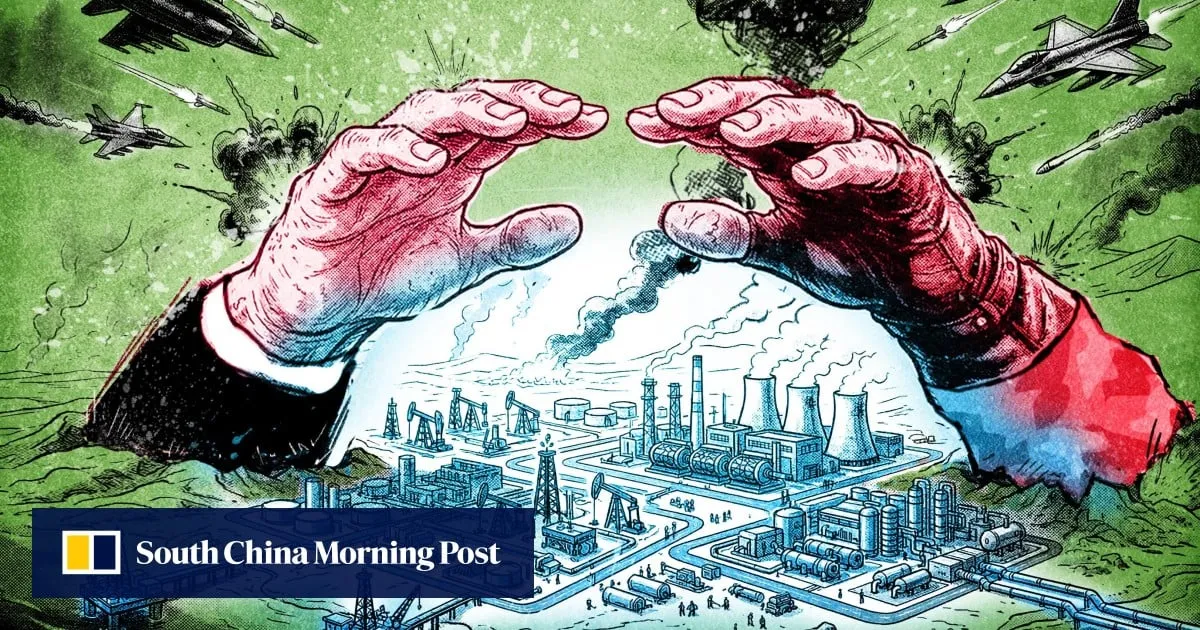
Whether the US-Israeli war on Iran wraps up quickly or drags on, the repercussions will be felt for years, reshaping warfare, geopolitics and energy security as well as how the world sees the United States and its tactical and strategic capabilities. In the final instalment of a three-part series, we look at the move away from precision strikes on limited military assets.When Iran’s South Pars gas field was hit at the start of the US-Israeli war on the country, Tehran retaliated with attacks on energy infrastructure across the Gulf. And as the conflict has escalated, more energy and civilian sites have been targeted.In Iran, the destruction includes pharmaceutical company Tofigh Darou, the Pasteur Institute, a century-old medical research centre, and a major bridge near Tehran which was said to be one of the tallest in the Middle East.Before a two-week ceasefire was agreed on Wednesday, with negotiations for a peace deal to start on Friday, US President Donald Trump had threatened to destroy bridges, power plants and other civilian facilities in Iran if it did not agree to reopen the Strait of Hormuz.01:31US and Iran agree to 2-week ceasefire amid Pakistani mediation efforts
SRCSouth China Morning Post
LANGEN
LEANCenter-Right
WORDS193
ENT10
WED · 2026-04-08 · 22:00 GMTBRIEF NSR-2026-0409-59401
NSR-2026-0409-59401Analysis·EN·Political Strategy
Iran war: is the US shifting away from its strategy of precision strikes?
A US-Israeli war on Iran has led to a shift away from precision strikes, with both sides increasingly targeting energy and civilian infrastructure. Initial attacks on Iran's South Pars gas field prompted retaliatory attacks on energy infrastructure across the Gulf.
Amber WangSouth China Morning PostFiled 2026-04-08 · 22:00 GMTLean · Center-RightRead · 1 min
South China Morning PostFIG 01
Reading time
1min
Word count
193words
Sources cited
0cited
Entities identified
10entities
Quality score
100%
§ 01
Briefing Summary
AI-generatedNEWSAR · AI
A US-Israeli war on Iran has led to a shift away from precision strikes, with both sides increasingly targeting energy and civilian infrastructure. Initial attacks on Iran's South Pars gas field prompted retaliatory attacks on energy infrastructure across the Gulf. Civilian targets in Iran, such as a pharmaceutical company, a medical research center, and a major bridge, have been destroyed. The escalation occurred before a two-week ceasefire was agreed upon, mediated by Pakistan, with negotiations for a peace deal scheduled to begin. Prior to the ceasefire, the US President threatened further destruction of Iranian civilian facilities if the Strait of Hormuz was not reopened.
Confidence 0.90Claims 5Entities 10
§ 02
Article analysis
Model · rule-basedFraming
Political Strategy
National Security
Tone
Mixed Tone
AI-assessed
CalmNeutralAlarmist
Factuality
0.40 / 1.00
Mixed
LowHigh
Sources cited
0
No named sources
FewMany
§ 03
Key claims
5 extracted01
US President Donald Trump had threatened to destroy civilian facilities in Iran.
factual
Confidence
0.90
02
Destruction in Iran includes pharmaceutical company Tofigh Darou and the Pasteur Institute.
factual
Confidence
0.90
03
Iran's South Pars gas field was hit at the start of the US-Israeli war on the country.
factual
Confidence
0.80
04
Attacks on energy infrastructure across the Gulf occurred as retaliation.
factual
Confidence
0.70
05
The US-Israeli war on Iran will have repercussions for years, reshaping warfare, geopolitics and energy security.
prediction
Confidence
0.70
§ 04
Full report
1 min read · 193 words§ 05
Entities
10 identifiedKey playerOppositionContextPositiveNeutralNegative
§ 06
Keywords & salience
9 termsiran war
1.00
precision strikes
0.80
energy infrastructure
0.70
civilian sites
0.70
energy security
0.60
geopolitics
0.60
ceasefire
0.50
strait of hormuz
0.50
us strategy
0.40
§ 07
Topic connections
Interactive graph Network visualization showing 51 related topics
View Full Graph Person Organization Location Event|Click node to navigate|Edge numbers = shared articles