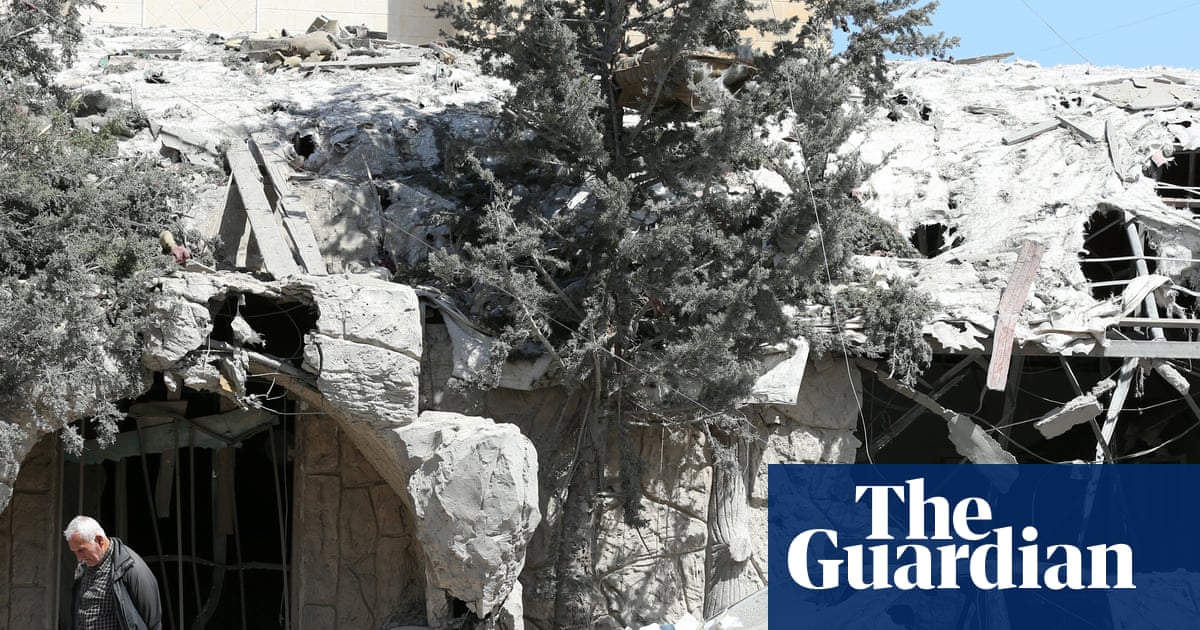
Benjamin Netanyahu has called for negotiations with Lebanon after worldwide condemnation of Israel’s intense bombardment of Beirut and other Lebanese cities, which threatened to undo the US-Iran ceasefire before it was barely a day old.The Israeli prime minister said the talks should focus on the disarmament of Hezbollah and the establishment of “peace relations” with Lebanon, but gave no undertaking that the bombardment would stop, and there was no immediate sign of a let up in Israeli strikes. The Lebanese government had requested a ceasefire before talks began.More than 200 people were killed by Israeli bombing in the 24 hours after the announcement of a ceasefire in the Iran war on Tuesday night. The bombardment, ostensibly aimed at Hezbollah targets, included strikes with heavy munitions on densely populated areas, which drew outrage from the International Committee of the Red Cross and other international humanitarian organisations.The ferocious attack on Lebanon had threatened to derail hopes of a negotiated end to the war in Iran, which began with a US-Israeli attack on 28 February. Despite claims by the US president, Donald Trump, that the Pakistani-brokered ceasefire had marked significant progress towards bringing a durable peace to the Middle East, the truce looked in danger of collapsing on its first day.The Israeli strikes on Beirut were condemned by various world leaders and humanitarian organisations. Photograph: Raghed Waked/ReutersIran warned that, in response to the Israeli attacks after the ceasefire, it would once more close the strait of Hormuz, the economically critical waterway it had agreed to open for the two-week duration of the ceasefire. The country’s president, Masoud Pezeshkian, said negotiations were “meaningless” as long as Israel continued to bomb Lebanon, placing in doubt US-Iranian talks in Pakistan scheduled for Saturday. Pezeshkian vowed Iran would not abandon the Lebanese people.According to Iran’s deputy foreign minister, Saeed Khatibzadeh, Iran had been held back from responding forcefully to Israel’s escalation in Lebanon by Pakistani intervention urging restraint in the interests of a broader peace agreement. Pakistan’s prime minister, Shehbaz Sharif, condemned Israel’s “ongoing aggression against Lebanon”.Netanyahu had insisted Lebanon was not included in the Tuesday night ceasefire agreed by Donald Trump, and vowed the Israeli military would continue to strike Hezbollah targets “wherever necessary”. The Israeli prime minister said his forces had killed the secretary to Hezbollah’s leader, Naim Qassem.Trump himself backed Netanyahu’s version, telling the public broadcaster PBS that Lebanon was “not included in the deal” because of Hezbollah’s role. He referred to the conflict in Lebanon as a “separate skirmish” from the Iranian war and added: “That’ll get taken care of, too. It’s all right.”CNN reported that Netanyahu’s announcement of peace talks with Lebanon had come at the urging of the US president, who is keen to extricate the US from a war that he was persuaded to join by Netanyahu, according to multiple accounts of the lead-up to the conflict.The US vice-president, JD Vance, assigned to lead the US delegation to peace talks in Pakistan, suggested there had been a “legitimate misunderstanding” on the geographic reach of the ceasefire deal.9:39
SRCThe Guardian - World News
LANGEN
LEANCenter-Left
WORDS507
ENT12
THU · 2026-04-09 · 13:41 GMTBRIEF NSR-2026-0409-60384
NSR-2026-0409-60384News Report·EN·Conflict
Israel’s bombing of Lebanon after US-Iran ceasefire prompts condemnation
Following a newly established US-Iran ceasefire, Israel's intense bombing of Beirut and other Lebanese cities has drawn international condemnation and threatened to destabilize the truce. Israeli Prime Minister Benjamin Netanyahu called for negotiations with Lebanon focusing on Hezbollah's disarmament, but did not commit to halting the strikes, which have killed over 200 people in the past 24 hours.
Julian Borger Senior international correspondentThe Guardian - World NewsFiled 2026-04-09 · 13:41 GMTLean · Center-LeftRead · 3 min
The Guardian - World NewsFIG 01
Reading time
3min
Word count
507words
Sources cited
8cited
Entities identified
12entities
Quality score
100%
§ 01
Briefing Summary
AI-generatedNEWSAR · AI
Following a newly established US-Iran ceasefire, Israel's intense bombing of Beirut and other Lebanese cities has drawn international condemnation and threatened to destabilize the truce. Israeli Prime Minister Benjamin Netanyahu called for negotiations with Lebanon focusing on Hezbollah's disarmament, but did not commit to halting the strikes, which have killed over 200 people in the past 24 hours. Iran has warned it may close the Strait of Hormuz again in response to the Israeli attacks, jeopardizing US-Iranian talks scheduled in Pakistan. Despite claims of progress by the US president, the ceasefire is in danger of collapsing as Iran insists negotiations are "meaningless" while Israel continues its bombardment of Lebanon. Pakistan has condemned Israel's actions and urged restraint.
Confidence 0.90Sources 8Claims 5Entities 12
§ 02
Article analysis
Model · rule-basedFraming
Conflict
Diplomatic
Tone
Mixed Tone
AI-assessed
CalmNeutralAlarmist
Factuality
0.70 / 1.00
Factual
LowHigh
Sources cited
8
Well sourced
FewMany
§ 03
Key claims
5 extracted01
Trump said Lebanon was 'not included in the deal' because of Hezbollah's role.
quoteDonald Trump
Confidence
1.00
02
Iran warned it would close the Strait of Hormuz in response to Israeli attacks.
factualMasoud Pezeshkian
Confidence
1.00
03
Netanyahu called for negotiations with Lebanon focusing on Hezbollah's disarmament.
factualBenjamin Netanyahu
Confidence
1.00
04
More than 200 people were killed by Israeli bombing in the 24 hours after the ceasefire.
statistic
Confidence
1.00
05
Israel bombed Beirut and other Lebanese cities after a US-Iran ceasefire.
factual
Confidence
1.00
§ 04
Full report
3 min read · 507 words§ 05
Entities
12 identifiedKey playerOppositionContextPositiveNeutralNegative
People5
Organizations1
§ 06
Keywords & salience
8 termsisrael bombing lebanon
1.00
us-iran ceasefire
0.90
israeli strikes
0.80
hezbollah
0.70
international condemnation
0.60
negotiations
0.60
peace relations
0.50
strait of hormuz
0.50
§ 07
Topic connections
Interactive graph Network visualization showing 51 related topics
View Full Graph Person Organization Location Event|Click node to navigate|Edge numbers = shared articles