More than 250 people have been killed in a barrage of air strikes on Lebanon since the ceasefire was declared.A view of the destruction after the Israeli military carried out three air strikes on Beirut, Lebanon, on April 8, 2026 [Murat Şengül/Anadolu]Published On 9 Apr 2026Just hours after the United States and Iran announced a ceasefire in the war that has dominated news headlines around the world and pushed oil prices to new heights, Israel bombarded Lebanon on Wednesday, killing hundreds, injuring thousands and prompting Iran to reimpose its blockade of the Strait of Hormuz.The bone of contention: whether or not Israel’s relentless strikes on Lebanon were included in the ceasefire at all. Pakistan, which brokered the agreement, said they were. Israel said they weren’t.Recommended Stories list of 4 itemslist 1 of 4Defeat from the jaws of victory: Israel reacts to Trump’s Iran ceasefirelist 2 of 4‘Israel must be restrained for US-Iran ceasefire to hold’list 3 of 4Why Israel’s attacks on Lebanon could cripple US-Iran ceasefirelist 4 of 4Global energy crisis is ‘the mother of all crises’: Turkish energy ministerend of listLater on Wednesday, the US sided with Israel, with President Donald Trump calling the violence in Lebanon “a separate skirmish” even though Hezbollah had entered the war in defence of Iran.In Israel, Prime Minister Benjamin Netanyahu has come under intense political pressure since the US and Iran signed the ceasefire, which had little or no active involvement from Israel.None of Israel’s war aims, which Netanyahu had assured his country were the basis for what he framed as an existential battle with Iran, had been achieved, angering those who supported the war.Furthermore, under the terms of the truce published yesterday, a 10-point peace plan put forward by Iran has been accepted as a starting point for negotiations due to begin this weekend in Islamabad.Under early descriptions of the Iranian plan, Iran would retain its nuclear stock and could benefit financially from levies charged on shipping traffic through the Strait of Hormuz and from tariffs and sanctions relief promised by Israel’s ally, US President Donald Trump, on his Truth Social account.This is far from the 15-point list of demands the US previously put forward to Iran, which would have seen the strait completely reopened without conditions, and Iran giving up its enriched uranium stocks, ending its ballistic missiles programme and promising to stop arming proxy groups in the region, such as the Houthis in Yemen, Hezbollah in Lebanon and a flurry of armed groups in Iraq.Arguing that Lebanon is exempt from the ceasefire agreement, Israel launched the most extensive bombardment on its neighbour in recent months on Wednesday. In the space of about 10 minutes, the Israeli military carried out more than 100 strikes on what it claimed were Hezbollah targets, hitting Beirut, southern Lebanon and the eastern Bekaa Valley, killing at least 254 people, 91 of them in the capital, Beirut, alone.The attacks have been condemned by numerous nations and international organisations, including Spain, France, the United Kingdom, the United Nations and Pakistan, which brokered the ceasefire deal and stated explicitly that Lebanon was included.Responding to the strikes, Iranian state media announced that its government was now considering walking away from the truce and has already announced that restrictions on the economically vital Strait of Hormuz will be reimposed.For its part, Israel says it is not trying to kill the ceasefire by launching strikes on Lebanon. Charles Freilich, Israel’s former deputy national security adviser, told Al Jazeera that the motivation for the strikes arose solely from the “opportunity to hit numerous mid to high-level Hezbollah fighters, not spoil the ceasefire, which both the US and Israel maintain does not include Lebanon”.‘Provocateurs-in-chief’Some analysts are sceptical, however.“Israeli officials will no doubt claim that this was a super sophisticated operation against necessary security targets, perhaps embellishing those arguments with claims of deep intel and technological penetration and sophistication, and you will probably have the usual mainstream Western media outlets slavishly parroting the Israeli line,” former Israeli government adviser Daniel Levy told Al Jazeera, before explaining that such operations typically combine two principal features.“The first is, sadly, an Israeli devotion to death and destruction, largely for its own sake, to spread terror and upend state capacity in various places in the region, and to upend civilian life,” he said. “And, secondly, a very transparent attempt to prolong the broader war against Iran, to collapse any ceasefire prospects, and to act as provocateurs-in-chief.”Politically, support within Israel for the war may have weakened, however. Many of those who initially supported the war on Iran have been unsparing in their criticism of a potential pause in the conflict negotiated by the other two parties at Israel’s apparent expense.Posting on X, opposition leader Yair Lapid claimed that Prime Minister “Netanyahu has turned us into a protectorate state that receives instructions over the phone on matters pertaining to the core of our national security”.Democrats leader Yair Golan was equally scathing. “Netanyahu lied,” he wrote on X. “He promised a ‘historic victory’ and security for generations, and in practice, we got one of the most severe strategic failures Israel has ever known.”Israeli opposition leader Yair Lapid has been unsparing in his criticism of Prime Minister Benjamin Netanyahu following a ceasefire he claims Israel was excluded from [Evelyn Hockstein/Pool via AP]“Netanyahu is in real trouble, and he thinks he has to wreck the ceasefire to get out of it, just as he did previously in Gaza,” Member of the Knesset Aida Touma Sliman of the left-wing Hadash party, which has opposed the war from the start, told Al Jazeera. “The ceasefire has lost him a lot of support, even among those who backed the war. None of his war aims have been achieved and it looks like he is losing control to the Trump administration,” she said.“Don’t forget, we’re heading towards elections,” she added, referring to the vote currently slated for October, “and Netanyahu’s dropping in the polls. He needs something he can claim is a victory.“And that’s why he did what he did,” she said, of Wednesday’s barrage on busy Lebanese neighbourhoods that killed hundreds, including women, children and medical workers, according to emergency workers on the ground. “He conducted a massacre in Lebanon.”
SRCAl Jazeera
LANGEN
LEANCenter
WORDS1 034
ENT10
THU · 2026-04-09 · 14:52 GMTBRIEF NSR-2026-0409-60479
NSR-2026-0409-60479News Report·EN·Conflict
Israeli attacks on Lebanon aimed to undermine ceasefire, critics say
Following a US-Iran ceasefire in April 2026, Israel launched air strikes on Lebanon, resulting in over 250 deaths and prompting Iran to reimpose its Strait of Hormuz blockade. The dispute centers on whether the ceasefire included Israel's actions in Lebanon, with Pakistan claiming it did and Israel denying it.
Simon Speakman CordallAl JazeeraFiled 2026-04-09 · 14:52 GMTLean · CenterRead · 5 min
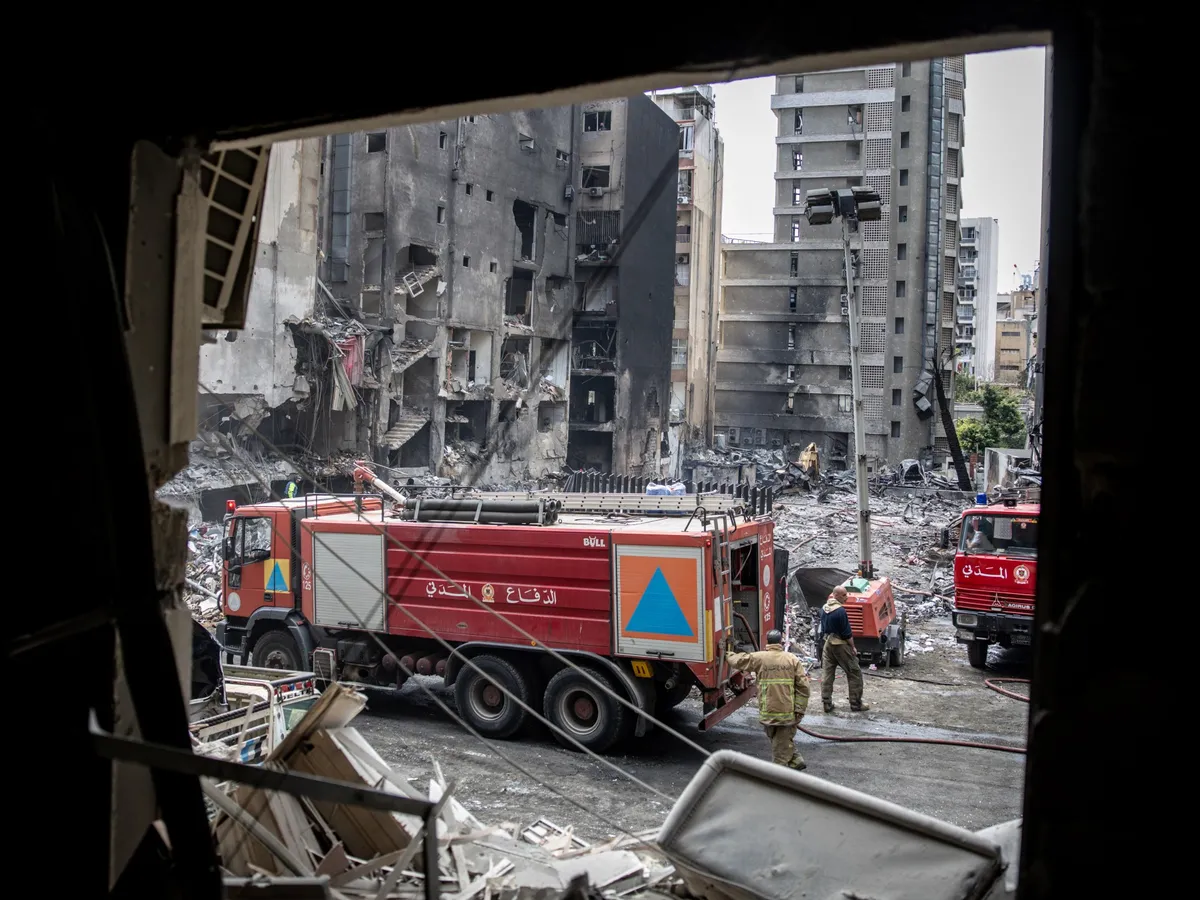
Al JazeeraFIG 01
Reading time
5min
Word count
1 034words
Sources cited
3cited
Entities identified
10entities
Quality score
100%
§ 01
Briefing Summary
AI-generatedNEWSAR · AI
Following a US-Iran ceasefire in April 2026, Israel launched air strikes on Lebanon, resulting in over 250 deaths and prompting Iran to reimpose its Strait of Hormuz blockade. The dispute centers on whether the ceasefire included Israel's actions in Lebanon, with Pakistan claiming it did and Israel denying it. The US sided with Israel, calling the violence a separate issue. The ceasefire, brokered without Israel's active involvement, has led to political pressure on Israeli Prime Minister Netanyahu as none of Israel's war aims were achieved. Negotiations based on Iran's 10-point peace plan are set to begin, potentially allowing Iran to retain its nuclear stock and benefit financially.
Confidence 0.90Sources 3Claims 5Entities 10
§ 02
Article analysis
Model · rule-basedFraming
Conflict
Political Strategy
Tone
Mixed Tone
AI-assessed
CalmNeutralAlarmist
Factuality
0.70 / 1.00
Factual
LowHigh
Sources cited
3
Well sourced
FewMany
§ 03
Key claims
5 extracted01
President Donald Trump calling the violence in Lebanon “a separate skirmish”.
quotePresident Donald Trump
Confidence
1.00
02
Israel said the strikes on Lebanon weren’t included in the ceasefire.
factualIsrael
Confidence
0.90
03
Pakistan, which brokered the agreement, said the Israeli strikes on Lebanon were included in the ceasefire.
factualPakistan
Confidence
0.90
04
More than 250 people have been killed in a barrage of air strikes on Lebanon since the ceasefire was declared.
statisticArticle
Confidence
0.90
05
Israel bombarded Lebanon on Wednesday, killing hundreds, injuring thousands and prompting Iran to reimpose its blockade of the Strait of Hormuz.
factualArticle
Confidence
0.80
§ 04
Full report
5 min read · 1 034 words§ 05
Entities
10 identifiedKey playerOppositionContextPositiveNeutralNegative
Organizations1
§ 06
Keywords & salience
9 termsceasefire
1.00
israeli attacks
0.90
lebanon
0.80
iran
0.70
us-iran relations
0.60
strait of hormuz
0.60
peace negotiations
0.50
political pressure
0.40
nuclear stock
0.40
§ 07
Topic connections
Interactive graph Network visualization showing 51 related topics
View Full Graph Person Organization Location Event|Click node to navigate|Edge numbers = shared articles