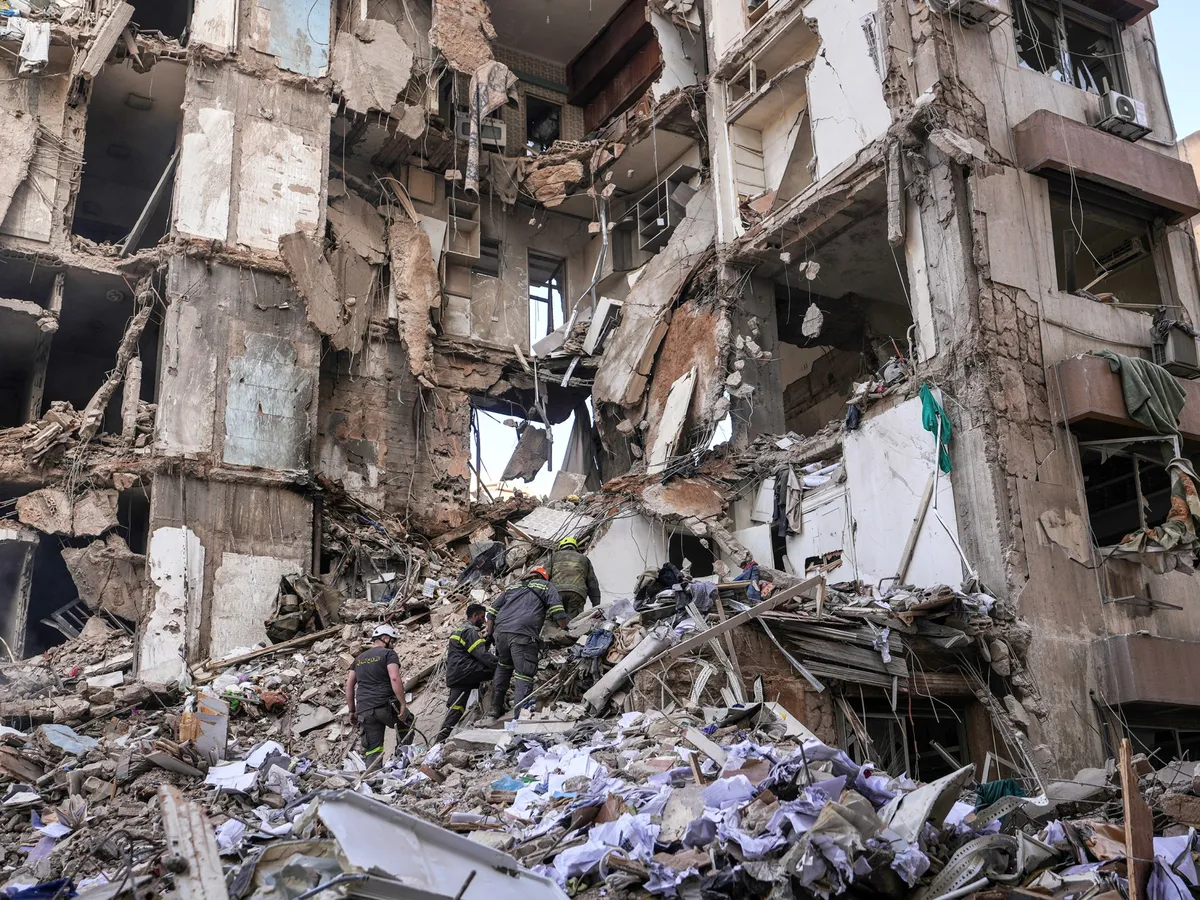
Israeli PM says his gov’t ready to enter negotiations on ‘disarming Hezbollah’ and ‘establishing peaceful relations’ with Lebanon.Lebanese civil defence workers search for victims in the rubble of a building destroyed in an Israeli air strike a day earlier in central Beirut, Lebanon, Thursday, April 9, 2026 [Hassan Ammar/AP Photo]Published On 9 Apr 2026|Updated: 9 Apr 2026 07:17 PM (GMT)Israeli Prime Minister Benjamin Netanyahu says his government is ready to hold direct talks with Lebanon, a day after Israeli attacks on its northern neighbour killed hundreds of people and threatened a fragile United States-Iran truce.“In light of Lebanon’s repeated requests to open direct negotiations with Israel, I instructed the cabinet yesterday to start direct negotiations with Lebanon as soon as possible,” Netanyahu said in a statement released by his office on Thursday.Recommended Stories list of 3 itemslist 1 of 3Why Israel’s attacks on Lebanon could cripple US-Iran ceasefirelist 2 of 3The Take: Does a US-Iran ceasefire mean the end of the war?list 3 of 3Global energy crisis is ‘the mother of all crises’: Turkish energy ministerend of list“The negotiations will focus on disarming Hezbollah and establishing peaceful relations between Israel and Lebanon.”The statement comes a day after Israeli attacks across Lebanon killed more than 300 people in a series of devastating strikes that have threatened to undermine a US-Iran ceasefire.Israel and the US have said Lebanon was not included in the two-week truce that aims to allow for negotiations on ending the five-week US-Israel war on Iran. Meanwhile, Iran and mediator Pakistan have said Lebanon was included in the ceasefire, and several international leaders have called for Lebanon to be included.Shortly before Netanyahu’s surprise announcement about potential talks, Lebanese President Joseph Aoun said he was working on a diplomatic track on this matter that was starting to be seen “positively” by international actors.And Lebanon’s cabinet instructed security forces to restrict weapons in Beirut exclusively to state institutions, in a warning to the armed group Hezbollah.“The army and security forces are requested to immediately begin reinforcing the full imposition of state authority over Beirut governorate and to monopolise weapons in the hands of legitimate authorities alone,” Prime Minister Nawaf Salam said at the end of a cabinet meeting.Aoun later said on X that the “only solution” to the ongoing situation in the country was to achieve a ceasefire.“I have said and repeat: I will not allow internal strife to occur, and everyone must have faith in the state and its legitimate forces, for there is no salvation without it,” he said.Hezbollah lawmaker Ali Fayyad stated that the group rejects direct negotiations with Israel and said that the Lebanese government should demand a ceasefire as a precondition before further steps.Fayyad added that the government’s position should also prioritise the withdrawal of Israeli troops from Lebanese territory and the return of displaced people.An official source told Al Jazeera that there will be no talks before a ceasefire is secured.Attacks on HezbollahHours before opening the way for talks with Lebanon, Netanyahu said Israel would continue striking Hezbollah “with force, precision and determination”.Lebanon’s Health Ministry said at least 303 people were killed and more than 1,000 wounded on Wednesday in Israeli strikes in central Beirut and other areas of Lebanon, with Salam declaring Thursday a “national day of mourning”.But Israel continued its bombardment overnight and into Thursday, saying it killed Ali Yusuf Harshi, an aide to Hezbollah leader Naim Qassem. There was no immediate comment from the Lebanese armed group.Meanwhile, Lebanon’s National News Agency (NNA) reported on Thursday that the Israeli army targeted the centre of the town of Bint Jbeil with heavy artillery shelling.At the same time, Hezbollah has announced at least 20 operations against Israel and said it had targeted Israeli vehicles on Lebanese territory.Reporting from Beirut, Al Jazeera’s Malcolm Webb said the Israeli army had issued new forced evacuation orders for the capital’s southern suburbs in advance of an attack.“[This is an] area where thousands of people had initially fled, so this will force people to be on the move once again, looking yet again for somewhere safe to go to avoid the kind of destruction we can see here at one of the sites in central Beirut that was hit just over 24 hours ago in that wave of bombings across the city,” Webb said.Since the ongoing Israel-Lebanon conflict began on March 2, Israel has issued evacuation orders for about 15 percent of Lebanese territory, displacing more than 1.2 million people, according to the United Nations. Israeli attacks have killed at least 1,888 people and wounded more than 6,000 others, according to Lebanese health authorities.A Lebanese civil defence worker looks on as an excavator operates on the rubble of a building destroyed in an Israeli air strike a day earlier in Beirut, Lebanon [Hussein Malla/AP]Ceasefire dealAs Israel continues its attacks on Lebanon, concerns are growing about the effect it could have on the originally fragile deal.Since Wednesday, Iran has argued that attacks in Lebanon violate the ceasefire deal in the US-Israel war on Iran, with Iranian President Masoud Pezeshkian saying on Thursday that Israeli strikes on Lebanon would render negotiations meaningless, adding that Iran would not abandon the Lebanese people.However, the US has said Lebanon is not covered by the truce, despite Pakistan, which acted as mediator, saying it was part of the deal.Other countries, including the United Kingdom, France, Russia and Turkiye, have said the truce should extend to Lebanon.Delegations from the US and Iran are expected to meet in the Pakistani capital, Islamabad, on Saturday for talks on ending the war.
SRCAl Jazeera
LANGEN
LEANCenter
WORDS922
ENT10
THU · 2026-04-09 · 17:16 GMTBRIEF NSR-2026-0409-60725
NSR-2026-0409-60725News Report·EN·Diplomatic
Israel’s Netanyahu ready for talks with Lebanon ‘as soon as possible’
Following deadly Israeli attacks in Lebanon that killed hundreds and threatened a US-Iran truce, Israeli Prime Minister Benjamin Netanyahu announced his government is ready to begin direct negotiations with Lebanon "as soon as possible." The talks, according to Netanyahu, will focus on disarming Hezbollah and establishing peaceful relations. This announcement comes after Lebanon's repeated requests for direct negotiations with Israel.
Al Jazeera StaffAl JazeeraFiled 2026-04-09 · 17:16 GMTLean · CenterRead · 4 min
Al JazeeraFIG 01
Reading time
4min
Word count
922words
Sources cited
6cited
Entities identified
10entities
Quality score
100%
§ 01
Briefing Summary
AI-generatedNEWSAR · AI
Following deadly Israeli attacks in Lebanon that killed hundreds and threatened a US-Iran truce, Israeli Prime Minister Benjamin Netanyahu announced his government is ready to begin direct negotiations with Lebanon "as soon as possible." The talks, according to Netanyahu, will focus on disarming Hezbollah and establishing peaceful relations. This announcement comes after Lebanon's repeated requests for direct negotiations with Israel. Simultaneously, the Lebanese cabinet instructed security forces to restrict weapons in Beirut to state institutions, a warning to Hezbollah. Lebanese President Joseph Aoun stated he is working on a diplomatic solution that is being viewed "positively" by international actors. The US-Iran ceasefire's applicability to Lebanon remains disputed.
Confidence 0.90Sources 6Claims 5Entities 10
§ 02
Article analysis
Model · rule-basedFraming
Diplomatic
Conflict
Tone
Measured
AI-assessed
CalmNeutralAlarmist
Factuality
0.80 / 1.00
Factual
LowHigh
Sources cited
6
Well sourced
FewMany
§ 03
Key claims
5 extracted01
Hezbollah lawmaker Ali Fayyad stated that the group rejects direct negotiations with Israel.
quoteAli Fayyad
Confidence
1.00
02
Lebanon’s cabinet instructed security forces to restrict weapons in Beirut exclusively to state institutions.
factualarticle
Confidence
1.00
03
Negotiations will focus on disarming Hezbollah and establishing peaceful relations between Israel and Lebanon.
quoteBenjamin Netanyahu
Confidence
1.00
04
Israeli PM says his gov’t ready to enter negotiations with Lebanon ‘as soon as possible’.
quoteBenjamin Netanyahu
Confidence
1.00
05
Israeli attacks across Lebanon killed more than 300 people.
factualarticle
Confidence
0.90
§ 04
Full report
4 min read · 922 words§ 05
Entities
10 identifiedKey playerOppositionContextPositiveNeutralNegative
People3
Organizations1
§ 06
Keywords & salience
9 termsisrael-lebanon talks
0.90
lebanon
0.90
hezbollah disarmament
0.80
netanyahu
0.80
peaceful relations
0.70
israeli air strikes
0.70
us-iran ceasefire
0.60
beirut
0.50
state authority
0.40
§ 07
Topic connections
Interactive graph Network visualization showing 51 related topics
View Full Graph Person Organization Location Event|Click node to navigate|Edge numbers = shared articles