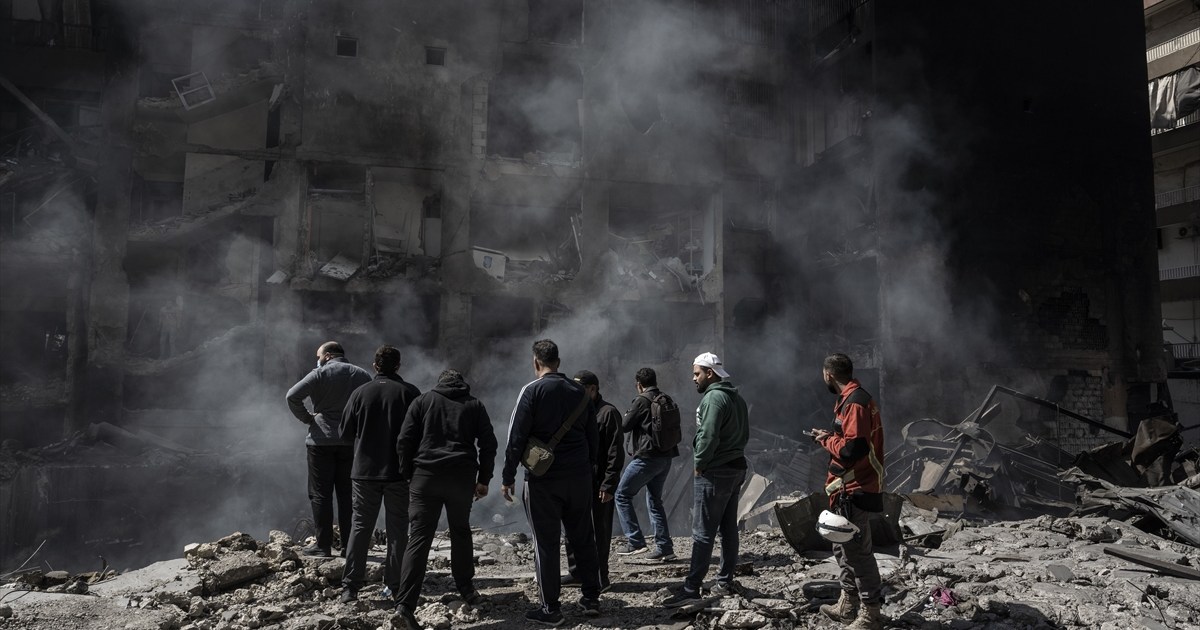
EXPLAINERIsrael and Hezbollah continued to trade attacks on Friday – although at a reduced intensity.Civilians inspect a residential building after an Israeli strike hit the Corniche El-Mazraa district in Beirut, Lebanon, on April 9, 2026. The Israeli army carried out 100 simultaneous attacks across Lebanon, including on the capital [Murat Şengül/Anadolu]Published On 10 Apr 2026Israeli Prime Minister Benjamin Netanyahu says he has directed his cabinet to begin ceasefire talks with Lebanon “as soon as possible”, a day after his country unleashed the largest-scale attacks yet on its neighbour, killing at least 300 people and injuring 1,150.In an X statement in Hebrew on Thursday, Netanyahu said he had made the request after “repeated calls” from Beirut to open direct talks but confirmed that Israel is still striking Hezbollah – even as analysts warn that the attacks could derail peace talks between the United States and Iran set to begin on Saturday in Pakistan.Recommended Stories list of 4 itemslist 1 of 4Hospitals in Beirut struggle to deal with casualties after Israeli attackslist 2 of 4US-Iran ceasefire: Uncertainty over what’s nextlist 3 of 4Iran war: Ceasefire talks to Lebanon, what’s happening on day 42?list 4 of 4Iran ceasefire: Not an off-ramp for the US but a life-saving ejection seatend of listIsrael’s heaviest bombing of Lebanon on Wednesday came without usual warnings, just hours after the US and Iran announced a ceasefire in the US-Israel war on Iran that began on February 28.Strikes continued in Lebanon on Friday morning, although at a reduced pace. Hezbollah, too, has fired missiles into Israel.Experts say Wednesday’s bloody attacks were likely designed to derail Tehran’s talks with the US, as Iran has insisted that halting fire on both Iran and Lebanon would form the basis for any negotiations.Iran-backed Hezbollah began hitting Israel in defence of Tehran, opening up another front in the US-Israel war. Israel says its retaliation and consequent invasion of southern Lebanon are aimed at targeting fighter positions, but thousands of civilians have died, and more than one million people have been displaced.Israel occupied southern Lebanon for 18 years from 1982 in response to armed attacks from Palestinian fighters, and Hezbollah was formed in resistance to that invasion.The group has since morphed into a political party represented in parliament, but its armed wing, described as equivalent to a medium-sized army and stronger than the Lebanese military, has remained active.Here’s what we know about the Lebanese-Israeli talks:A woman and an injured man, centre, are rescued by firefighters from a destroyed building that was hit in an Israeli air strike in central Beirut, Lebanon, on Wednesday, April 8, 2026 [Emilio Morenatti/AP]Are ceasefire talks really happening?As of Friday morning, both the Israeli and Lebanese governments have signalled willingness to hold peace talks, but Israel’s continued bombing of the country is causing scepticism among analysts as to its real intentions.For Israel, disarming Hezbollah is a priority, Netanyahu reiterated in a televised address on Thursday, adding that Israel would continue striking the group even as he directed ceasefire talks to start.In an X statement, Israeli army chief Eyal Zamir said on Friday: “We continue to fight against Hezbollah with great intensity … we are prepared to resume fighting with great determination if required at any given moment.”Lebanese Prime Minister Joseph Aoun, in his response to Netanyahu’s announcement of talks, said he welcomed the move.However, Beirut has insisted that there will be no negotiations with the country under fire.Israel may have no choice but to comply, analysts say, as reports emerge that Washington, racing to protect its talks with Iran as a priority, is applying pressure. The US has even offered to mediate and host Israeli and Lebanese negotiators, an unnamed US official told AFP news agency.The Wall Street Journal reported that US President Donald Trump pressured Netanyahu to stop bombing Lebanon after Wednesday’s barrage of bombs.In a shorter than usual phone call, Trump delivered a stern warning to Netanyahu over Israel’s actions in Lebanon, the WSJ reported.The US president confirmed to NBC on Thursday that he spoke with Netanyahu and that Israel will “be sort of a little more low-key”.Vice President JD Vance also said that Israel has agreed to “check itself” in Lebanon.Israel is also under pressure from its European allies, particularly Germany and France, to cease attacks on Lebanon.But talks between the Lebanese and Israeli governments – if they happen – will be uneasy, Al Jazeera’s Zeina Khodr said, reporting from Beirut.While the Lebanese government itself banned Hezbollah’s military wing in March, blaming it for dragging Lebanon into the US-Israel war on Iran, Beirut will insist on a halt to all hostilities before any talks, she said.On the other hand, Hezbollah, which holds 15 of 128 seats in parliament, has rejected any talks with Israel.Analysts say Iran’s insistence on including Lebanon in the agreement, while beneficial, also risks the ire of the government in Beirut. Lebanon, they say, wants a greater say over when it enters or exits a war.The mother and wife of Lebanese man Mohammed Zain al-Abidin Shehab, who was killed in an Israeli strike on Wednesday, react during his funeral in Beirut, Lebanon, on April 9, 2026 [Mohamad Azakir/Reuters]Why does Lebanon matter for the US-Iran ceasefire negotiations?Iran was clear in its 10-point proposal to the US that Israel and Washington must halt attacks on all of its allies – including Hezbollah – for the two-week ceasefire announced on Tuesday to hold and for negotiations to begin.Against that backdrop, Israel’s continued bombardment of Lebanon is now violating Tehran’s red lines, analysts point out, and could derail the fragile truce between the US and Iran.Israel said it killed an aide to Hezbollah chief Naim Qassem in the major escalation on Wednesday and confirmed on Friday it still had troops in southern Lebanon.Iran has condemned the attacks on Lebanon, saying it is a “grave violation” of its deal with the US and has threatened “strong responses”.Middle East analyst Mohamad Elmasry said Tehran will likely insist on a Lebanon ceasefire in the Islamabad talks.Not doing so “would be stabbing the Lebanese, stabbing Hezbollah in the back” from Iran’s point of view, Elmasry told Al Jazeera.“They understand Israel is on a path to a ‘Greater Israel’, as they call it; they are going through systematically country by country … so it’s really important for the entire region that Israel stops.”Why was there confusion over whether Lebanon was included in Iran-US talks?After Iran and the US confirmed Tuesday’s ceasefire, thousands of displaced people in Lebanon began returning to their homes in celebration.Iran, in its statements, had said the two-week ceasefire included the Lebanon front.Pakistan’s Prime Minister Shehbaz Sharif, who negotiated the talks, said in his statement that the US and Israel, “along with their allies, have agreed to an immediate ceasefire everywhere including Lebanon and elsewhere, EFFECTIVE IMMEDIATELY”.The US did not initially comment on Lebanon in its statements. Trump did say that “almost all of the various points of past contention have been agreed to between the United States and Iran”.He also called Iran’s 10-point plan “workable”.But after Wednesday’s devastating bombing in Beirut, Trump said Lebanon was never a part of the ceasefire deal with Iran. The White House doubled down on that assertion, insisting that Lebanon was not a part of the agreement. US Vice President JD Vance, who is expected to lead his country’s delegation at the talks in Islamabad on Saturday, also said that the Iranians had a “genuine misunderstanding” — and that Lebanon was not included in the truce.Nevertheless, Vance said that Israel would reduce the intensity of its attacks on Lebanon to give the Islamabad dialogue a chance, a claim that Trump echoed on Thursday.
SRCAl Jazeera
LANGEN
LEANCenter
WORDS1 268
ENT9
FRI · 2026-04-10 · 10:34 GMTBRIEF NSR-2026-0410-61817
NSR-2026-0410-61817News Report·EN·Conflict
Will Israel and Lebanon start ceasefire talks?
Following large-scale Israeli attacks on Lebanon that resulted in significant casualties, Israeli Prime Minister Benjamin Netanyahu has directed his cabinet to begin ceasefire talks with Lebanon. The announcement comes after repeated calls from Beirut for direct talks.
Shola LawalAl JazeeraFiled 2026-04-10 · 10:34 GMTLean · CenterRead · 6 min
Al JazeeraFIG 01
Reading time
6min
Word count
1 268words
Sources cited
1cited
Entities identified
9entities
Quality score
100%
§ 01
Briefing Summary
AI-generatedNEWSAR · AI
Following large-scale Israeli attacks on Lebanon that resulted in significant casualties, Israeli Prime Minister Benjamin Netanyahu has directed his cabinet to begin ceasefire talks with Lebanon. The announcement comes after repeated calls from Beirut for direct talks. Despite the call for negotiations, Israel continues to strike Hezbollah targets in Lebanon, while Hezbollah also fires missiles into Israel. Analysts suggest the recent Israeli attacks may be an attempt to derail upcoming peace talks between the United States and Iran, as Iran has stated that a ceasefire in both Iran and Lebanon is a prerequisite for negotiations. The conflict between Israel and Hezbollah began as a result of the US-Israel war on Iran, with Hezbollah acting in defense of Tehran.
Confidence 0.90Sources 1Claims 5Entities 9
§ 02
Article analysis
Model · rule-basedFraming
Conflict
Diplomatic
Tone
Mixed Tone
AI-assessed
CalmNeutralAlarmist
Factuality
0.70 / 1.00
Factual
LowHigh
Sources cited
1
Limited
FewMany
§ 03
Key claims
5 extracted01
Israeli Prime Minister Benjamin Netanyahu says he has directed his cabinet to begin ceasefire talks with Lebanon “as soon as possible”.
quoteBenjamin Netanyahu
Confidence
1.00
02
Israel’s heaviest bombing of Lebanon on Wednesday came without usual warnings.
factual
Confidence
0.90
03
Israel unleashed the largest-scale attacks yet on its neighbour, killing at least 300 people and injuring 1,150.
statistic
Confidence
0.90
04
Iran-backed Hezbollah began hitting Israel in defence of Tehran, opening up another front in the US-Israel war.
factual
Confidence
0.80
05
Israel is still striking Hezbollah even as analysts warn that the attacks could derail peace talks between the United States and Iran.
factual
Confidence
0.80
§ 04
Full report
6 min read · 1 268 words§ 05
Entities
9 identifiedKey playerOppositionContextPositiveNeutralNegative
Organizations1
§ 06
Keywords & salience
9 termsceasefire talks
1.00
israel
0.90
lebanon
0.90
hezbollah
0.80
attacks
0.70
strikes
0.60
us-iran
0.60
negotiations
0.50
casualties
0.40
§ 07
Topic connections
Interactive graph Network visualization showing 51 related topics
View Full Graph Person Organization Location Event|Click node to navigate|Edge numbers = shared articles