Oil prices in Japan surged more than 80 per cent in the month following the US-Israeli strikes on Iran that triggered the closure of Hormuz.Fuel prices are displayed at a petrol station in Tokyo, Japan, last month. Photo: EPAIn some cities, including Kobe and Kyoto, petrol prices doubled, according to Japanese media – with predictable knock-on disruption to public transport.The price spike put further strain on an economy already grappling with inflation and supply-chain pressures on petroleum-derived goods.“For a government that campaigned on easing the burden of rising living costs, higher electricity and fuel prices could quickly translate into both economic and political pressure,” said Bakshi, referring to Prime Minister Sanae Takaichi’s administration.Energy-intensive sectors such as petrochemicals, refining and manufacturing typically felt such shocks first, she said, adding that the combination of high, volatile energy prices and a weak yen risked rapidly driving up costs for households and industry alike.‘Real risk to Japan’Among developed nations, Japan is one of the most vulnerable to energy shocks, according to Jane Nakano, a senior fellow at the Centre for Strategic and International Studies in Washington who specialises in energy security.Further ReadingNot only does its cramped geography limit the use of renewables, but the 2011 Fukushima disaster, which forced the evacuation of 164,000 people from radiation-contaminated areas, left a legacy of scepticism towards nuclear power.Most Japanese refineries, meanwhile, are designed to optimally process medium crude: the grade common in Middle Eastern fields.For decades, Japan has imported almost all of its oil from the Gulf – a dependency that only grew from 2022 amid sanctions on Russia following the invasion of Ukraine.Like other members of the Group of Seven, it pledged to stop importing Russian oil in the wake of that invasion, causing it to lean even more heavily on Saudi and Emirati crude that the closure of Hormuz choked off.“This war in the Gulf is unprecedented and is a real risk to Japan,” said Ben Cahill, director for energy markets and policy at the University of Texas’ Centre for Energy and Environmental Systems Analysis.Oil and oil products still account for the largest share, at 37 per cent, of Japan’s total energy mix, according to the International Energy Agency.Switching to light crude from the US or heavy crude from Latin America would entail additional processing costs, said energy policy analyst Masahide Takahashi, a senior research fellow at the Middle East Institute of Japan.An All Nippon Airways aeroplane flies past an oil refinery as it approaches Tokyo’s Haneda airport in Japan on March 17. Photo: ReutersThe investment needed to retrofit refineries had also grown harder to justify as an ageing, shrinking population generated less demand, he said.From mid-March, Tokyo began releasing 80 million barrels of oil, equivalent to roughly 45 days of demand, in the largest-ever withdrawal from its strategic reserves. The government also rolled out subsidies in a bid to cap petrol prices at 170 yen (HK$8.40) per litre – some 20 yen lower than the record highs seen last month.Such measures could cushion the blow, said energy finance specialist Michiyo Miyamoto of the US-based Institute for Energy Economics and Financial Analysis. “But they do not address the root cause of vulnerability and if the crisis persists, they will become increasingly costly and fiscally unsustainable.”“Prolonged reliance” on fossil fuel subsidies was also in direct conflict with Japan’s stated commitment to phasing hydrocarbons out, she added.A further release from Japan’s strategic oil reserve equivalent to 20 days of demand is under consideration for May and the government is also reportedly preparing requests for businesses and households to curb electricity and fuel consumption.While encouraging conservation made sense, Takahashi cautioned that the government needed to guard against a scenario in which “restraining economic activity leads to a deterioration in the economy”.A tanker sits anchored in Muscat, Oman, as the traffic is down in the Strait of Hormuz amid the war on Iran. Photo: ReutersHormuz exceptionsEven as Iran has restricted passage through the Strait of Hormuz by threatening “enemy” vessels and reportedly imposing a toll of up to US$2 million per transit, some Japanese ships have been allowed through.At least three Japanese vessels successfully navigated the strait earlier this month, after Iranian Foreign Minister Abbas Araghchi told Kyodo news in an interview on March 20 that Tehran was ready to facilitate the passage of the East Asian nation’s tankers.Tokyo was initially hesitant to accept Iran’s offer, with Foreign Minister Toshimitsu Motegi telling local media on March 22 that Japan was instead focused on ensuring “conditions where everyone can pass”.On Wednesday, Prime Minister Takaichi said she had urged Iran’s President Masoud Pezeshkian to ensure the safety of vessels sailing through the strait during a 25-minute phone call, in which she also welcomed the ceasefire agreement.Energy policy analyst Takahashi said Japan had been wary of engaging in direct negotiations with Iran while the conflict with the US was ongoing, for fear of undermining its relationship with Washington.Yet that same alliance with the world’s leading oil-and-gas supplier has also helped softened the energy shock, according to Nakano.US President Donald Trump greets Japan’s Prime Minister Sanae Takaichi during a dinner at the White House on March 19. Photo: APTokyo has turned to Washington in recent weeks for naphtha – a liquid hydrocarbon mixture used as a petrol additive and to manufacture plastics – to cover shortfalls from the Middle East, for example.The US is also one of Japan’s top five suppliers of liquefied natural gas, which accounted for roughly 32 per cent of Japan’s power generation in 2024, according to Bakshi – despite making up less than 21 per cent of total energy supply that year.LNG, a processed gas used mainly for electricity and heating, burns cleaner than oil or coal, but cannot be stored long-term without significant losses to evaporation.Japan has no pipelines for importing oil and gas, so is entirely dependent on tanker deliveries – the bulk of which come from Australia, supplying over 40 per cent of its needs – and limited terminal storage to sustain LNG power generation.“This structural reliance on uninterrupted global supply chains increases vulnerability to geopolitical disruptions,” Bakshi said.Restarting reactorsJapan’s latest long-term strategic energy plan, published in February 2025, stressed security and stability in the wake of disruptions such as Russia’s invasion of Ukraine.Analysts say achieving that will require action on decisions that Tokyo has long deferred, with restarting more nuclear reactors being one of the most consequential.Japan began restarting reactors closed in the wake of Fukushima earlier this year and Bakshi said the current energy crisis could add momentum to that push, especially for those plants that were already close to gaining regulatory approval.Refinery upgrades are equally urgent. Takahashi argued that Japan should expand its procurement of more expensive crude from the US and Canada in a bid to reduce the Middle East’s share of Japan’s oil mix “to below 70 per cent”.“The government should also provide financial support for the refinery upgrades needed to make this possible,” he said, adding that turning to Russian oil would not be “appropriate” given Tokyo’s continued support for Ukraine.Accelerating the shift to electric and hydrogen fuel-cell vehicles would also help trim long-term petroleum demand.On the supply side, Bakshi said Japan might increasingly turn to spot LNG markets to cover shortfalls – though she cautioned that spot markets were far more volatile and expensive than long-term contracts, with buyers facing fierce competition during exactly the kind of crises that Japan was now experiencing.04:33Fukushima 15 years on: why Japan’s younger generation is embracing nuclear powerFukushima 15 years on: why Japan’s younger generation is embracing nuclear powerJapan does have one well-worn tool in reserve: energy conservation campaigns. After Fukushima, the government launched setsuden (“saving electricity”) drives to reduce consumption. Similar appeals may follow if the current crisis drags on.But Bakshi said such a push could hit a hard ceiling: “Japan is already one of the world’s most energy-efficient economies, which means the scope for additional household conservation may be relatively limited.”Looking ahead, Bakshi said Japan was likely to combine “diplomacy, supply diversification and domestic energy transition” to buffer against future shocks – a strategy already visible in its recent international engagements.Earlier this month, Japan agreed to step up collaboration with France on nuclear power, including the development of next-generation fast reactors, and recently signed pacts on critical minerals and energy security cooperation with Indonesia.Miyamoto framed the current crisis as both a challenge and an opportunity, but noted that Japan’s public finance institutions had historically directed far more funding to fossil fuels than to clean energy across Asia.Roughly 31 per cent of agreements under the Japan-proposed Asia Zero Emission Community involve fossil fuel technologies, despite it purportedly being designed to facilitate net-zero energy transitions across the region.Tepco’s Kashiwazaki-Kariwa nuclear power plant in Japan’s Niigata prefecture. Earlier this year, the company began restarting the facility that had been closed in the wake of the Fukushima disaster. Photo: KyodoOf the 49 new agreements signed with Southeast Asian partners last October, meanwhile, 30 per cent involved fossil fuels against just 22 per cent for renewables.That matters, because the crisis is already reshaping energy strategy across the region. From the Philippines and Vietnam to Malaysia, Indonesia and Singapore, supply insecurity is accelerating a push towards renewables not as an environmental aspiration but as a matter of national energy security, according to Miyamoto.The region will need around US$190 billion in clean energy investment and US$300 billion in grid infrastructure by 2035, according to a 2024 International Energy Agency report.“Japan has the capital, technology and regional relationships to help meet that demand, if it chooses to,” Miyamoto said.“The question now is whether it will extend that leadership to clean energy, or remain anchored to a strategy this crisis has once again exposed as structurally fragile.”
SRCSouth China Morning Post
LANGEN
LEANCenter-Right
WORDS1 617
ENT12
SAT · 2026-04-11 · 00:00 GMTBRIEF NSR-2026-0411-62720
NSR-2026-0411-62720News Report·EN·Economic Impact
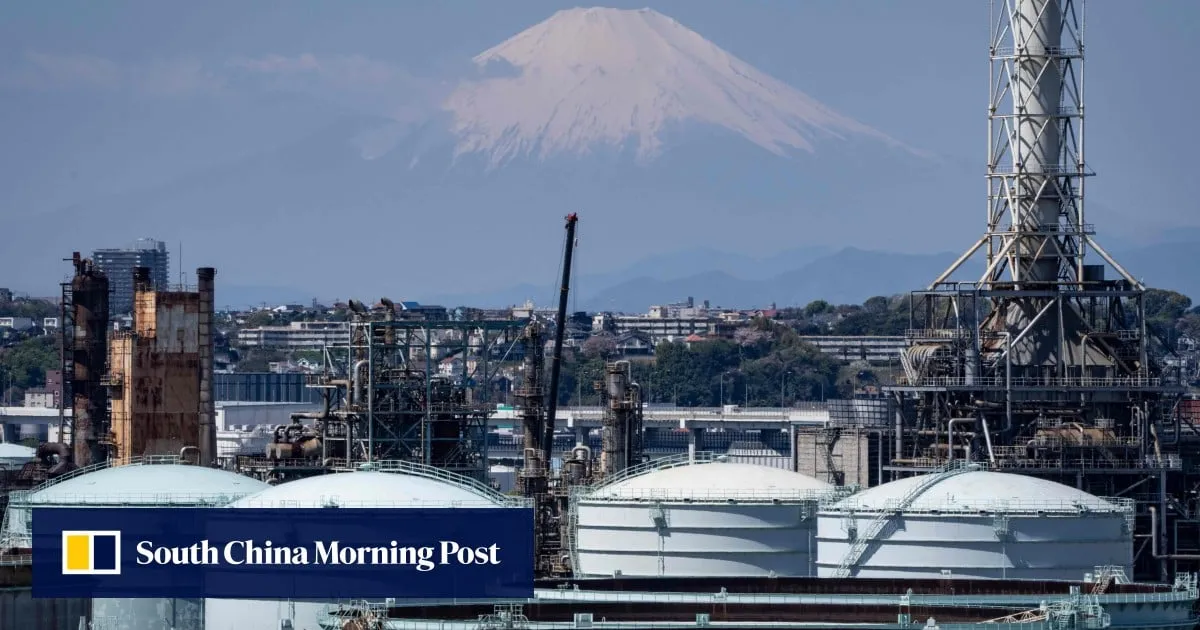
Japan’s Middle East oil habit gets an Iran war reality check
Following a hypothetical US-Israeli strike on Iran and the subsequent closure of the Strait of Hormuz, Japan experienced a surge in oil prices, with some cities seeing prices double. This price spike strains Japan's economy, already facing inflation and supply-chain issues, potentially impacting energy-intensive sectors and household costs.
Maria SiowSouth China Morning PostFiled 2026-04-11 · 00:00 GMTLean · Center-RightRead · 7 min
South China Morning PostFIG 01
Reading time
7min
Word count
1 617words
Sources cited
5cited
Entities identified
12entities
Quality score
100%
§ 01
Briefing Summary
AI-generatedNEWSAR · AI
Following a hypothetical US-Israeli strike on Iran and the subsequent closure of the Strait of Hormuz, Japan experienced a surge in oil prices, with some cities seeing prices double. This price spike strains Japan's economy, already facing inflation and supply-chain issues, potentially impacting energy-intensive sectors and household costs. Japan's heavy reliance on Middle Eastern oil, exacerbated by sanctions on Russia, makes it particularly vulnerable to energy shocks. The country's limited renewable energy options and skepticism towards nuclear power further compound the problem. Switching to alternative crude oil sources would also entail additional processing costs.
Confidence 0.90Sources 5Claims 5Entities 12
§ 02
Article analysis
Model · rule-basedFraming
Economic Impact
National Security
Tone
Mixed Tone
AI-assessed
CalmNeutralAlarmist
Factuality
0.70 / 1.00
Factual
LowHigh
Sources cited
5
Well sourced
FewMany
§ 03
Key claims
5 extracted01
Oil and oil products still account for the largest share, at 37 per cent, of Japan’s total energy mix.
statisticInternational Energy Agency
Confidence
1.00
02
Tokyo began releasing 80 million barrels of oil, equivalent to roughly 45 days of demand, from mid-March.
factualArticle
Confidence
0.90
03
This war in the Gulf is unprecedented and is a real risk to Japan.
quoteBen Cahill, director for energy markets and policy at the University of Texas
Confidence
0.90
04
Oil prices in Japan surged more than 80 per cent in the month following the US-Israeli strikes on Iran that triggered the closure of Hormuz.
factualArticle
Confidence
0.90
05
The price spike put further strain on an economy already grappling with inflation and supply-chain pressures.
factualArticle
Confidence
0.80
§ 04
Full report
7 min read · 1 617 words§ 05
Entities
12 identifiedKey playerOppositionContextPositiveNeutralNegative
People3
Locations8
Events1
§ 06
Keywords & salience
10 termsoil prices
0.90
japan
0.90
energy security
0.70
middle east
0.70
energy shocks
0.60
hormuz closure
0.60
fuel prices
0.60
russian oil sanctions
0.50
petroleum-derived goods
0.40
energy mix
0.40
§ 07
Topic connections
Interactive graph Network visualization showing 51 related topics
View Full Graph Person Organization Location Event|Click node to navigate|Edge numbers = shared articles