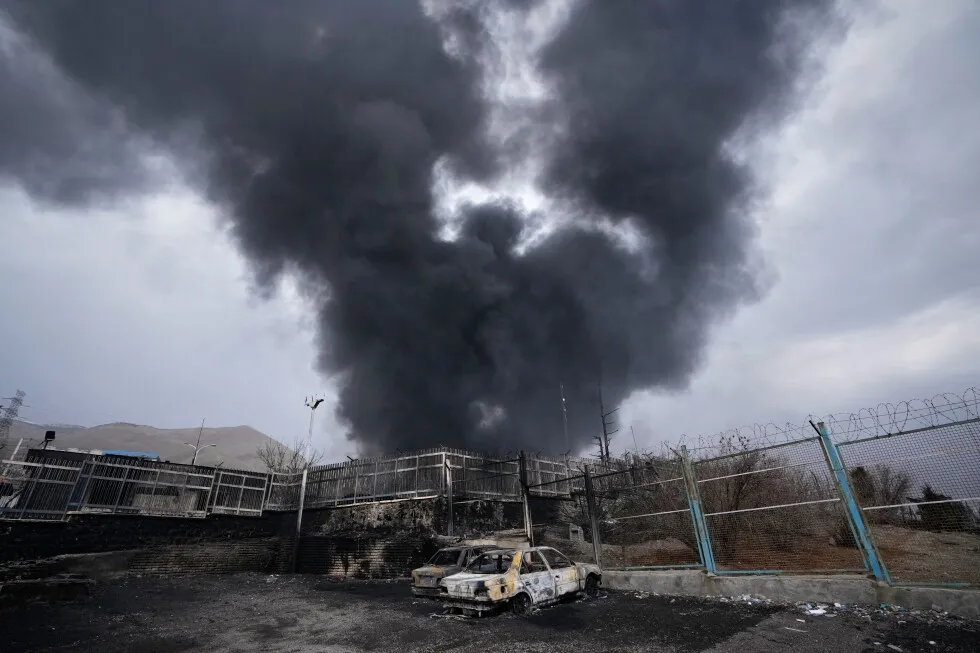
A thick plume of smoke rises from an oil storage facility hit by a U.S.-Israeli strike in Tehran, Iran, March 8, 2026. (AP Photo/Vahid Salemi, File) 2026-04-11T04:05:20Z The long-term fallout of the war in Iran is only beginning to take shape, but this much is clear: The conflict has left the Middle East unsettled, alliances strained and the world facing uncertain shifts in the balance of economic and military power. Iran’s theocracy is tattered but alive, with new economic leverage. The U.S. and Israel will hold elections this year, their leaders potentially facing voters having fallen short of their war aims. The NATO alliance, already strained, is under even more pressure. The Gulf Arab states face an emboldened Iran in their backyard. At this inflection point, as the U.S. and Iran prepare for talks this weekend in Pakistan, AP journalists in the Middle East and Washington share their assessments on how the war is still reverberating across the world during the tenuous ceasefire: Israel If Prime Minister Benjamin Netanyahu were to be graded for the war, he would get an “incomplete.” Netanyahu set some ambitious goals at the outset of the fighting on Feb. 28, saying he wanted to remove the threats posed by Iran’s missile and nuclear programs and its support for hostile proxy groups. He also vowed to create the conditions for a popular uprising against the Iranian government. None of these goals were fully achieved. In a televised address after the ceasefire, Netanyahu acknowledged “we still have goals to complete.” But he nonetheless claimed “immense achievements.” (
SRCAssociated Press (AP)
LANGEN
LEANCenter
WORDS260
ENT8
SAT · 2026-04-11 · 06:53 GMTBRIEF NSR-2026-0411-62969
NSR-2026-0411-62969News Report·EN·Conflict
Unsettled and uncertain: What the Iran war means around the world as US and Iran enter talks
Following a U.S.-Israeli strike in Tehran on March 8, 2026, and subsequent conflict, the world faces an unsettled Middle East and strained global alliances. While Iran's government remains, it now possesses new economic leverage.
Associated Press (AP)Filed 2026-04-11 · 06:53 GMTLean · CenterRead · 2 min
Associated Press (AP)FIG 01
Reading time
2min
Word count
260words
Sources cited
1cited
Entities identified
8entities
Quality score
100%
§ 01
Briefing Summary
AI-generatedNEWSAR · AI
Following a U.S.-Israeli strike in Tehran on March 8, 2026, and subsequent conflict, the world faces an unsettled Middle East and strained global alliances. While Iran's government remains, it now possesses new economic leverage. The U.S. and Israel, both scheduled for elections this year, may face voters dissatisfied with the war's outcome. NATO is under increased pressure, and Gulf Arab states contend with a more powerful Iran. As a tenuous ceasefire holds, the U.S. and Iran are set to begin talks in Pakistan this weekend. Despite claiming "immense achievements," Israeli Prime Minister Netanyahu acknowledges uncompleted goals, including dismantling Iran's missile and nuclear programs and instigating an uprising against the Iranian government.
Confidence 0.90Sources 1Claims 5Entities 8
§ 02
Article analysis
Model · rule-basedFraming
Conflict
Political Strategy
Tone
Mixed Tone
AI-assessed
CalmNeutralAlarmist
Factuality
0.60 / 1.00
Mixed
LowHigh
Sources cited
1
Limited
FewMany
§ 03
Key claims
5 extracted01
Netanyahu vowed to create the conditions for a popular uprising against the Iranian government.
factualAP journalists
Confidence
1.00
02
In a televised address after the ceasefire, Netanyahu acknowledged “we still have goals to complete.”
quoteBenjamin Netanyahu
Confidence
1.00
03
Netanyahu set some ambitious goals at the outset of the fighting on Feb. 28, saying he wanted to remove the threats posed by Iran’s missile and nuclear programs.
factualAP journalists
Confidence
1.00
04
The U.S. and Israel will hold elections this year, their leaders potentially facing voters having fallen short of their war aims.
factualAP journalists
Confidence
1.00
05
The conflict has left the Middle East unsettled, alliances strained and the world facing uncertain shifts in the balance of economic and military power.
factualAP journalists
Confidence
0.80
§ 04
Full report
2 min read · 260 words§ 05
Entities
8 identifiedKey playerOppositionContextPositiveNeutralNegative
Organizations1
§ 06
Keywords & salience
10 termsiran war
0.90
us-iran talks
0.80
middle east
0.70
strained alliances
0.70
israel
0.60
military power
0.60
economic leverage
0.60
ceasefire
0.50
proxy groups
0.40
netanyahu
0.40
§ 07
Topic connections
Interactive graph Network visualization showing 51 related topics
View Full Graph Person Organization Location Event|Click node to navigate|Edge numbers = shared articles