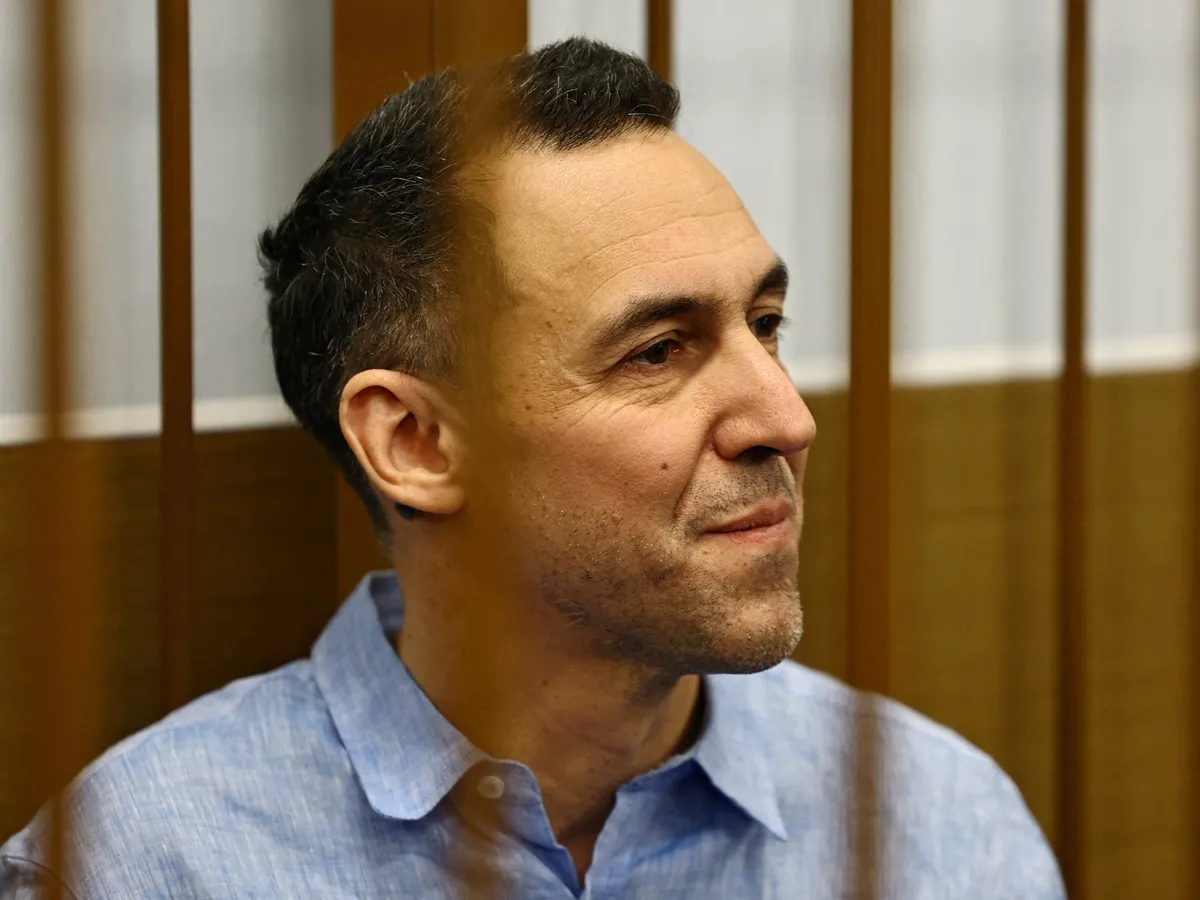
Laurent Vinatier, had been sentenced to three years for allegedly violating Russia’s so-called ‘foreign agent’ laws.French researcher Laurent Vinatier, who is suspected of illegally collecting sensitive Russian military information, sits inside an enclosure for defendants before a court hearing in Moscow, Russia [Evgenia Novozhenina/Reuters]Published On 8 Jan 2026A French researcher serving a three-year sentence in Russia has been freed in a prisoner exchange with Moscow, French and Russian officials have said.President Emmanuel Macron announced the release of Laurent Vinatier, who had been jailed for allegedly violating Russia’s so-called “foreign agent” laws, saying that the researcher was “free and back in France.”Recommended Stories list of 3 itemslist 1 of 3Will Russia accept Western troops in Ukraine?list 2 of 3China eyes risks, gains as Trump pushes for ‘spheres of influence’list 3 of 3Russia-Ukraine war: List of key events, day 1,414end of list“I share the relief of his family and loved ones. My gratitude to our diplomatic agents for their mobilisation”, Macron said on Thursday.Russia’s FSB security service announced that Vinatier, 49, had been swapped for basketball player Daniil Kasatkin, 26.Kasatkin was arrested last June at a Paris airport and was wanted by the United States over an alleged involvement in ransomware attacks – an allegation that Kasatkin has previously denied.Daniil Kasatkin, a Russian basketball player who was jailed in France and whose extradition was demanded by the United States, is seen after being released in a prisoner swap with France that saw the release of Laurent Vinatier [Russian Federal Security Service/Russia-1 TV channel via AP]The FSB said Vinatier had been pardoned by President Vladimir Putin, who promised last month to look into the case after a French journalist raised it during the Kremlin leader’s annual news conference.Vinatier was arrested by the FSB at a Moscow restaurant in June 2024 and convicted four months later of breaking laws requiring individuals deemed to be “foreign agents” to register with the Russian authorities.While behind bars, he was placed under additional investigation for espionage, and he had been facing a likely further trial in the coming months.The FSB said that the researcher, acting on instructions from Swiss intelligence, had collected sensitive political and military information, including combat and training plans, that could target Moscow’s security.However, it said that the case against Vinatier had been dismissed due to his “active repentance.”Before he was arrested, Vinatier worked for the Centre for Humanitarian Dialogue, a Swiss-based conflict mediation organisation, where fellow scholars respected him.At his trial, the researcher said he loved Russia, apologised for breaking the law, and even recited a verse by Russian poet Alexander Pushkin.Frederic Belot, a lawyer representing Vinatier, said the decision was a “huge relief”.“We are extremely happy that he has been released for Orthodox Christmas,” Belot added, who also represents Kasatkin.Franco-Russian relationsRelations between Paris and Moscow have been frosty in the wake of Russia’s full-scale invasion of Ukraine in February, 2022.While Macron has been outspoken in his support for Kyiv’s military efforts alongside other European allies, including the UK, he has also expressed a willingness to engage with Russia to end the war.On Thursday, Moscow condemned a security plan agreed by Ukraine and its European allies in the French capital, Paris, for the deployment of a peacekeeping force as an “axis of war”.Earlier this week, European leaders and United States envoys announced that the security guarantees for Kyiv would include a US-led monitoring mechanism and a European multinational force, in the event of a ceasefire.However, Moscow rejected the plan.“All such units and facilities will be considered legitimate military targets for the Russian Armed Forces,” Russian Foreign Ministry spokeswoman Maria Zakharova said in a statement.
SRCAl Jazeera
LANGEN
LEANCenter
WORDS600
ENT9
THU · 2026-01-08 · 17:48 GMTBRIEF NSR-2026-0108-6427
NSR-2026-0108-6427News Report·EN·Diplomatic
Russia releases French researcher in prisoner exchange
French researcher Laurent Vinatier, who was serving a three-year sentence in Russia for allegedly violating "foreign agent" laws, has been released in a prisoner exchange. The exchange, confirmed by both French and Russian officials, involved Vinatier being swapped for Russian basketball player Daniil Kasatkin.
Edna MohamedAl JazeeraFiled 2026-01-08 · 17:48 GMTLean · CenterRead · 3 min
Al JazeeraFIG 01
Reading time
3min
Word count
600words
Sources cited
6cited
Entities identified
9entities
Quality score
100%
§ 01
Briefing Summary
AI-generatedNEWSAR · AI
French researcher Laurent Vinatier, who was serving a three-year sentence in Russia for allegedly violating "foreign agent" laws, has been released in a prisoner exchange. The exchange, confirmed by both French and Russian officials, involved Vinatier being swapped for Russian basketball player Daniil Kasatkin. Kasatkin was arrested in Paris and wanted by the U.S. for alleged involvement in ransomware attacks. Vinatier was arrested in Moscow in June 2024 and accused of collecting sensitive military information for Swiss intelligence, claims which led to an additional investigation for espionage. He was pardoned by President Vladimir Putin as part of the agreement, and has returned to France.
Confidence 0.90Sources 6Claims 5Entities 9
§ 02
Article analysis
Model · rule-basedFraming
Diplomatic
Legal & Judicial
Tone
Measured
AI-assessed
CalmNeutralAlarmist
Factuality
0.90 / 1.00
Factual
LowHigh
Sources cited
6
Well sourced
FewMany
§ 03
Key claims
5 extracted01
The FSB said Vinatier had been pardoned by President Vladimir Putin.
factualFSB
Confidence
1.00
02
Vinatier was swapped for basketball player Daniil Kasatkin.
factualRussia’s FSB security service
Confidence
1.00
03
Vinatier had been sentenced to three years for allegedly violating Russia’s ‘foreign agent’ laws.
factual
Confidence
1.00
04
Laurent Vinatier was released in a prisoner exchange with Moscow.
factualFrench and Russian officials
Confidence
1.00
05
Kasatkin was wanted by the United States over an alleged involvement in ransomware attacks.
factual
Confidence
0.90
§ 04
Full report
3 min read · 600 words§ 05
Entities
9 identifiedKey playerOppositionContextPositiveNeutralNegative
People4
Organizations1
§ 06
Keywords & salience
10 termsprisoner exchange
1.00
france
0.90
russia
0.90
laurent vinatier
0.80
foreign agent laws
0.70
daniil kasatkin
0.60
espionage
0.60
military information
0.50
fsb
0.50
ransomware attacks
0.40
§ 07
Topic connections
Interactive graph No topic relationship data available yet. This graph will appear once topic relationships have been computed.