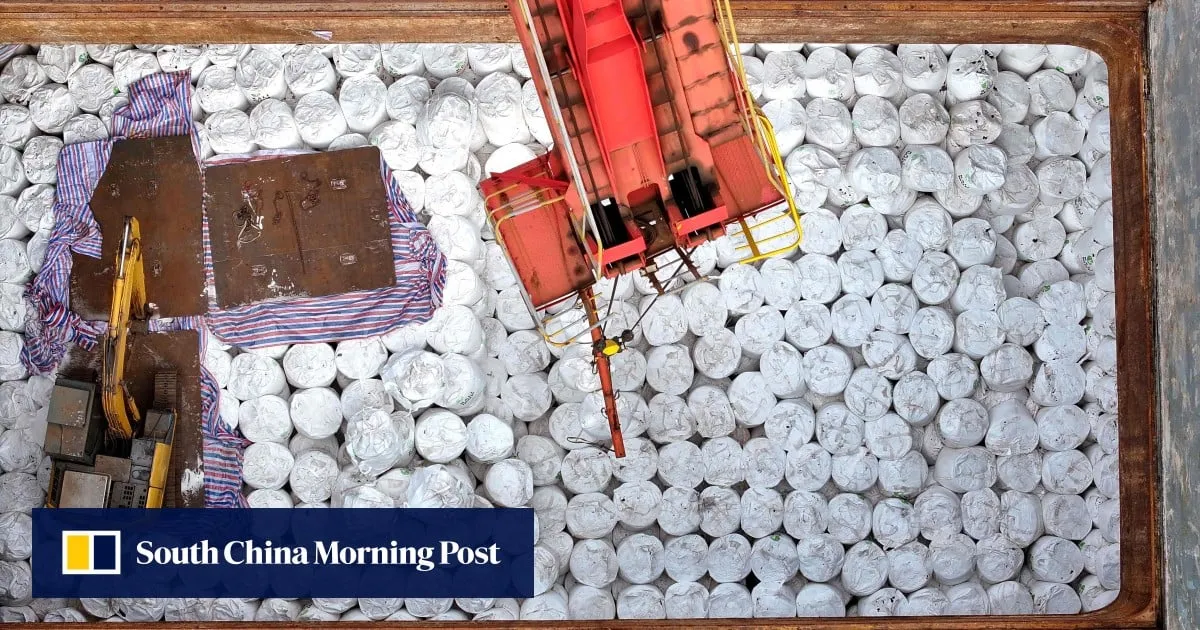
China’s reported decision to halt sulphuric acid exports, together with the failure of peace talks between the United States and Iran over the weekend, risks driving prices higher and disrupting global mining and fertiliser supply chains that have few readily available alternatives.Beijing had indicated it would halt shipments of sulphuric acid from May, according to reports from Acuity Commodities and Bloomberg, though no official announcement has been made. Economists said food security sat atop Beijing’s agenda and that the move would hit some countries especially hard.“Administrative controls are expected to amount to a de facto suspension of sulphuric acid exports from May 2026,” said Lynn Song, chief economist for Greater China at Dutch investment bank ING, though he added that he had not seen any official notifications from government agencies.“I’d imagine the intention would be to secure fertiliser supply, which is currently at risk thanks to the blockage of the Strait of Hormuz, which accounts for around a third of seaborne fertiliser trade as well as a lot of global sulphur exports.”For Beijing, he added, the contribution of sulphuric acid exports to gross domestic product was far less important than the broader goal of safeguarding food security.China was the world’s largest sulphuric acid exporter in 2025, with the total valued at US$290 million, according to the Observatory of Economic Complexity. The main destinations for these shipments included Chile, Indonesia, Saudi Arabia, Morocco and India.While most commonly used to manufacture fertiliser, sulphuric acid is also vital to the broader chemical industry, where it is used to process minerals and waste water, refine oil and synthesise chemicals.
SRCSouth China Morning Post
LANGEN
LEANCenter-Right
WORDS265
ENT12
MON · 2026-04-13 · 08:00 GMTBRIEF NSR-2026-0413-65512
NSR-2026-0413-65512News Report·EN·Economic Impact
China, the Iran war and the chemical suddenly stoking global supply fears
Reports indicate China may halt sulphuric acid exports starting May 2026, raising concerns about global supply chains. This potential action, combined with stalled US-Iran peace talks, could increase prices and disrupt the mining and fertilizer industries, which rely heavily on the chemical.
Kandy WongSouth China Morning PostFiled 2026-04-13 · 08:00 GMTLean · Center-RightRead · 2 min
South China Morning PostFIG 01
Reading time
2min
Word count
265words
Sources cited
1cited
Entities identified
12entities
Quality score
100%
§ 01
Briefing Summary
AI-generatedNEWSAR · AI
Reports indicate China may halt sulphuric acid exports starting May 2026, raising concerns about global supply chains. This potential action, combined with stalled US-Iran peace talks, could increase prices and disrupt the mining and fertilizer industries, which rely heavily on the chemical. China was the world's largest exporter of sulphuric acid in 2025, with key destinations including Chile, Indonesia, Saudi Arabia, Morocco, and India. The move is reportedly motivated by Beijing's focus on securing domestic fertilizer supply and food security, especially given disruptions in the Strait of Hormuz, a critical trade route for fertilizers and sulfur. Sulphuric acid is essential for fertilizer production, mineral processing, wastewater treatment, oil refining, and chemical synthesis.
Confidence 0.90Sources 1Claims 5Entities 12
§ 02
Article analysis
Model · rule-basedFraming
Economic Impact
National Security
Tone
Measured
AI-assessed
CalmNeutralAlarmist
Factuality
0.70 / 1.00
Factual
LowHigh
Sources cited
1
Limited
FewMany
§ 03
Key claims
5 extracted01
China was the world’s largest sulphuric acid exporter in 2025, with the total valued at US$290 million.
statisticObservatory of Economic Complexity
Confidence
1.00
02
Beijing had indicated it would halt shipments of sulphuric acid from May, according to reports.
factualAcuity Commodities and Bloomberg
Confidence
0.90
03
The Strait of Hormuz accounts for around a third of seaborne fertiliser trade.
factualLynn Song, chief economist for Greater China at ING
Confidence
0.80
04
China’s reported decision to halt sulphuric acid exports risks disrupting global mining and fertiliser supply chains.
prediction
Confidence
0.80
05
Administrative controls are expected to amount to a de facto suspension of sulphuric acid exports from May 2026.
predictionLynn Song, chief economist for Greater China at ING
Confidence
0.70
§ 04
Full report
2 min read · 265 words§ 05
Entities
12 identifiedKey playerOppositionContextPositiveNeutralNegative
People1
Organizations1
§ 06
Keywords & salience
9 termssulphuric acid
1.00
china
0.90
exports
0.80
fertiliser
0.70
supply chain
0.60
food security
0.60
iran
0.50
mining
0.40
strait of hormuz
0.40
§ 07
Topic connections
Interactive graph Network visualization showing 51 related topics
View Full Graph Person Organization Location Event|Click node to navigate|Edge numbers = shared articles