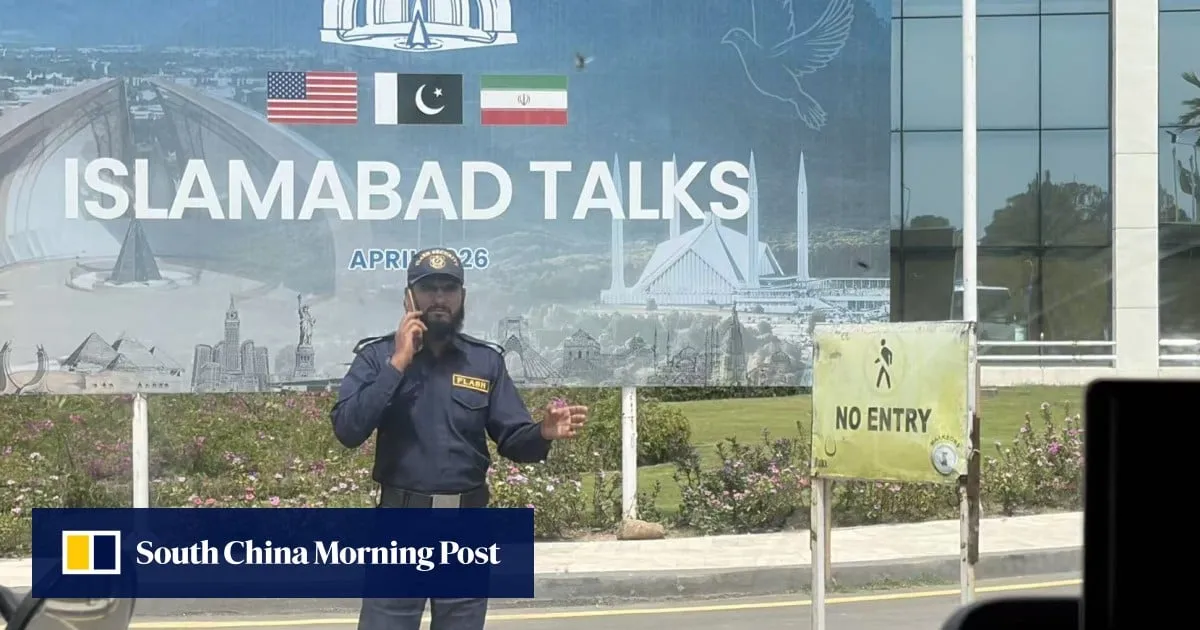
Lack of mutual trust means a strategic miscalculation could trigger renewed conflict at any moment, analysts say3-MIN READ3-MIN2 ListenPublished: 9:00pm, 14 Apr 2026Updated: 10:01pm, 14 Apr 2026Negotiating teams from America and Iran could return to Islamabad as early as the end of this week, days after 21 hours of talks in the Pakistani capital ended without a deal, Reuters reported.US President Donald Trump on Monday said that “we’ve been called by the other side” and “they want to work a deal”.A limited or temporary settlement remained possible as the two sides were cautiously approaching a de-escalation despite a total deficit of trust, according to analysts.But they warned that the path forward hinged on how pragmatically both sides adjusted their expectations, with a lack of mutual trust meaning a strategic miscalculation could trigger renewed conflict at any moment.Mohammad Bagher Ghalibaf, Iran’s lead negotiator and speaker of the country’s parliament, said no deal had been reached because Washington failed to win Tehran’s trust. Iranians dismiss Trump threats to block Hormuz StraitIranians dismiss Trump threats to block Hormuz StraitMeanwhile, US Vice-President J.D. Vance cited Tehran’s failure to make a “fundamental commitment of will” not to develop nuclear weapons.
SRCSouth China Morning Post
LANGEN
LEANCenter-Right
WORDS195
ENT11
TUE · 2026-04-14 · 13:00 GMTBRIEF NSR-2026-0414-67568
NSR-2026-0414-67568News Report·EN·Diplomatic
Will the next round of US-Iran talks bring peace or more confrontation?
US and Iranian negotiating teams may return to Islamabad for further talks after a previous round, lasting 21 hours, ended without a deal. Despite a lack of mutual trust, analysts suggest a limited settlement is possible as both sides cautiously approach de-escalation.
Cao JiaxuanSouth China Morning PostFiled 2026-04-14 · 13:00 GMTLean · Center-RightRead · 1 min
South China Morning PostFIG 01
Reading time
1min
Word count
195words
Sources cited
5cited
Entities identified
11entities
Quality score
100%
§ 01
Briefing Summary
AI-generatedNEWSAR · AI
US and Iranian negotiating teams may return to Islamabad for further talks after a previous round, lasting 21 hours, ended without a deal. Despite a lack of mutual trust, analysts suggest a limited settlement is possible as both sides cautiously approach de-escalation. However, they warn that a strategic miscalculation could trigger renewed conflict. Iran's lead negotiator stated that Washington failed to gain Tehran's trust, while the US Vice-President cited Tehran's lack of commitment to halt nuclear weapons development as a key obstacle. The talks aim to address ongoing tensions between the two nations, but success hinges on pragmatic adjustments to expectations.
Confidence 0.90Sources 5Claims 5Entities 11
§ 02
Article analysis
Model · rule-basedFraming
Diplomatic
Conflict
Tone
Measured
AI-assessed
CalmNeutralAlarmist
Factuality
0.60 / 1.00
Mixed
LowHigh
Sources cited
5
Well sourced
FewMany
§ 03
Key claims
5 extracted01
US Vice-President J.D. Vance cited Tehran’s failure to make a “fundamental commitment of will” not to develop nuclear weapons.
quoteJ.D. Vance
Confidence
1.00
02
Mohammad Bagher Ghalibaf said no deal had been reached because Washington failed to win Tehran’s trust.
quoteMohammad Bagher Ghalibaf
Confidence
1.00
03
US President Donald Trump said that “we’ve been called by the other side” and “they want to work a deal”.
quoteDonald Trump
Confidence
1.00
04
Negotiating teams from America and Iran could return to Islamabad as early as the end of this week.
factualReuters
Confidence
0.90
05
A limited or temporary settlement remained possible.
predictionanalysts
Confidence
0.60
§ 04
Full report
1 min read · 195 words§ 05
Entities
11 identifiedKey playerOppositionContextPositiveNeutralNegative
People3
Organizations1
§ 06
Keywords & salience
9 termsus-iran talks
1.00
mutual trust
0.80
strategic miscalculation
0.70
renewed conflict
0.70
de-escalation
0.60
negotiations
0.50
nuclear weapons
0.50
donald trump
0.40
hormuz strait
0.40
§ 07
Topic connections
Interactive graph Network visualization showing 51 related topics
View Full Graph Person Organization Location Event|Click node to navigate|Edge numbers = shared articles