NEWSAR
Multi-perspective news intelligence
SRCAssociated Press (AP)
LANGEN
LEANCenter
WORDS1 141
ENT9
THU · 2026-04-16 · 10:23 GMTBRIEF NSR-2026-0416-70005
News/Taiwan’s chipmaker TSMC reports 58% jump in profit, warns ab…
NSR-2026-0416-70005News Report·EN·Economic Impact

Taiwan’s chipmaker TSMC reports 58% jump in profit, warns about Iran war impacts

Taiwan Semiconductor Manufacturing Corp., a leading global chipmaker, reported a 58% increase in profit for the January-March quarter, driven by strong demand from the artificial intelligence boom. The company's net quarterly profit reached a record 572.5 billion new Taiwan dollars ($18.1 billion), exceeding analyst expectations.
Associated Press (AP)Filed 2026-04-16 · 10:23 GMTLean · CenterRead · 5 min
Taiwan’s chipmaker TSMC reports 58% jump in profit, warns about Iran war impacts
Associated Press (AP)FIG 01
Reading time
5min
Word count
1 141words
Sources cited
2cited
Entities identified
9entities
Quality score
100%
§ 01

Briefing Summary

AI-generated
NEWSAR · AI

Taiwan Semiconductor Manufacturing Corp., a leading global chipmaker, reported a 58% increase in profit for the January-March quarter, driven by strong demand from the artificial intelligence boom. The company's net quarterly profit reached a record 572.5 billion new Taiwan dollars ($18.1 billion), exceeding analyst expectations. This represents a 58.3% increase compared to the same period last year and a 13.2% rise over the previous quarter. Revenue grew 8.4% in the January-March period, reaching $35.9 billion. TSMC expects revenue to further grow between $39 billion and $40.2 billion for the April-June quarter, driven by continued AI-related demand. The company's CEO, C.C. Wei, attributed the strong performance to its expansion of chip fabrication plants in the US, Japan, and Taiwan, focusing on advanced 3-nanometer semiconductors used in smartphones and AI products.

Confidence 0.90Sources 2Claims 5Entities 9
§ 02

Article analysis

Model · rule-based
Framing
Economic Impact
Technology
Tone
Measured
AI-assessed
CalmNeutralAlarmist
Factuality
0.80 / 1.00
Factual
LowHigh
Sources cited
2
Limited
FewMany
§ 03

Key claims

5 extracted
01

AI-related demand continues to be extremely robust.

quoteC.C. Wei, TSMC’s CEO and chairman
Confidence
1.00
02

Revenue increased 8.4% in the January-March period from the previous three months to $35.9 billion.

statisticnull
Confidence
1.00
03

TSMC reported a record net quarterly profit of 572.5 billion new Taiwan dollars ($18.1 billion) for the first three months of the year.

statisticnull
Confidence
1.00
04

TSMC reported a 58% jump in profit for the January-March quarter.

factualnull
Confidence
1.00
05

TSMC expected revenue to further grow to between $39 billion and $40.2 billion for the current April-June quarter.

predictionnull
Confidence
0.90
§ 04

Full report

5 min read · 1 141 words
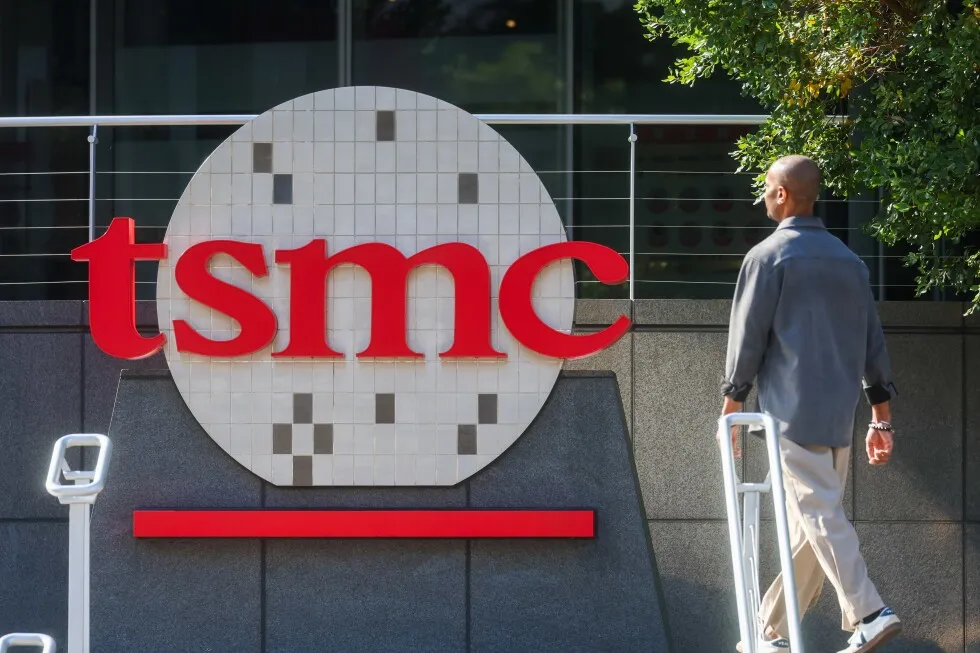
FILE -A worker walks past the logo of TSMC or Taiwan Semiconductor Manufacturing Corp., a Taiwanese multinational semiconductor contract manufacturing and design company, in Hsinchu, Taiwan, on Thursday, Jan. 29, 2026. (AP Photo/Daniel Ceng, File) 2026-04-16T10:05:01Z HONG KONG (AP) — Taiwan’s chipmaker TSMC, one of the world’s largest companies, reported a 58% jump in profit on Thursday for the January-March quarter, thanks to strong demand driven by the artificial intelligence boom even as the Iran war was driving up costs. Taiwan Semiconductor Manufacturing Corp., a key supplier for Apple and Nvidia and the largest contract chipmaker in the world, reported a record net quarterly profit of 572.5 billion new Taiwan dollars ($18.1 billion) for the first three months of the year, better than analysts had expected. Profit for the quarter was 58.3% higher compared to the 361.6 billion new Taiwan dollars ($11.5 billion) booked the same period a year earlier. It was also 13.2% higher compared with the previous quarter in October-December. Revenue increased 8.4% in the January-March period from the previous three months to $35.9 billion, the company said. For the current April-June quarter, TSMC expected revenue to further grow to between $39 billion and $40.2 billion. freestar.queue.push(function () { window.fsAdCount = window.fsAdCount + 1 || 0; let customChannel = '/dynamic_' + fsAdCount; let adList = document.querySelectorAll(".fs-feed-ad") let thisAd = adList[fsAdCount]; let randId = Math.random().toString(36).slice(2); thisAd.id = randId; let thisPlacement = fsAdCount == 0 ? "apnews_story_feed" : "apnews_story_feed_dynamic"; freestar.newAdSlots({ placementName: thisPlacement, slotId: randId }, customChannel); }); As AI-related demand continues to surge, TSMC has been expanding chip fabrication plants in the U.S., Japan and Taiwan, with a focus on making more advanced 3-nanometer semiconductors that are used in smartphones and AI products. “AI-related demand continues to be extremely robust,” C.C. Wei, TSMC’s CEO and chairman, told an earnings conference on Thursday. “Our conviction in the multi-year AI megatrend remains high, and we believe the demand for semiconductors will continue to be very fundamental.” /* Desktop-first: fully collapse by default */ #ap-readmore-embed { display: none; margin: 0; padding: 0; height: 0; min-height: 0; overflow: hidden; text-align: center; position: relative; z-index: 2; } /* Only show on mobile */ @media (max-width: 767px) { #ap-readmore-embed { display: block; margin: 28px 0; height: auto; overflow: visible; } } #ap-readmore-embed .ap-readmore-btn { appearance: none; -webkit-appearance: none; border: 0; background: #000; color: #fff; cursor: pointer; display: inline-flex; align-items: center; justify-content: center; gap: 10px; padding: 14px 22px; border-radius: 999px; font-family: inherit, "AP Sans", -Apple-system, BlinkMacSystemFont, "Helvetica Neue", Arial, sans-serif; font-weight: 700; font-size: 16px; letter-spacing: 0.2px; line-height: 1; box-shadow: 0 10px 18px rgba(0,0,0,0.12); transition: transform 120ms ease, box-shadow 120ms ease, opacity 120ms ease; touch-action: manipulation; -webkit-tap-highlight-color: transparent; position: relative; z-index: 3; } #ap-readmore-embed .ap-readmore-btn:hover { transform: translateY(-1px); box-shadow: 0 14px 22px rgba(0,0,0,0.16); } #ap-readmore-embed .ap-readmore-btn:active { transform: translateY(0); box-shadow: 0 10px 18px rgba(0,0,0,0.12); opacity: 0.95; } #ap-readmore-embed .ap-readmore-btn:focus-visible { outline: 3px solid rgba(228, 0, 43, 0.35); outline-offset: 3px; } #ap-readmore-embed .ap-readmore-icon { width: 10px; height: 10px; border-right: 2px solid currentColor; border-bottom: 2px solid currentColor; transform: rotate(45deg); margin-top: -2px; } #ap-readmore-embed .ap-readmore-fade { display: none; height: 48px; margin-top: -48px; pointer-events: none; background: linear-gradient(to bottom, rgba(255,255,255,0), rgba(255,255,255,1)); } Read More (function () { var APRM_EMBED_ID = "ap-readmore-embed"; var APRM_MOBILE_MQ = "(max-width: 767px)"; function APRM_onReady(fn) { if (document.readyState === "loading") { document.addEventListener("DOMContentLoaded", fn); } else { fn(); } } APRM_onReady(function () { var APRM_embedEl = document.getElementById(APRM_EMBED_ID); if (!APRM_embedEl) return; // 🚨 DESKTOP: remove entire module wrapper and bail early if (!window.matchMedia(APRM_MOBILE_MQ).matches) { var APRM_rootModule = APRM_embedEl.closest(".HTMLModuleEnhancement") || APRM_embedEl.closest(".HtmlModule"); if (APRM_rootModule && APRM_rootModule.parentNode) { APRM_rootModule.parentNode.removeChild(APRM_rootModule); } else if (APRM_embedEl.parentNode) { APRM_embedEl.parentNode.removeChild(APRM_embedEl); } return; // stop the rest of the script from running } }); })(); (function () { var EMBED_ID = "ap-readmore-embed"; var BTN_ID = "apReadMoreBtn"; var FADE_ID = "apReadMoreFade"; var STOP_SELECTOR = ".Page-below"; var SIGN_IN_GATE_SELECTOR = ".sign-in-gate-content"; var HIDDEN_ATTR = "data-ap-readmore-hidden"; var MOBILE_MQ = "(max-width: 767px)"; function ready(fn) { if (document.readyState === "loading") { document.addEventListener("DOMContentLoaded", fn); } else { fn(); } } function isElementNode(n) { return n && n.nodeType === 1; } function cancelEvent(e) { if (!e) return; if (typeof e.preventDefault === "function") e.preventDefault(); if (typeof e.stopPropagation === "function") e.stopPropagation(); if (typeof e.stopImmediatePropagation === "function") e.stopImmediatePropagation(); e.cancelBubble = true; e.returnValue = false; } function collapseDesktopEmbed(embed) { if (!embed) return true; if (!window.matchMedia(MOBILE_MQ).matches) { var maybeWrappers = [ embed.parentElement, embed.closest(".html-embed"), embed.closest("[data-type='htmlembed']"), embed.closest("[class*='embed']"), embed.closest("[class*='Embed']") ].filter(Boolean); embed.style.display = "none"; embed.style.margin = "0"; embed.style.padding = "0"; embed.style.height = "0"; embed.style.minHeight = "0"; embed.style.overflow = "hidden"; maybeWrappers.forEach(function (el) { el.style.margin = "0"; el.style.padding = "0"; el.style.height = "0"; el.style.minHeight = "0"; el.style.overflow = "hidden"; }); if (embed.parentNode) { embed.parentNode.removeChild(embed); } return true; } return false; } ready(function () { var embed = document.getElementById(EMBED_ID); var btn = document.getElementById(BTN_ID); var fade = document.getElementById(FADE_ID); if (!embed || !btn) return; if (collapseDesktopEmbed(embed)) return; var signInGate = document.querySelector(SIGN_IN_GATE_SELECTOR); if (signInGate) { embed.innerHTML = ""; return; } // — Analytics: impression when embed enters viewport — if ("IntersectionObserver" in window) { var io = new IntersectionObserver(function (entries, observer) { if (entries[0].isIntersecting) { window.dataLayer = window.dataLayer || []; window.dataLayer.push({ event: "ap_readmore_impression" }); observer.disconnect(); } }, { threshold: 0 }); io.observe(btn); } var stopEl = document.querySelector(STOP_SELECTOR); if (!stopEl) return; var rootCandidates = [ embed.closest(".Page"), embed.closest("article"), embed.closest("main"), document.body ].filter(Boolean); var root = rootCandidates.find(function (c) { return c.contains(stopEl); }) || document.body; var all = root.getElementsByTagName("*"); var hidden = []; for (var i = 0; i TSMC also warned of potential impacts from the Iran war, which has not only pushed up global supply chain costs but is also disrupting the world’s supply of chemicals and gas such as helium essential for chipmaking. Wendell Huang, TSMC’s chief financial officer, said while rising costs stemming from the Iran war could weigh on profitability, the company has “prepared safety stock inventory on hand” including for helium and is not expecting “any near-term impact” on operations. freestar.queue.push(function () { window.fsAdCount = window.fsAdCount + 1 || 0; let customChannel = '/dynamic_' + fsAdCount; let adList = document.querySelectorAll(".fs-feed-ad") let thisAd = adList[fsAdCount]; let randId = Math.random().toString(36).slice(2); thisAd.id = randId; let thisPlacement = fsAdCount == 0 ? "apnews_story_feed" : "apnews_story_feed_dynamic"; freestar.newAdSlots({ placementName: thisPlacement, slotId: randId }, customChannel); }); TSMC has pledged huge investments in expanding its manufacturing capacity in Taiwan and abroad, including $165 billion of commitments in building plants in Arizona . The company said Thursday its capital spending for the next three years will be “significantly higher” than the past three years as it ramps up capacity to meet customers’ growing demand. The chipmaker had earlier announced plans to raise its capital expenditure budget to $52 billion-$56 billion for this year from about $40 billion in 2025. It said Thursday it now expects capital spending in 2026 to be toward the higher end of that. CHAN HO-HIM Chan writes about business and economy in China for The Associated Press, reporting on key sectors of the world’s second-largest economy from trade and technology to autos. He is based in Hong Kong. mailto
§ 05

Entities

9 identified
§ 06

Keywords & salience

7 terms
tsmc
0.90
ai demand surge
0.80
artificial intelligence
0.80
semiconductors
0.70
3-nanometer semiconductors
0.70
chip fabrication
0.60
iran war impact
0.50
§ 07

Topic connections

Interactive graph
No topic relationship data available yet. This graph will appear once topic relationships have been computed.