Turkiye has rapidly expanded its defence industry to become a leading global missile exporter amid rising conflict.Murat Ikinci, general manager of Roketsan, stands next to a Tayfun ballistic missile signed by President Recep Tayyip Erdogan at the company's facility in Ankara, Turkiye [Al Jazeera]Published On 16 Apr 2026Modern warfare has dramatically changed as we have seen from the Russia-Ukraine war, conflicts involving Gaza, India and Pakistan, and the recent US-Israeli strikes on Iran. At the centre of this shift is a surging global reliance on drone and missile technology as well as advanced air defence systems.Turkiye, one of the largest military powers in the Middle East, is increasingly positioning itself as a major supplier in the global defence sector. Central to this effort is Roketsan, a company founded in 1988 to supply the Turkish Armed Forces, which has since evolved into the country’s primary manufacturer of missile and rocket systems.Recommended Stories list of 3 itemslist 1 of 3Turkiye says Iranian ballistic missile intercepted by NATO air defenceslist 2 of 3A new regional order for the Strait of Hormuzlist 3 of 3Iran war day 48: What’s happening in Lebanon, Tehran and Strait of Hormuz?end of listCurrently exporting to approximately 50 countries, the firm is one of the fastest-growing defence companies globally.So how did Roketsan secure a large share of the global arms trade?Bypassing Western embargoesTurkiye’s defence expansion was largely accelerated by restrictions placed upon it. Western embargoes aimed at halting its military advancement meant Ankara could not acquire the necessary technical systems or components.In 2020, the United States imposed Countering America’s Adversaries Through Sanctions Act (CAATSA) restrictions on Turkiye – a key member of the transatlantic military alliance NATO. These sanctions targeted Turkiye’s military procurement agency, its chief Ismail Demir, and three other senior officials. Washington also ejected Ankara from the F-35 stealth jet programme in July 2019.The measures came after Ankara purchased Russia’s S-400 missile defence system, which was seen as a potential threat to NATO security. The European Union also prepared limited sanctions and discussed restricting arms exports following energy exploration disputes in the Eastern Mediterranean.To circumvent this, the country built an integrated, domestic defence ecosystem. Today, Turkiye relies on a vast supply chain of nearly 4,000 small and medium-sized enterprises (SMEs) scattered across the country. As a result, the Turkish defence industry now operates with a local production rate exceeding 90 percent.Türkiye’s defence industry now operates with a local production rate exceeding 90 percent, bypassing long-standing Western embargoes [Al Jazeera]This shift has yielded significant financial returns for Ankara. In 2025, Turkiye’s defence industry reported $10bn in exports. Roketsan’s General Manager Murat Ikinci told Al Jazeera that the company currently ranks 71st among global defence firms, with ambitions to break into the top 50, then the top 20, and ultimately the top 10.To support this expansion, Turkish President Recep Tayyip Erdogan inaugurated several large-scale facilities last week, including: Europe’s largest warhead facility. new research and development (R&D) centre housing 1,000 engineers. the “Kirikkale” facility dedicated to rocket fuel technology. new infrastructure for the mass production of ballistic and cruise missiles. These projects represent a $1bn investment, with the company planning to inject an additional $2bn to expand mass production capabilities.The ‘Tayfun’ and modern warfareRoketsan’s R&D strategy – which employs 3,200 engineers and makes the company the third-largest R&D institution in Turkiye – is heavily influenced by data gathered from ongoing global conflicts.According to Ikinci, the war in Ukraine highlighted the impact of cheap, first-person view (FPV) and kamikaze drones supported by artificial intelligence. In response, Roketsan developed air defence systems like “ALKA” and “BURC,” alongside the “CIRIT” laser-guided missile.The regional landscape was further complicated during the US-Israel war on Iran, as cheap Iranian-designed Shahed drones – recently upgraded by Russia with “Kometa-B” anti-jamming modules – overwhelmed defences and even struck a British base in Cyprus in March 2026. During the same month, NATO air defences were forced to intercept three Iranian ballistic missiles that entered Turkish airspace.Meanwhile, the recent conflict between Israel and Iran showcased the use of complex attacks combining ballistic missiles with “swarms” of kamikaze drones designed to overwhelm air defences. This environment makes hypersonic technology a critical asset.This brings the Tayfun (Typhoon) project into focus. Tayfun is a developing family of long-range ballistic missiles. Its most advanced iteration, the Tayfun Block 4, is a hypersonic missile engineered to penetrate advanced air defence systems by travelling at extreme speeds.When Al Jazeera asked for specific details regarding the Tayfun’s exact operational range, Ikinci was elusive. “We avoid mentioning its range; we just say its range is sufficient,” he noted.Similarly, historical Western sanctions have pushed Turkiye to form new cooperation initiatives, effectively accelerating an “Eastern shift” away from Western defence dependence. Turkish drones are now being used by a growing number of countries, including by Pakistan during its war against India last May.Based on these threat assessments, Roketsan has prioritised five key areas of production: long-range ballistic and cruise missiles. air defence systems, including the “Steel Dome”, Hisar-A, Hisar-O, and Siper. submarine-launched cruise missiles, utilising the AKYA system to leverage Turkiye’s large submarine fleet. smart micro-munitions designed specifically for armed drones. long-range air-to-air missiles, a need highlighted by the brief India-Pakistan skirmish. A strategic export modelUnlike traditional arms procurement, Turkiye is marketing its defence industry to international buyers as a strategic partnership.“Our offer to our partners… is as follows: Let’s produce together, let’s develop technology together,” Ikinci stated.Rokestan’s General Manager Murat İkinci, right, emphasises that Roketsan’s international strategy is based on ‘partnership models’ rather than simple sales [Al Jazeera]By establishing joint facilities and R&D centres in allied nations across the Middle East, the Far East, and Europe, Turkiye is attempting to secure long-term geopolitical alliances rather than purely transactional sales. Ikinci highlighted Qatar as a prime example of this model, describing it as a benchmark for technological, military, and security cooperation in the region.Filling the global stockpile gapThis rapid expansion comes at a critical time for the global arms trade. Ongoing wars have severely depleted the stockpiles of advanced weapon systems worldwide.During the recent US-Israel war on Iran, Washington relied heavily on multimillion-dollar Patriot and Terminal High Altitude Area Defense (THAAD) systems to intercept cheap Iranian drones targeting US assets across Qatar, Kuwait, Bahrain, Saudi Arabia, and the United Arab Emirates. With growing concerns that US interceptor supplies could run low, Gulf states – which have collectively detected over 1,000 drones in their airspace – are actively seeking alternative defence technologies, creating a highly lucrative opening for Turkiye’s missile industry.Defence analyses indicate that even military superpowers like the US will require significant time to replenish their current air defence inventories due to the complexity and massive infrastructure required to build them.Turkish defence officials view this shortage as a strategic opening. Having localised its supply chain, Turkiye claims it can manufacture and export these highly sought-after complex systems independently.As global demand for air defence and ballistic technologies rises, Roketsan is aggressively reinvesting its revenues into production infrastructure to expand its footprint in the international arms market.
SRCAl Jazeera
LANGEN
LEANCenter
WORDS1 166
ENT12
THU · 2026-04-16 · 14:24 GMTBRIEF NSR-2026-0416-70038
NSR-2026-0416-70038News Report·EN·National Security
Turkiye’s Roketsan eyes top 10 exporter rank amid Middle East conflict
Amidst rising global conflict and a growing reliance on missile technology, Turkiye is expanding its defense industry, with Roketsan at the forefront. Founded in 1988, Roketsan has become Turkiye's primary manufacturer of missile and rocket systems, now exporting to approximately 50 countries.
Mohammad MansourAl JazeeraFiled 2026-04-16 · 14:24 GMTLean · CenterRead · 5 min
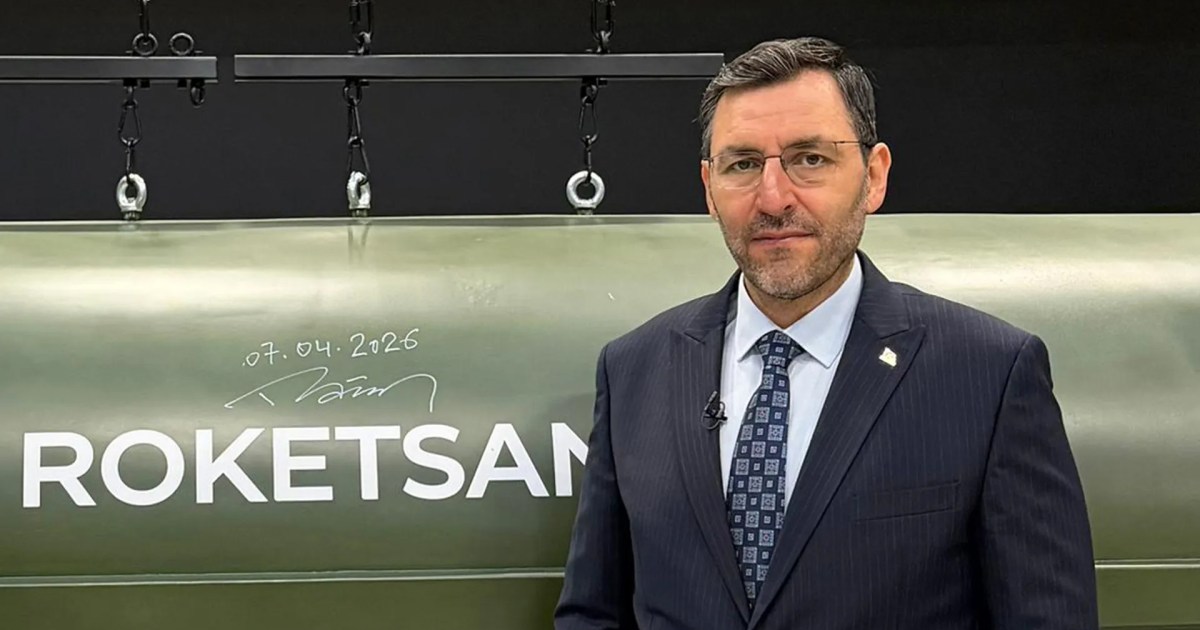
Al JazeeraFIG 01
Reading time
5min
Word count
1 166words
Sources cited
1cited
Entities identified
12entities
Quality score
100%
§ 01
Briefing Summary
AI-generatedNEWSAR · AI
Amidst rising global conflict and a growing reliance on missile technology, Turkiye is expanding its defense industry, with Roketsan at the forefront. Founded in 1988, Roketsan has become Turkiye's primary manufacturer of missile and rocket systems, now exporting to approximately 50 countries. This expansion was accelerated by Western embargoes, including CAATSA sanctions from the US in 2020, which prompted Turkiye to develop a domestic defense ecosystem. By building its own supply chain of nearly 4,000 small and medium enterprises, Turkiye aims to become a top 10 global missile exporter.
Confidence 0.90Sources 1Claims 5Entities 12
§ 02
Article analysis
Model · rule-basedFraming
National Security
Economic Impact
Tone
Measured
AI-assessed
CalmNeutralAlarmist
Factuality
0.70 / 1.00
Factual
LowHigh
Sources cited
1
Limited
FewMany
§ 03
Key claims
5 extracted01
In 2020, the United States imposed Countering America’s Adversaries Through Sanctions Act (CAATSA) restrictions on Turkiye.
factualAl Jazeera
Confidence
1.00
02
Türkiye’s defence industry now operates with a local production rate exceeding 90 percent.
statisticAl Jazeera
Confidence
0.90
03
Turkiye has rapidly expanded its defence industry to become a leading global missile exporter.
factualAl Jazeera
Confidence
0.90
04
In 2025, Turkiye’s defence industry reported $10bn in exports.
statisticAl Jazeera
Confidence
0.80
05
Currently exporting to approximately 50 countries, the firm is one of the fastest-growing defence companies globally.
factualAl Jazeera
Confidence
0.80
§ 04
Full report
5 min read · 1 166 words§ 05
Entities
12 identifiedKey playerOppositionContextPositiveNeutralNegative
§ 06
Keywords & salience
10 termsturkiye
1.00
roketsan
0.90
defence industry
0.90
missile technology
0.80
arms exports
0.70
defence systems
0.70
global arms trade
0.60
western embargoes
0.60
middle east conflict
0.50
military procurement
0.50
§ 07
Topic connections
Interactive graph Network visualization showing 50 related topics
View Full Graph Person Organization Location Event|Click node to navigate|Edge numbers = shared articles