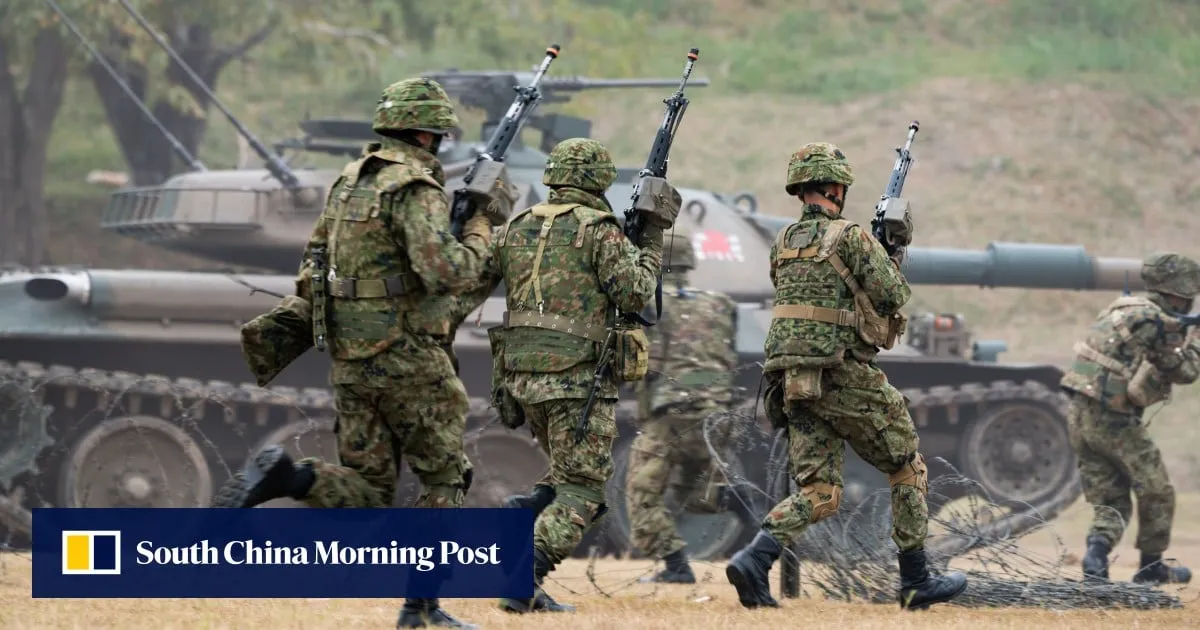
Japan’s most extensive participation to date in a counter-landing and missile defence exercise in the Philippines signals its “priorities” in deterring Beijing in a Taiwan contingency, according to analysts.Japan’s Joint Staff announced on Tuesday that its Self-Defence Forces (SDF) would deploy about 1,400 personnel, multiple warships and aircraft, as well as Type 88 anti-ship missile systems for the Balikatan exercise, an annual large-scale joint military drill between the Philippines and the United States.The troop deployment marks Japan’s first active participation in the Balikatan exercise, which runs from April 20 to May 8. Tokyo’s involvement this year makes it the third-largest troop contributor after the US and the Philippines.
SRCSouth China Morning Post
LANGSCO
LEANCenter-Right
WORDS108
ENT7
THU · 2026-04-16 · 14:00 GMTBRIEF NSR-2026-0416-70048
NSR-2026-0416-70048News Report·SCO·National Security
What does Japan’s role in a US-Philippine military drill mean for Taiwan?
Japan is significantly increasing its involvement in the annual Balikatan exercise, a joint military drill between the Philippines and the United States, signaling its strategic focus on deterring China in a potential Taiwan conflict. Approximately 1,400 personnel from Japan's Self-Defence Forces (SDF), along with warships, aircraft, and missile systems, will participate in the exercise, running from April 20 to May 8.
Seong Hyeon Choi,Alcott WeiSouth China Morning PostFiled 2026-04-16 · 14:00 GMTLean · Center-RightRead · 1 min
South China Morning PostFIG 01
Reading time
1min
Word count
108words
Sources cited
1cited
Entities identified
7entities
Quality score
100%
§ 01
Briefing Summary
AI-generatedNEWSAR · AI
Japan is significantly increasing its involvement in the annual Balikatan exercise, a joint military drill between the Philippines and the United States, signaling its strategic focus on deterring China in a potential Taiwan conflict. Approximately 1,400 personnel from Japan's Self-Defence Forces (SDF), along with warships, aircraft, and missile systems, will participate in the exercise, running from April 20 to May 8. This marks Japan's first active participation in Balikatan, making it the third-largest troop contributor after the US and the Philippines. The exercise focuses on counter-landing operations and missile defense. Analysts suggest Japan's expanded role reflects its prioritization of regional security in the face of growing concerns over Taiwan.
Confidence 0.85Sources 1Claims 4Entities 7
§ 02
Article analysis
Model · rule-basedFraming
National Security
Political Strategy
Tone
Measured
AI-assessed
CalmNeutralAlarmist
Factuality
0.80 / 1.00
Factual
LowHigh
Sources cited
1
Limited
FewMany
§ 03
Key claims
4 extracted01
Tokyo’s involvement this year makes it the third-largest troop contributor after the US and the Philippines.
factualnull
Confidence
1.00
02
The Balikatan exercise runs from April 20 to May 8.
factualnull
Confidence
1.00
03
Japan's SDF will deploy about 1,400 personnel for the Balikatan exercise.
factualJapan’s Joint Staff
Confidence
1.00
04
Japan’s participation in the Balikatan exercise signals its priorities in deterring Beijing in a Taiwan contingency.
quoteanalysts
Confidence
0.80
§ 04
Full report
1 min read · 108 words§ 05
Entities
7 identifiedKey playerOppositionContextPositiveNeutralNegative
Locations5
Events1
§ 06
Keywords & salience
9 termsjapan
0.90
balikatan exercise
0.90
military drill
0.80
taiwan contingency
0.80
united states
0.70
philippines
0.70
missile defence
0.60
counter-landing
0.60
self-defence forces
0.50
§ 07
Topic connections
Interactive graph Network visualization showing 51 related topics
View Full Graph Person Organization Location Event|Click node to navigate|Edge numbers = shared articles