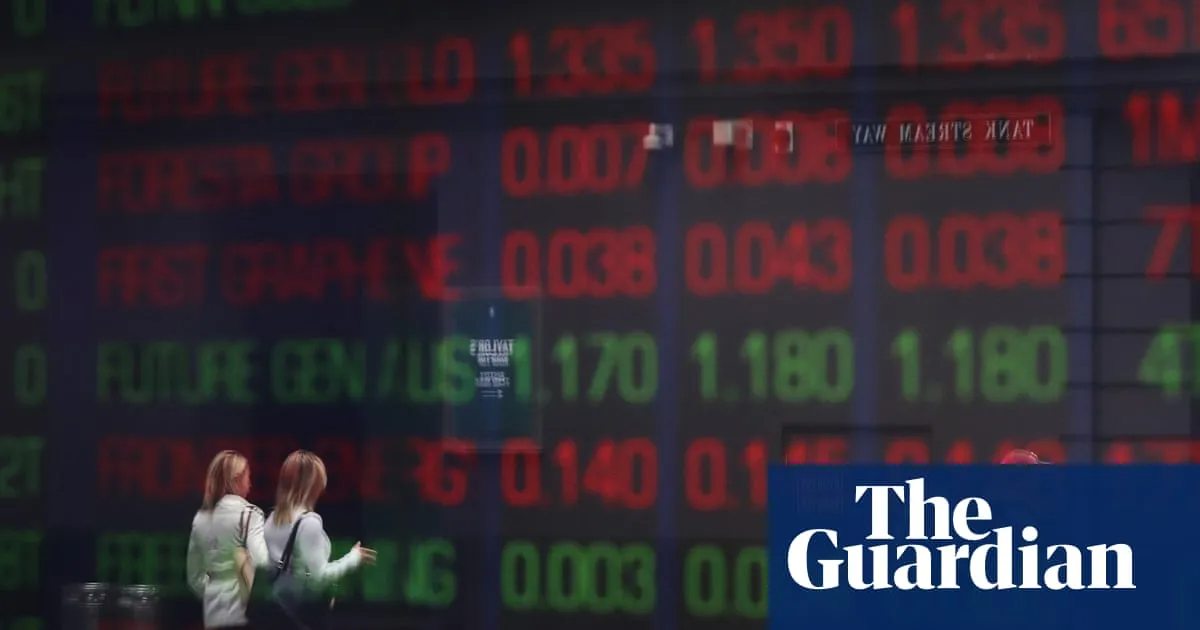
The local sharemarket has been on the rise in recent weeks, if not as enthusiastically as its counterpart across the Pacific. Photograph: Lisa Maree Williams/Getty Images View image in fullscreen The local sharemarket has been on the rise in recent weeks, if not as enthusiastically as its counterpart across the Pacific. Photograph: Lisa Maree Williams/Getty Images Analysis Wall Street seems to have decided the recession risk is over. Can the Australian market do the same? Patrick Commins Experts say US market ‘may have run ahead of itself’, while the ASX 200’s more modest recovery is due in part to Australia’s reliance on fuel imports Get our breaking news email, free app or daily news podcast One day the IMF warns of a global recession, the next day stocks on Wall Street hit a record high. From looking at the complete U-turn in fortunes in America, you wouldn’t know the world was in the grips of an unprecedented energy shock. The local sharemarket has also been on the rise in recent weeks, if not as enthusiastically as its counterpart across the Pacific. At their worst, Aussie stocks, as measured by the benchmark S&P/ASX 200 index, were down 9% from where they were before the bombs began falling on Iran at the end of February. That low point, however, was on 23 March. Over recent weeks, despite all the doom and gloom, they have been tracking pretty steadily higher and have now recouped about 70% of their losses. In other words: we are not back to where we were, but we are well on our way. At their worst, American stocks were about 8% down from immediately before the Iran war shut the Strait of Hormuz. The International Energy Agency has called the choking off of a fifth of the world’s oil and gas supply as the “greatest global energy security threat in history”. Yet on Wednesday night, Wall Street finished recouping all its earlier losses to reach its previous peak. The contrast is jarring, but may not be as crazy as it sounds. Shane Oliver, the chief economist at AMP, said two or three weeks ago investors were “starting to factor in the risk of a recession”. “Since then we’ve seen a ceasefire, which has been shaky, but the market has taken the view that Trump is looking for an off-ramp and that it’s just a matter of time until the Strait of Hormuz is reopened.” Which means despite the IMF’s grim warnings, investors have “already decided that the risk of recession is receding”. Oliver can see the sense in that reasoning, but thinks the market, especially in the US, “may have run ahead of itself”. “When I saw Wall Street was at a record high, I was surprised.” He said the Australian sharemarket generally tends to “fly around a bit less” than America’s, which could explain our more modest recovery. At the same time “we have reason to be a bit more concerned” about the Middle East war. “We rely more on fuel imports, and that leaves us vulnerable. “We are a net exporter of energy, which boosts our national income and buoys the budget. But [higher fuel prices are] a bigger hit to households and businesses, and partly that could be weighing on our market.” Stephen Miller, the markets strategist at fund manager GSFM, said there were two possible explanations for the complete turnaround on Wall Street. The first is that markets are “incredibly complacent”, and investors are underestimating the impact of the global oil shock on inflation and the potential hit to growth. “The macro [economic] environment is pretty challenging. And even if there is an accommodation of sorts between Iranians and the US, oil prices will stay higher,” Miller said. “It’s not like we are going back to where we were in February. Oil prices might not be as bad as they have been, but they won’t be good.” The other explanation, he said, is that there is a lot happening “under the surface”, particularly in the US, that is unrelated to the broader economic outlook. These are the mega trends that investors are happy – desperate even – to chase in an increasingly “winner takes all” world: the artificial intelligence boom; the explosion in defence spending; the opportunities in energy. And as Wall Street climbs what analysts refer to as the “wall of worry”, Miller said “we get dragged along”. “The ASX is basically a bunch of miners and banks. We are a net energy exporter, and that shields us a bit.” All that said, it’s far from clear that the worst is behind us. Oliver said investors are putting their trust in the “Taco” trade – that is, that “Trump always chickens out”. That was fine when the US president was piling on tariffs and then whipping them away again when the damage to the American stock market or economy looked like it might be too great. This time around and Iran may not be prepared to play ball, especially if it believes it can keep the strait closed for longer than Trump can hold out before giving up ground. “There may not be the ingredients for a Taco this time around,” Oliver said. Miller is similarly unconvinced that investors are properly pricing in the risk of lingering damage to the world economy. “My own opinion is that those ‘macro chickens’ may yet come home to roost.” Patrick Commins is Guardian Australia’s economics editor Explore more on these topics US-Israel war on Iran Stock markets analysis Share Reuse this content
SRCThe Guardian - World News
LANGEN
LEANCenter-Left
WORDS925
ENT12
THU · 2026-04-16 · 15:00 GMTBRIEF NSR-2026-0416-70056
NSR-2026-0416-70056Analysis·EN·Economic Impact
Wall Street seems to have decided the recession risk is over. Can the Australian market do the same?
The article discusses the contrasting recovery of the US and Australian stock markets following a period of decline triggered by geopolitical tensions and energy security concerns. Wall Street has fully recovered its losses, seemingly dismissing recession risks despite warnings from the IMF and a major energy shock.
Patrick ComminsThe Guardian - World NewsFiled 2026-04-16 · 15:00 GMTLean · Center-LeftRead · 4 min
The Guardian - World NewsFIG 01
Reading time
4min
Word count
925words
Sources cited
1cited
Entities identified
12entities
Quality score
100%
§ 01
Briefing Summary
AI-generatedNEWSAR · AI
The article discusses the contrasting recovery of the US and Australian stock markets following a period of decline triggered by geopolitical tensions and energy security concerns. Wall Street has fully recovered its losses, seemingly dismissing recession risks despite warnings from the IMF and a major energy shock. The Australian sharemarket (ASX 200) has also been rising since late March, recouping about 70% of its losses. Experts suggest the US market may be overly optimistic, while Australia's more cautious recovery is partly due to its reliance on fuel imports. Investors in the US market believe the risk of recession is receding due to a ceasefire and the expectation of the Strait of Hormuz reopening.
Confidence 0.90Sources 1Claims 5Entities 12
§ 02
Article analysis
Model · rule-basedFraming
Economic Impact
Political Strategy
Tone
Measured
AI-assessed
CalmNeutralAlarmist
Factuality
0.60 / 1.00
Mixed
LowHigh
Sources cited
1
Limited
FewMany
§ 03
Key claims
5 extracted01
Wall Street finished recouping all its earlier losses to reach its previous peak.
factualarticle
Confidence
1.00
02
American stocks were about 8% down from immediately before the Iran war shut the strait of Hormuz.
statisticarticle
Confidence
1.00
03
Aussie stocks were down 9% from before the Iran war at the end of February.
statisticarticle
Confidence
1.00
04
Australia relies more on fuel imports, and that leaves us vulnerable.
quoteShane Oliver, chief economist at AMP
Confidence
0.90
05
Investors have already decided that the risk of recession is receding.
quoteShane Oliver, chief economist at AMP
Confidence
0.80
§ 04
Full report
4 min read · 925 words§ 05
Entities
12 identifiedKey playerOppositionContextPositiveNeutralNegative
Organizations4
§ 06
Keywords & salience
8 termsrecession risk
0.90
australian market
0.80
wall street
0.70
sharemarket
0.60
energy shock
0.60
fuel imports
0.50
asx 200
0.50
global energy security
0.40
§ 07
Topic connections
Interactive graph Network visualization showing 41 related topics
View Full Graph Person Organization Location Event|Click node to navigate|Edge numbers = shared articles