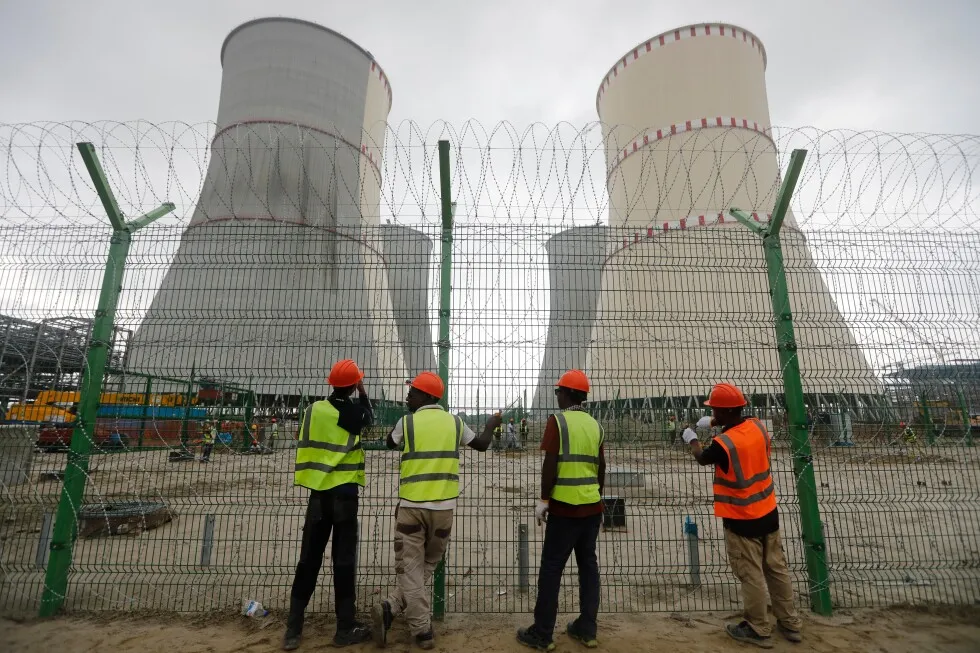
Workers fix barbed wire on the fence of the Rooppur Nuclear Power Plant at Ishwardi in Pabna, Bangladesh, Oct.4, 2023. (AP Photo/Mahmud Hossain Opu) 2026-04-17T05:08:14Z NAIROBI, Kenya (AP) — The Iran war’s global energy shock is causing some nations in Asia and Africa to boost nuclear power generation and spurring atomic energy plans in non-nuclear countries on both continents. Asia, where most of the Middle Eastern oil and natural gas was headed, was hit first and hardest by disruptions to shipping routes carrying those fuels — swiftly followed by Africa. The U.S. and Europe are also feeling the pinch as the conflict drives up energy costs . African and Asian nations with nuclear plants are increasing their output as they scramble for short-term energy supplies, while non-nuclear countries are accelerating long-term nuclear plans to safeguard against future fossil fuel shocks. Nuclear power isn’t a quick fix for the current energy crisis. Developing atomic energy can take decades, especially for nuclear newcomers. But long-term commitments to nuclear power made now will likely lock it in to countries’ future energy mixes, said Joshua Kurlantzick of the Council on Foreign Relations. In Asia, the Iran war is pushing South Korea to increase nuclear power generation, while Taiwan is debating restarting mothballed reactors. In Africa, future plans to build reactors have taken on urgency, with Kenya, Rwanda and Africa" class="entity-link entity-location" data-entity-id="534" data-entity-type="location">South Africa affirming their support. Nuclear power takes advantage of the energy released when the nucleus of an atom, such as uranium, splits in a process called fission. Unlike fossil fuels, this doesn’t release climate change-causing carbon dioxide. But it creates potentially dangerous radioactive waste, one reason many countries are cautious about nuclear power. (
SRCAssociated Press (AP)
LANGEN
LEANCenter
WORDS279
ENT12
FRI · 2026-04-17 · 06:23 GMTBRIEF NSR-2026-0417-70250
NSR-2026-0417-70250News Report·EN·Economic Impact
Iran war energy shock drives nuclear power plans in hard-hit Asia and Africa
The Iran war's disruption of global energy supplies is prompting nations in Asia and Africa to reconsider nuclear power. Asian countries, heavily reliant on Middle Eastern oil and gas, are increasing nuclear output or considering reactivating plants.
Associated Press (AP)Filed 2026-04-17 · 06:23 GMTLean · CenterRead · 2 min
Associated Press (AP)FIG 01
Reading time
2min
Word count
279words
Sources cited
1cited
Entities identified
12entities
Quality score
100%
§ 01
Briefing Summary
AI-generatedNEWSAR · AI
The Iran war's disruption of global energy supplies is prompting nations in Asia and Africa to reconsider nuclear power. Asian countries, heavily reliant on Middle Eastern oil and gas, are increasing nuclear output or considering reactivating plants. African nations, including Kenya, Rwanda, and South Africa, are accelerating plans to build nuclear reactors. While nuclear energy development is a long-term process, it is seen as a way to safeguard against future fossil fuel shocks. The move towards nuclear power is driven by the need for energy security amidst rising costs and supply disruptions caused by the conflict. Although nuclear power offers a carbon-free alternative, concerns about radioactive waste remain a significant consideration.
Confidence 0.90Sources 1Claims 5Entities 12
§ 02
Article analysis
Model · rule-basedFraming
Economic Impact
Political Strategy
Tone
Measured
AI-assessed
CalmNeutralAlarmist
Factuality
0.70 / 1.00
Factual
LowHigh
Sources cited
1
Limited
FewMany
§ 03
Key claims
5 extracted01
Developing atomic energy can take decades, especially for nuclear newcomers.
factual
Confidence
0.90
02
The Iran war’s global energy shock is causing some nations in Asia and Africa to boost nuclear power generation.
factual
Confidence
0.90
03
In Asia, the Iran war is pushing South Korea to increase nuclear power generation, while Taiwan is debating restarting mothballed reactors.
factual
Confidence
0.80
04
African and Asian nations with nuclear plants are increasing their output as they scramble for short-term energy supplies.
factual
Confidence
0.80
05
Long-term commitments to nuclear power made now will likely lock it in to countries’ future energy mixes.
predictionJoshua Kurlantzick of the Council on Foreign Relations
Confidence
0.70
§ 04
Full report
2 min read · 279 words§ 05
Entities
12 identifiedKey playerOppositionContextPositiveNeutralNegative
People1
Organizations1
§ 06
Keywords & salience
8 termsnuclear power
1.00
energy shock
0.80
asia
0.70
iran war
0.70
africa
0.70
fossil fuels
0.60
energy crisis
0.50
radioactive waste
0.40
§ 07
Topic connections
Interactive graph Network visualization showing 51 related topics
View Full Graph Person Organization Location Event|Click node to navigate|Edge numbers = shared articles