Donald Trump’s decision to send US officials to Islamabad for further talks on Monday with Iran just 24 hours after Iran once again closed the Strait of Hormuz will signal to Tehran that the strategic waterway remains a bargaining asset beyond parallel.It will also confirm in Iran’s eyes that the US president’s chaotic approach to diplomacy doubles the need for Tehran to act calmly and strategically – two competencies it believes he totally lacks.Such is the distrust and fog surrounding relations between Iran and the US that no one can know whether Trump – after meetings in the Situation Room on Saturday – has once again decided to use diplomacy as a giant smokescreen prior to a further military attack on Iran once the ceasefire expires on Wednesday.At a minimum it is undeniable that the run-up to a proposed second round of talks in Islamabad has been far from propitious, partly because an impatient Trump repeatedly misunderstands the need to proceed sequentially or take account of the sensitivities on the Iranian side. Iranian state media reported on Sunday evening that Tehran had not yet decided whether to join.Iran’s three demands before entering another round of talks were a ceasefire in Lebanon, an end to the US blockade on Iranian ports and progress on Iranian asset releases.Iran and the mediators in Pakistan saw this as a traditional diplomatic step-by-step reciprocal process whereby one confidence-building measure from one side would lead to another on the other side.As a result, the imposition on Israel of the two-week ceasefire in Lebanon by Trump was regarded as significant by Iran, and was due to lead to a reciprocal partial lifting of the Iranian chokehold on the Strait of Hormuz – a step announced somewhat clumsily by the Iranian foreign minister, Abbas Araghchi, in a tweet on Friday morning. In return it was expected that Trump would lift the US blockade of Iranian ports, and the momentum surrounding the virtuous circle would build.But in a series of tweets on Friday Trump kept the blockade in place, claimed Iran had completely lifted the restrictions on tanker traffic in the strait, and for good measure said Iran had agreed to hand over Iran’s stockpile of highly enriched uranium to the US for safe keeping. In short, he gave the impression that Iran had surrendered.The backlash that followed in Tehran on Friday was inevitable, and whether there was a genuine split between the foreign ministry and the Islamic Revolutionary Guard Corps leadership or simply misapprehension due to Trump’s mischaracterisation of what Araghchi had said is unclear.What matters is that clarifications were issued by the Iranian foreign ministry on Friday and the leader of Iran’s delegation to Islamabad, Mohammad-Bagher Ghalibaf, in a TV interview on Saturday. Ghalibaf accused Trump of telling lies, but said the door to diplomacy was not closed. Once it became clear Trump was not lifting the blockade, Iran said on Saturday that the strait was fully closed again and the brief conditional reopening had ended.Trump on Sunday could have responded by insisting no further negotiations with Iran were possible. He could have claimed Iran was shooting at European ships in total violation of the ceasefire.Instead, with the strait in effect closed, Trump clearly examined his array of bad options and decided to try diplomacy again. The sense of unbridled chaos inside the White House was only underlined by a flurry of conflicting reports as to whether the vice-president, JD Vance, was to attend, and the according implications for the Iranian delegation, including the presence of Ghalibaf.None of this brings either side closer to the solving the substantive problem of how to address Iran’s determination to maintain a right to enrich uranium on Iranian soil. Indeed, the solution to this conundrum may be to try not to solve it, but instead settle for a framework agreement that agrees to discuss these issues in the context of an absence of war, quite possibly at the forthcoming summit between Trump and China’s leader, Xi Jinping.By the end of the day, the Iranian Fars news agency reported that “the ministry of foreign affairs and the supreme national security council have decided to continue the policy of silence in the face of news-making by foreign media”.The sense that a similarly Quiet American in the White House may speed the path to peace was overwhelming.
SRCThe Guardian - World News
LANGEN
LEANCenter-Left
WORDS723
ENT11
SUN · 2026-04-19 · 17:54 GMTBRIEF NSR-2026-0419-70754
NSR-2026-0419-70754Analysis·EN·Diplomatic
Intemperate Trump brings chaos and confusion to Iran talks
The article reports on the chaotic lead-up to proposed US-Iran talks in Islamabad, following Iran's brief closure of the Strait of Hormuz. Despite a ceasefire in Lebanon brokered by the US, Iran is hesitant to proceed without the fulfillment of its demands: an end to the US blockade on Iranian ports and progress on asset releases.
Patrick Wintour Diplomatic editorThe Guardian - World NewsFiled 2026-04-19 · 17:54 GMTLean · Center-LeftRead · 3 min
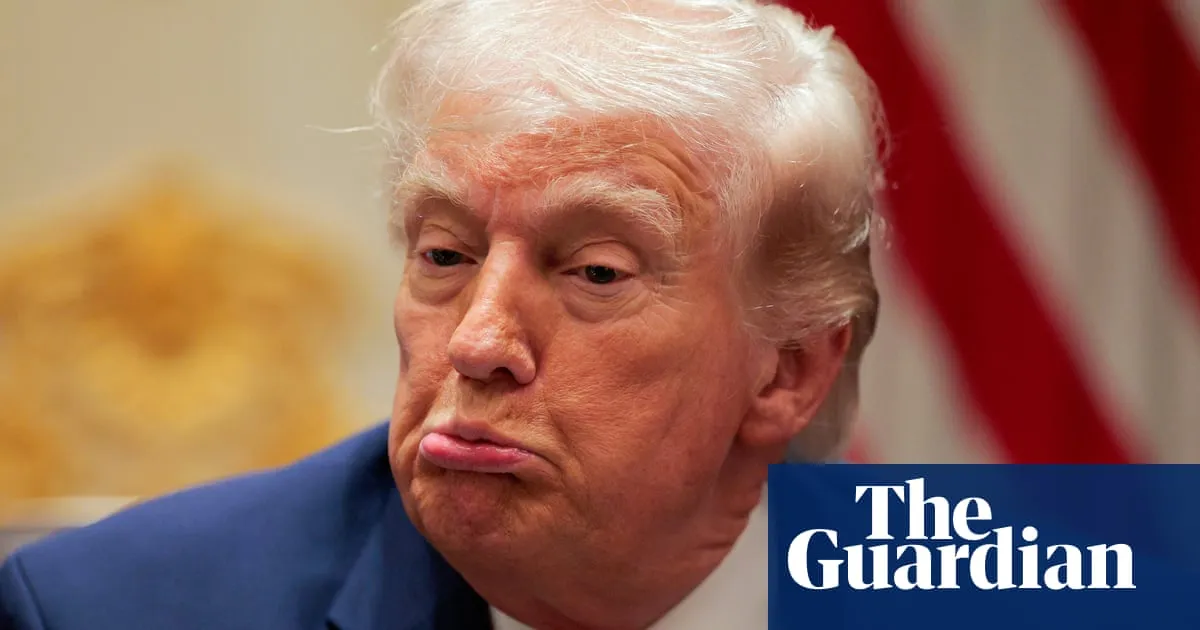
The Guardian - World NewsFIG 01
Reading time
3min
Word count
723words
Sources cited
2cited
Entities identified
11entities
Quality score
100%
§ 01
Briefing Summary
AI-generatedNEWSAR · AI
The article reports on the chaotic lead-up to proposed US-Iran talks in Islamabad, following Iran's brief closure of the Strait of Hormuz. Despite a ceasefire in Lebanon brokered by the US, Iran is hesitant to proceed without the fulfillment of its demands: an end to the US blockade on Iranian ports and progress on asset releases. The situation was exacerbated by President Trump's tweets, which inaccurately portrayed Iranian concessions and kept the blockade in place. This led to a backlash in Tehran and uncertainty about Iran's participation in the talks, raising concerns about the future of diplomatic efforts and potential military action. The article highlights distrust and miscommunication between the two nations.
Confidence 0.90Sources 2Claims 4Entities 11
§ 02
Article analysis
Model · rule-basedFraming
Diplomatic
Political Strategy
Tone
Mixed Tone
AI-assessed
CalmNeutralAlarmist
Factuality
0.40 / 1.00
Mixed
LowHigh
Sources cited
2
Limited
FewMany
§ 03
Key claims
4 extracted01
Ghalibaf accused Trump of telling lies, but said the door to diplomacy was not closed.
quoteMohammad-Bagher Ghalibaf
Confidence
1.00
02
Trump claimed Iran had completely lifted the restrictions on tanker traffic in the strait.
quoteArticle reporting Trump's statement
Confidence
1.00
03
Iran's three demands before entering another round of talks were a ceasefire in Lebanon, an end to the US blockade on Iranian ports and progress on Iranian asset releases.
factualArticle
Confidence
1.00
04
Iran closed the strait of Hormuz.
factualArticle
Confidence
0.90
§ 04
Full report
3 min read · 723 words§ 05
Entities
11 identifiedKey playerOppositionContextPositiveNeutralNegative
Organizations1
§ 06
Keywords & salience
9 termsiran talks
0.90
us diplomacy
0.80
strait of hormuz
0.70
donald trump
0.70
us blockade
0.60
ceasefire
0.60
iranian ports
0.50
diplomatic process
0.50
asset releases
0.40
§ 07
Topic connections
Interactive graph Network visualization showing 51 related topics
View Full Graph Person Organization Location Event|Click node to navigate|Edge numbers = shared articles