As Pakistan works frantically to narrow differences between Iran and the US in its newfound role as global peacemaker, it is also seeking to recast its diplomatic standing and attract business.Pakistani officials, mediating between an unpredictable US president and hardliners in Tehran, were on Monday trying to coax both sides to put the conditions in place for a second round of talks in Islamabad this week, including easing the standoff in the Strait of Hormuz. Pakistan was optimistic that the meeting would happen, viewing objections voiced by the Iranian side and Donald Trump’s threats as posturing for domestic audiences.At stake is not only regional peace, but also Islamabad’s own concerns about becoming dragged into the war and its dependence on energy supplies shipped from the Gulf.Often portrayed as an international problem child, under threat from religious extremism and with an economy perennially on the brink, Pakistan seized the opportunity of its relative neutrality in the conflict to take the role of “adult in the room”.A three-day visit to Tehran last week by Pakistan’s powerful military chief, Field Marshal Asim Munir, helped produce a ceasefire in Israel’s attacks on Lebanon, and a short-lived breakthrough on opening the Strait of Hormuz.Pakistani officials expect concessions from the two camps, including on Iran’s nuclear programme, the trickiest dispute. If an agreement is reached, Pakistan is hopeful that Trump and the Iranian president, Masoud Pezeshkian, will fly to Islamabad to sign the deal.A security cordon was reinstated around the centre of Islamabad on Sunday, with roads closed and the two big hotels there emptied of guests in order to house the Iranian and US delegations – if they return.Workers sweep a road in Islamabad on Sunday in preparation for the second round of talks. Photograph: Aamir Qureshi/AFP/Getty ImagesThe only nuclear-armed country in the Muslim world, with an army of 600,000 soldiers, Pakistan believes it has been punching below its weight. As a new multipolar order takes shape, Pakistan is seeking greater sway, using its military heft to counterbalance the longstanding weaknesses of an anaemic economy and tumultuous politics.The opening was provided by the Trump administration’s need for an interlocutor with Iran, a task that Munir took on after a surprise June 2025 meeting at the White House with Trump. For Iran, Islamabad’s diplomatic support during last year’s 12-day conflict with Israel cemented ties.Ali Sarwar Naqvi, a former senior Pakistani diplomat now heading the Centre for International Security Studies, a thinktank in Islamabad, said Iran did not have faith in traditional European diplomatic venues, such as Geneva and Vienna, to host the talks. “Pakistan has the confidence of all the permanent members of the [UN] security council. And Pakistan also has the trust of Iran,” said Naqvi. “Pakistan is a big country, with nuclear capability, and it is strategically located.”For decades, Pakistan has managed to balance close ties both with Beijing and Washington, and has maintained a deep partnership with the Gulf states. Pakistan was able to call on China to provide assurances to Iran to enter into peace negotiations.Zamir Akram, a former Pakistani ambassador, said Pakistan’s embassy in Washington had represented Iranian interests there since the 1979 revolution, while Pakistan had set up secret talks in 1971 that led to the establishment of diplomatic relations between China and the US.“Pakistan’s role today does not come out of the blue,” said Akram. “Pakistan’s job now is to make sure that both sides believe they are getting an honourable exit.”Even in the midst of its high-wire diplomacy, Pakistan’s economic vulnerability has been on display in recent days, with daily power cuts to save money and an emergency $3bn (£2.2bn) loan taken from Saudi Arabia. There is hope that with greater global stature, Pakistan could attract more investment, though that would also depend on economic reforms such as lower taxes and more robust laws.Iran’s foreign minister, Abbas Araghchi (right), welcomes Munir to Tehran last week. Photograph: Iranian foreign ministry/AFP/Getty ImagesJoshua White, a former White House official who is now a professor at Johns Hopkins University, said Washington’s traditional policy-making process would have flagged that Pakistan had a difficult relationship with Iran and that it lacked leverage.“Pakistan has been sophisticated and obsequious in engaging the Trump administration,” said White. “The decision-making process in Washington today is highly personalised, and highly dependent on the president’s instincts, perspectives and proclivities. And the Pakistani leadership, to their credit, have taken full advantage.”Elizabeth Threlkeld, a former American diplomat who is director for south Asia at the Stimson Center, a US thinktank, said Pakistan’s stock had risen in Washington through its performance in the conflict with India last year, its more active role in the Middle East that included joining Trump’s Board of Peace initiative, and the defence deal it signed last year with Saudi Arabia.“So long as Pakistan does not set unrealistic expectations for the outcome of talks and is able to host them without incident, it stands to gain from simply providing an opportunity for the two sides to come together and has little to lose in the process,” Threlkeld said.
SRCThe Guardian - World News
LANGEN
LEANCenter-Left
WORDS839
ENT11
MON · 2026-04-20 · 13:42 GMTBRIEF NSR-2026-0420-70964
NSR-2026-0420-70964News Report·EN·Diplomatic
Pakistan seeks to raise its global standing in push for Middle East peace
Pakistan is seeking to increase its global standing by mediating between Iran and the US in a bid for Middle East peace. The country's officials are working to ease tensions, including those over the Strait of Hormuz, with the aim of hosting a second round of talks in Islamabad this week.
Saeed Shah in IslamabadThe Guardian - World NewsFiled 2026-04-20 · 13:42 GMTLean · Center-LeftRead · 4 min
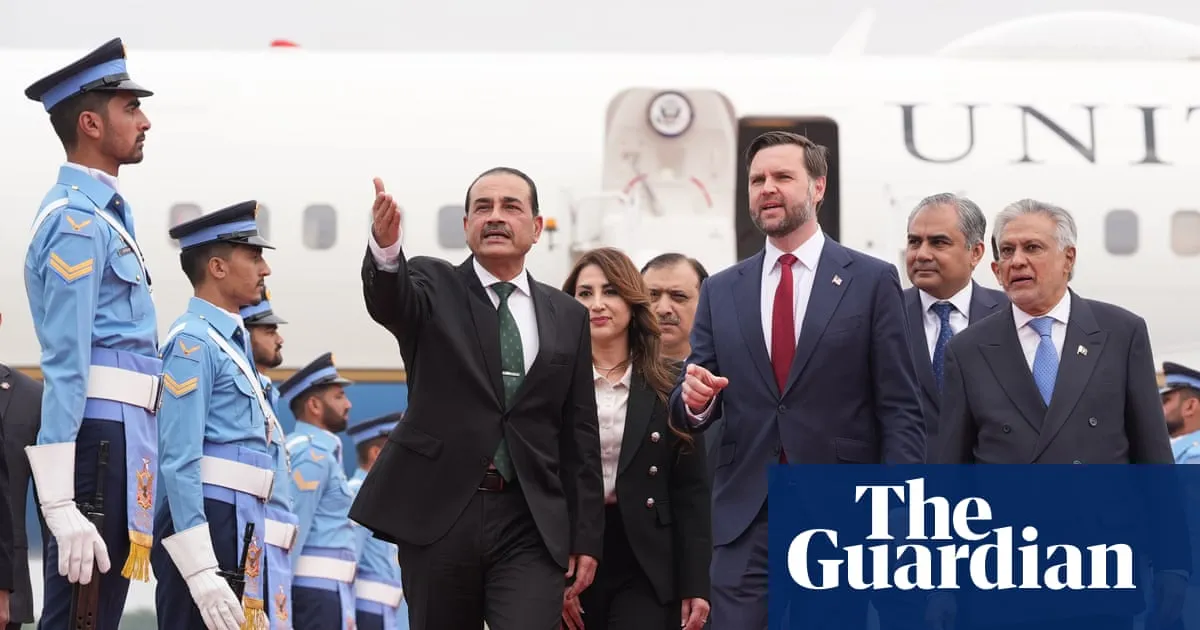
The Guardian - World NewsFIG 01
Reading time
4min
Word count
839words
Sources cited
1cited
Entities identified
11entities
Quality score
100%
§ 01
Briefing Summary
AI-generatedNEWSAR · AI
Pakistan is seeking to increase its global standing by mediating between Iran and the US in a bid for Middle East peace. The country's officials are working to ease tensions, including those over the Strait of Hormuz, with the aim of hosting a second round of talks in Islamabad this week. Pakistan views this opportunity as a chance to demonstrate its neutrality and take on a more significant role in regional diplomacy. The country hopes to secure concessions from both sides, particularly regarding Iran's nuclear program. A recent visit by Pakistani military chief Field Marshal Asim Munir helped produce a ceasefire in Israel's attacks on Lebanon, and a short-lived breakthrough on opening the Strait of Hormuz. Pakistan aims to capitalize on its relative neutrality to assert its influence in the region.
Confidence 0.90Sources 1Claims 5Entities 11
§ 02
Article analysis
Model · rule-basedFraming
Diplomatic
Political Strategy
Tone
Measured
AI-assessed
CalmNeutralAlarmist
Factuality
0.70 / 1.00
Factual
LowHigh
Sources cited
1
Limited
FewMany
§ 03
Key claims
5 extracted01
Pakistan is mediating between the US and Iran to ease tensions in the Strait of Hormuz and facilitate further talks.
factual
Confidence
0.90
02
Pakistan is seeking greater sway, using its military heft to counterbalance the longstanding weaknesses of an anaemic economy.
factual
Confidence
0.80
03
Pakistan has the confidence of all the permanent members of the UN security council. And Pakistan also has the trust of Iran.
quoteAli Sarwar Naqvi, former senior Pakistani diplomat
Confidence
0.80
04
Pakistan's military chief, Field Marshal Asim Munir, helped produce a ceasefire in Israel's attacks on Lebanon.
factual
Confidence
0.80
05
Pakistani officials expect concessions from the US and Iran, including on Iran’s nuclear program.
factual
Confidence
0.70
§ 04
Full report
4 min read · 839 words§ 05
Entities
11 identifiedKey playerOppositionContextPositiveNeutralNegative
§ 06
Keywords & salience
10 termspakistan
1.00
middle east peace
0.90
iran
0.80
us
0.80
diplomatic standing
0.70
mediation
0.70
strait of hormuz
0.60
regional peace
0.60
asim munir
0.50
nuclear programme
0.50
§ 07
Topic connections
Interactive graph Network visualization showing 51 related topics
View Full Graph Person Organization Location Event|Click node to navigate|Edge numbers = shared articles