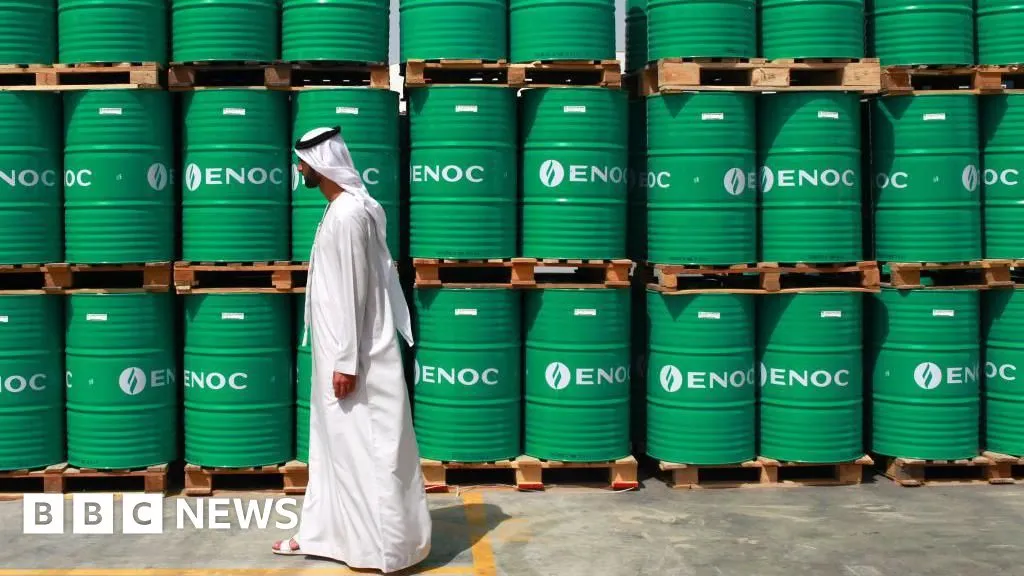
It is a very big deal that the United Arab Emirates (UAE) has announced its abrupt exit from Opec, the Organisation of Petroleum Exporting Countries. The Emiratis were members even before they became a nation state in 1971.Opec is the organisation of mainly Gulf oil exporters, which for many decades controlled the price of crude oil by decreasing or increasing production and allocating quotas across its membership. It had a vital role in 1970s oil crises, which in turn transformed global energy policy.While Opec production is dominated by Saudi Arabia, the UAE had the second highest spare production capacity. In other words, it was the second most important swing producer, capable of increasing production to help ease prices.Indeed it is precisely this that led to long-term reconsiderations of the UAE's position. Put simply, the UAE wanted to use the considerable capacity it has invested in.Opec quotas limited its production to 3-3.5 million barrels per day. Opec membership sacrifices, in terms of lost revenues, were being made disproportionately by the UAE.However, the timing of this move hints at consequences from the Iran war. The pressure cooker in the Gulf has impacted the UAE's relationship with Iran and may affect its already strained relationship with Saudi Arabia.As for Opec, this is a big blow at a time when significant questions are being asked about its long-term coherence. It's not just that the UAE, when it can get its oil fully back on the market by sea or pipeline, is likely to target 5 million barrels per day production. Saudi Arabia might respond with an oil price war that the UAE's more diversified economy could withstand, but other poorer Opec members might not.
SRCBBC News - World
LANGEN
LeanCenter
WORDS280
TUE · 2026-04-28 · 15:55 GMTBRIEF NSR-2026-0428-72399
NSR-2026-0428-72399Analysis·EN·Economic Impact
Faisal Islam: Why the UAE's exit from Opec is a big deal
The United Arab Emirates (UAE) has announced its significant and abrupt departure from OPEC, an organization it has been a member of since before its formation in 1971. This move is considered a major development as the UAE, the second-largest swing producer within OPEC, sought to utilize its substantial invested production capacity, which was previously limited by OPEC quotas.
BBC News - WorldFiled 2026-04-28 · 15:55 GMTLean · CenterRead · 2 min
BBC News - WorldFIG 01
Reading time
2min
Word count
280words
Sources cited
0cited
Entities identified
0entities
NEWSAR · AI
The United Arab Emirates (UAE) has announced its significant and abrupt departure from OPEC, an organization it has been a member of since before its formation in 1971. This move is considered a major development as the UAE, the second-largest swing producer within OPEC, sought to utilize its substantial invested production capacity, which was previously limited by OPEC quotas. The UAE's decision to exit, aiming for a production target of 5 million barrels per day, comes at a time of heightened regional tensions, potentially impacting its relationships with Iran and Saudi Arabia. This departure poses a significant challenge to OPEC's coherence, especially as Saudi Arabia might respond with an oil price war that could disproportionately affect poorer member nations.
Confidence 0.90Claims 5
Framing
Economic Impact
Diplomatic
Tone
Mixed Tone
AI-assessed
CalmNeutralAlarmist
Factuality
0.60 / 1.00
Mixed
LowHigh
Sources cited
0
No named sources
FewMany
01
The UAE was a member of Opec even before it became a nation state in 1971.
factual
Confidence
1.00
02
The United Arab Emirates (UAE) has announced its exit from Opec.
factual
Confidence
1.00
03
Opec quotas limited UAE production to 3-3.5 million barrels per day.
statistic
Confidence
0.90
04
The UAE had the second highest spare production capacity within Opec.
factual
Confidence
0.90
05
The UAE is likely to target 5 million barrels per day production once fully back on the market.
prediction
Confidence
0.70
§ 04
Full report
2 min read · 280 wordsuae exit opec
1.00
opec
0.90
oil production
0.80
crude oil price
0.70
swing producer
0.60
saudi arabia
0.50
iran war
0.50
oil price war
0.40
global energy policy
0.40