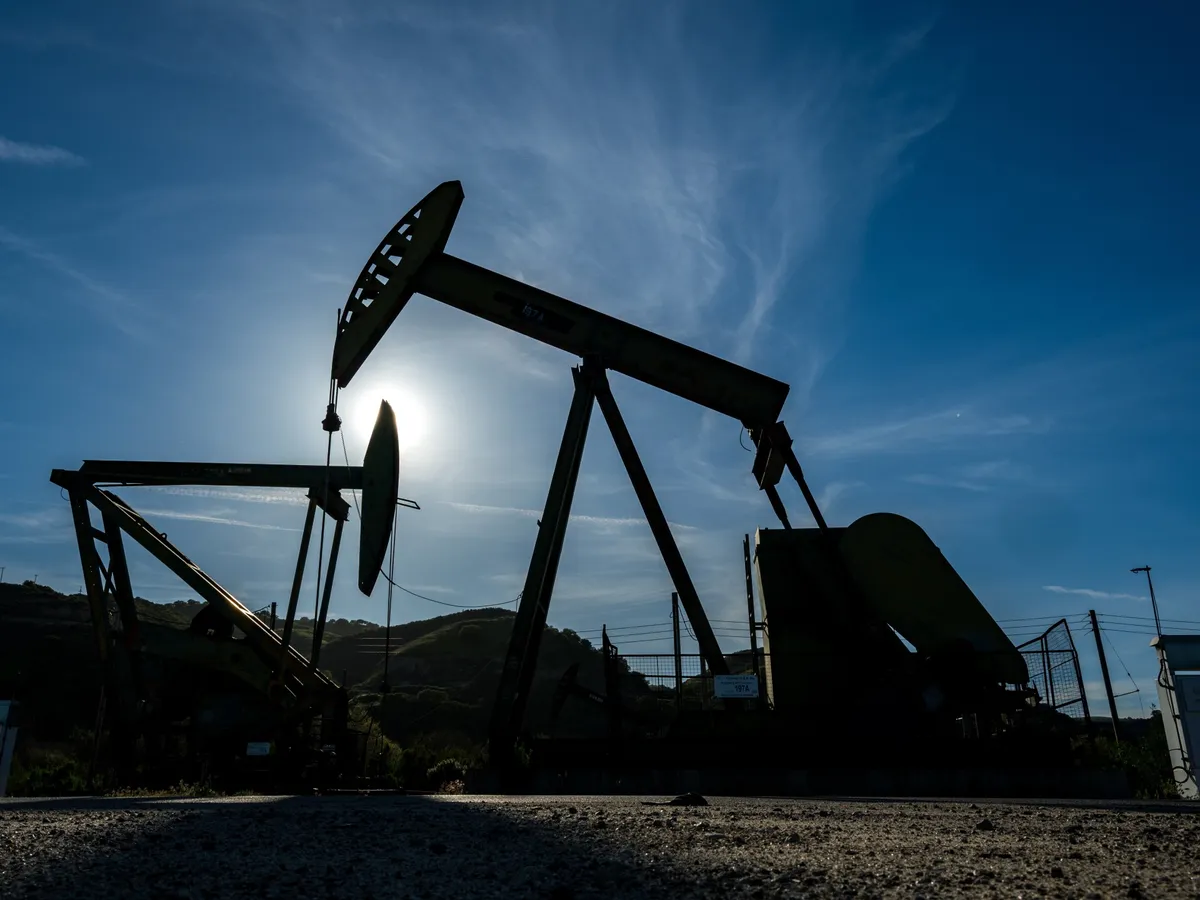
US President Trump meets with oil firms over ways to minimise impact on fuel supplies amid US blockade of Iranian ports.Oil wells at the San Ardo oilfield in San Ardo, California, in March 2026 [File: Nic Coury/AP Photo]Published On 30 Apr 2026Oil prices soared more than 6 percent on worries about prolonged supply disruption in the Strait of Hormuz and fears of a lengthy US siege of Iranian ports, settling at their highest levels in weeks.US crude settled up 6.95 percent at $106.88 per barrel on Wednesday, and Brent crude, the international benchmark, was up 6.08 percent, or $6.77, at $118.03 after earlier touching its highest price since June 2022, the Reuters news agency reports.Recommended Stories list of 4 itemslist 1 of 4Is Iran’s oil storage nearly full – and will it have to cut production?list 2 of 4UAE quits OPEC: What that means for the Gulf, energy markets and beyondlist 3 of 4Trump vows to maintain Iran blockade, Tehran threatens ‘practical’ actionlist 4 of 4Why is the UAE quitting OPEC – and what’s the impact?end of listBrent crude futures for June continued to rise on Thursday to $119.94 per barrel as of 00:57 GMT, and US West Texas Intermediate futures were at $107.51, Reuters said.Oil prices continue to surge with no resolution in sight to the two-month-long US-Israel war on Iran, and as supplies of fuel remain snarled in the Strait of Hormuz, where Iranian forces have imposed a blockade on the transit of vessels and the US is besieging Iranian ports and shipping.A White House official said on Wednesday that US President Donald Trump had asked US oil companies about ways to mitigate the impact of a potentially months-long siege of Iranian ports.The president and the oil executives “discussed the steps President Trump has taken to alleviate global oil markets and steps we could take to continue the current blockade for months if needed and minimize impact on American consumers,” the White House official said.News of Trump’s talks with oil executives triggered concerns in the market of an extended disruption to oil supplies, Reuters reports, and came as the Pentagon revealed for the first time that the war on Iran has cost the US military $25bn so far.“Prospects for any near-term resolution to the Iran conflict or a reopening of the Strait of Hormuz remain dim,” IG market analyst Tony Sycamore said in a note on the current situation.Al Jazeera’s Barnaby Lo, reporting from Seoul, South Korea, said almost the entire Asia Pacific region is dependent on oil imports and much of those supplies come from the Middle East.“So with the price of Brent crude touching $120 a barrel, there is no doubt that is going to have a huge impact on the region. The Asian Development Bank already cutting its growth forecast for the region from 5.1 percent to 4.7 percent this year,” Lo said.“Right now millions if not billions across the region are already suffering from elevated fuel prices as well as higher prices for basic goods and commodities,” he said.‘Getting oil down, getting everything down’President Trump on Wednesday also welcomed the announced withdrawal of the United Arab Emirates (UAE) from the Organization of the Petroleum Exporting Countries (OPEC), saying, “I think it’s great”.The UAE’s President Mohamed bin Zayed Al Nahyan was “very smart” and probably wanted to go his “own way”, Trump said.“I think ultimately it’s a good thing for getting the price of gas down, getting oil down, getting everything down,” Trump added.The UAE announced on Tuesday that it would leave OPEC and the broader OPEC+ alliance effective on May 1.Experts had expected the move as the UAE’s decision to leave the cartel comes after years of open dissatisfaction with OPEC’s policy of capping members’ production as a way to control prices and stabilise the market.Experts told Al Jazeera the UAE’s departure is unlikely to have an immediate impact on the market because the UAE’s exports, like those of all its neighbouring countries, are currently constrained by Iran’s control of the Strait of Hormuz.Although the UAE’s exit from OPEC would allow it to raise production after exports restart, analysts say that is unlikely to affect market fundamentals this year, especially with the Strait of Hormuz closure and other production disruptions from the war.“Gulf countries, including the UAE, will take months to return to pre-war production volumes,” Wood Mackenzie analysts said in a note, Reuters reports.
SRCAl Jazeera
LANGEN
LEANCenter
WORDS731
ENT9
THU · 2026-04-30 · 04:06 GMTBRIEF NSR-2026-0430-72665
NSR-2026-0430-72665News Report·EN·National Security
Oil prices soar on fears of long supply disruption, US siege of Iran ports
Oil prices surged over 6% on April 30, 2026, reaching multi-week highs due to fears of prolonged supply disruptions. US crude settled at $106.88 per barrel, and Brent crude at $118.03.
Al Jazeera StaffAl JazeeraFiled 2026-04-30 · 04:06 GMTLean · CenterRead · 3 min
Al JazeeraFIG 01
Reading time
3min
Word count
731words
Sources cited
3cited
Entities identified
9entities
Quality score
100%
§ 01
Briefing Summary
AI-generatedNEWSAR · AI
Oil prices surged over 6% on April 30, 2026, reaching multi-week highs due to fears of prolonged supply disruptions. US crude settled at $106.88 per barrel, and Brent crude at $118.03. This price increase is attributed to ongoing concerns about the Strait of Hormuz blockade by Iranian forces and a US siege of Iranian ports, part of a two-month war. US President Donald Trump met with oil firms to discuss strategies for mitigating the impact of a potential months-long siege on fuel supplies and consumers. The Pentagon also revealed the war has cost the US military $25 billion. Analysts suggest a near-term resolution to the conflict and the reopening of the Strait of Hormuz remain unlikely.
Confidence 0.90Sources 3Claims 3Entities 9
§ 02
Article analysis
Model · rule-basedFraming
National Security
Tone
Measured
AI-assessed
CalmNeutralAlarmist
Factuality
0.80 / 1.00
Factual
LowHigh
Sources cited
3
Well sourced
FewMany
§ 03
Key claims
3 extracted01
The Pentagon revealed for the first time that the war on Iran has cost the US military $25bn so far.
statisticPentagon
Confidence
1.00
02
Almost the entire Asia Pacific region is dependent on oil imports and much of those supplies come from the Middle East, according to Al Jazeera’s Barnaby Lo.
quoteBarnaby Lo, Al Jazeera
Confidence
0.90
03
Oil prices soared more than 6 percent on worries about prolonged supply disruption in the Strait of Hormuz and fears of a lengthy US siege of Iranian ports.
factual
Confidence
0.80
§ 04
Full report
3 min read · 731 words§ 05
Entities
9 identifiedKey playerOppositionContextPositiveNeutralNegative
Organizations2
Locations5
§ 06
Keywords & salience
10 termssupply disruption
1.00
iran ports blockade
1.00
oil prices
1.00
strait of hormuz
0.90
us siege
0.80
oil firms
0.70
fuel supplies
0.60
us-israel war
0.50
brent crude
0.50
us crude
0.50
§ 07
Topic connections
Interactive graph Network visualization showing 51 related topics
View Full Graph Person Organization Location Event|Click node to navigate|Edge numbers = shared articles