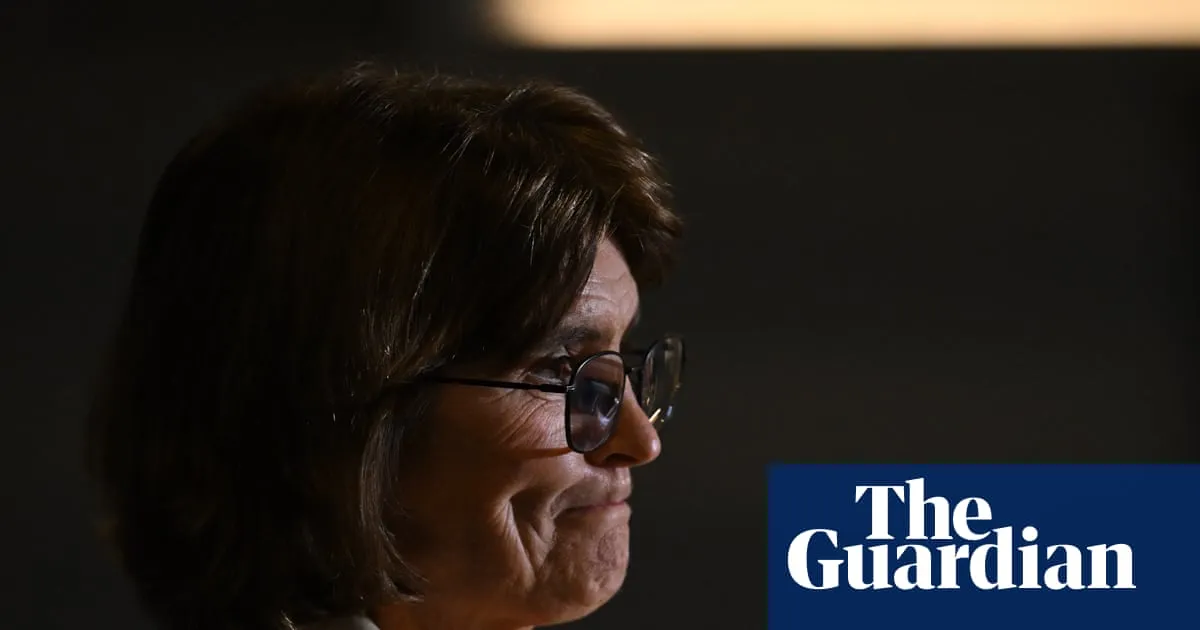
‘Australians are poorer because of this shock to oil prices and energy prices and all the other commodity prices that are being impacted,’ Michele Bullock told journalists. Photograph: Dean Lewins/AAP View image in fullscreen ‘Australians are poorer because of this shock to oil prices and energy prices and all the other commodity prices that are being impacted,’ Michele Bullock told journalists. Photograph: Dean Lewins/AAP Analysis Australians are poorer because of war on the other side of the world – Michele Bullock’s logic is hard to fault Patrick Commins In sobering comments, the RBA governor forecasts economic malaise due to the global fuel shock. Not recession but higher prices, lower growth and wages that don’t keep pace with inflation Get our breaking news email, free app or daily news podcast As far as rallying cries go, Michele Bullock’s “we are poorer, and there is no way out of that” leaves a lot to be desired. It’s not going to win you any applause, particularly when you’re the governor of a central bank that has just announced a third rate hike. But as a blunt way to describe what the US-Israel war on Iran means for everyday households, it’s hard to fault. “Australians are poorer because of this shock to oil prices and energy prices and all the other commodity prices that are being impacted,” Bullock told journalists. “So yes, we are all feeling poorer. That’s what this has done, this war on the other side of the world.” The RBA’s latest forecasts confirm this: higher prices and lower growth. Pay packets that can’t keep pace with inflation. An economy that grows at an “anaemic” rate of 1.3% in 2026, or half the pace of the year before. Not a recession, Bullock said, even in the worse of two more pessimistic scenarios considered by the central bank. But an economic malaise that Australians had dearly hoped to have escaped barely six months ago. The good news: the RBA’s experts reckon unemployment should stay reasonably steady, in the low fours, through to the end of this year. In other words, you will be poorer but you should keep your job. As silver linings go, it lacks some shine. The decent thing to do, one would think, is not to pile further pressure on mortgage holders with higher interest rates. But Bullock, who has one blunt tool, says it’s not the next six months she is focused on. That is locked in, she reckons. The fuel shock is here and will work it’s way through the economy. There were some other glimmers of sunlight. Tuesday’s rate raise gives the RBA’s rate-setting board “space to see how the conflict plays out”. Bullock repeated a variation of this phrase a few times during Tuesday’s press conference, and it’s reasonable to interpret this as her saying that another rate hike is not a done deal. On the other hand, analysts at NAB thought the RBA was more worried about inflation than expected, and said they now thought the central bank would hike again when it next meets in June. Of course, what happens in Iran will determine what happens next. But there’s another, more immediate, thing that’s also out of Bullock’s control: next Tuesday’s budget. If we are all getting poorer thanks to the Iranwar, the government’s instinct will be to shield us as much as possible. Here again, the governor was more blunt than usual. “The extent to which government make up the shortfalls for households by giving them more money makes it harder to dampen demand,” she said. In other words, splashing taxpayer money around to help ease our pain will just make it more likely the RBA has to go harder on rates. Again, her blunt talk is unlikely to be received well, this time by her political masters in Canberra. “We intend to play a helpful role, not a harmful role, in the fight against inflation.” Patrick Commins is Guardian Australia’s Economics editor Explore more on these topics Australian economy Interest rates Australia" class="entity-link entity-organization" data-entity-id="3046" data-entity-type="organization">Reserve Bank of Australia US-Israel war on Iran analysis Share Reuse this content
SRCThe Guardian - World News
LANGEN
LEANCenter-Left
WORDS682
ENT8
TUE · 2026-05-05 · 10:11 GMTBRIEF NSR-2026-0505-73872
NSR-2026-0505-73872Analysis·EN·Economic Impact
Australians are poorer because of war on the other side of the world – Michele Bullock’s logic is hard to fault
Reserve Bank of Australia Governor Michele Bullock stated that Australians are experiencing reduced wealth due to global commodity price shocks, particularly oil and energy, stemming from the war in the Middle East. These impacts are projected to lead to higher prices, slower economic growth, and wages failing to keep pace with inflation, creating an economic malaise rather than a recession.
Patrick ComminsThe Guardian - World NewsFiled 2026-05-05 · 10:11 GMTLean · Center-LeftRead · 3 min
The Guardian - World NewsFIG 01
Reading time
3min
Word count
682words
Sources cited
2cited
Entities identified
8entities
Quality score
100%
§ 01
Briefing Summary
AI-generatedNEWSAR · AI
Reserve Bank of Australia Governor Michele Bullock stated that Australians are experiencing reduced wealth due to global commodity price shocks, particularly oil and energy, stemming from the war in the Middle East. These impacts are projected to lead to higher prices, slower economic growth, and wages failing to keep pace with inflation, creating an economic malaise rather than a recession. The RBA forecasts an anaemic growth rate of 1.3% in 2026. Despite these challenges, unemployment is expected to remain relatively stable. Bullock acknowledged that while the current economic situation is difficult, the RBA's interest rate decisions are focused on the medium-term outlook.
Confidence 0.90Sources 2Claims 4Entities 8
§ 02
Article analysis
Model · rule-basedFraming
Economic Impact
Conflict
Tone
Mixed Tone
AI-assessed
CalmNeutralAlarmist
Factuality
0.60 / 1.00
Mixed
LowHigh
Sources cited
2
Limited
FewMany
§ 03
Key claims
4 extracted01
Australians are poorer because of the shock to oil prices, energy prices, and other commodity prices impacted by the war.
quoteMichele Bullock
Confidence
1.00
02
The RBA forecasts higher prices and lower economic growth due to the global fuel shock.
predictionRBA
Confidence
0.90
03
Unemployment should stay reasonably steady in the low fours through to the end of this year.
predictionRBA
Confidence
0.85
04
The Australian economy is forecast to grow at an anaemic rate of 1.3% in 2026.
statisticRBA
Confidence
0.80
§ 04
Full report
3 min read · 682 words§ 05
Entities
8 identifiedKey playerOppositionContextPositiveNeutralNegative
People3
Organizations2
§ 06
Keywords & salience
10 termseconomic malaise
1.00
oil prices
0.90
energy prices
0.90
commodity prices
0.90
inflation
0.80
lower growth
0.70
rba governor
0.60
michele bullock
0.60
global fuel shock
0.50
interest rates
0.40
§ 07
Topic connections
Interactive graph Network visualization showing 5 related topics
View Full Graph Person Organization Location Event|Click node to navigate|Edge numbers = shared articles