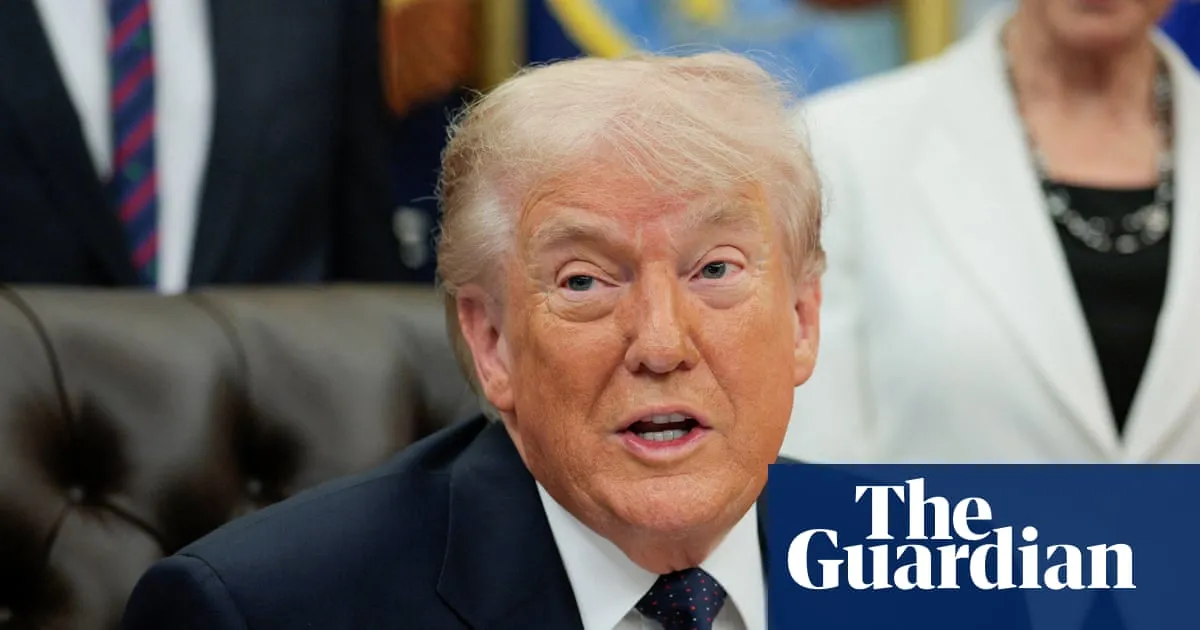
Donald Trump keeps up the threats against Iran while trying to get ships moving through the Strait of Hormuz. Photograph: Evan Vucci/Reuters View image in fullscreen Donald Trump keeps up the threats against Iran while trying to get ships moving through the Strait of Hormuz. Photograph: Evan Vucci/Reuters Wednesday briefing: How Trump’s attempt to reopen to Strait of Hormuz brought war closer again In today’s newsletter: The brief US effort to steer trapped vessels through the waterway put the fragile ceasefire under strain Good morning. Uncertainty once again reigns in the Middle East. The uneasy ceasefire between the US and Iran threatened to disintegrate after Donald Trump launched an initiative – dubbed “Project Freedom” – to help thousands of sailors stranded in the Gulf by the war to pass through the Strait of Hormuz. To Iran, the announcement was a cynical provocation. Flurries of fighting restarted as Iran sought to maintain its grip on the critical passageway out of the region. However overnight, the US president declared via social media that his project had been “paused for a short period of time” to see if an agreement with Iran could be finalised, but added that the blockade of ports would remain in place. For today’s First Edition, I spoke with Julian Borger, The Guardian’s senior international correspondent, about Trump’s strategy and the likelihood of a return to war. But first, this morning’s headlines. UK politics | Zack Polanski falsely claimed to be a spokesperson for the British Red Cross while campaigning for the Green Party leadership, the charity has said. Fuel shortages| Two million airline seats have been cut from this month’s schedules as airlines redraw their operations because of soaring jet fuel prices amid the Middle East conflict. UK news| A British crew member who became ill after a suspected outbreak of hantavirus on luxury cruise ship the MV Hondius is to be medically evacuated, officials have said. Tax | An increased windfall tax should be imposed on the UK’s largest banks, say trade union leaders, after the big four lenders reported almost £14bn in first-quarter profits, partly fuelled by market turbulence amid the Iran war. Society | People from black backgrounds in England are twice as likely to experience strokes as their white counterparts, while also being less likely to receive timely care, according to the largest study of its kind. In depth: ‘Iran’s strength is its ability to keep the strait closed’ View image in fullscreen About 850 vessels are stranded in the strait. Photograph: Amirhosein Khorgooi/ISNA/WANA/Reuters Since the conflict began in late February, an estimated 20,000 sailors have been trapped in the Gulf, unable to pass through the Strait of Hormuz into the open ocean. Concerns about their physical and mental health are growing as they face the prospect of enduring a blistering Middle Eastern summer while at anchor waiting for peace. Food and essential supplies are feared to be running low on some trapped vessels. On Sunday, Trump announced the launch of Project Freedom, a presidential initiative, which would see the stranded 850 vessels pass through the southern section of the Strait of Hormuz under the protection of the US military. Trump presented the plan as a humanitarian endeavour “meant to free people, companies, and countries that have done absolutely nothing wrong – they are victims of circumstance” in a post on Truth Social. But Iran did not buy it. They have imposed a blockade on foreign shipping since US-Israeli attacks on 28 February – and maintaining the closure is a key part of their negotiating position. Iran fired missiles at the UAE – a reminder to the world that a return to war is close. In a spate of claims and counterclaims, the US military said that they had destroyed six Iranian small boats carrying missiles and drones. Both sides appear keen to avoid a return to fighting. On Tuesday, the US’s top general Dan Caine clarified that Iran had not broken the ceasefire despite clashes over the strait. Now the US has backed down on the effort to guide stranded ships out – for now. Posting on Truth Social late on Tuesday, Trump said he had made the decision based “on the request of Pakistan and other Countries, the tremendous Military Success that we have had during the Campaign against the Country of Iran and, additionally, the fact that Great Progress has been made toward a Complete and Final Agreement with Representatives of Iran”. But unease remains, with no direct response yet from Iran and a lack of clarity over whether Trump could reinstate his latest mission. And observers fear another round of violence is not far away. Trump’s Project Freedom was aimed at undermining Iran’s capacity to maintain its blockade of the strait, says Julian Borger. “ Iran’s strength is its ability to keep the strait closed – and if that gets challenged then that’s an important card that Iran would have lost. That’s why it’s so important for them to keep it closed,” he says. “Even though Iran is being careful not to engage with the US navy directly, it is keen to keep up a sense of threat around going through the strait.” Just two vessels passed through the strait during Trump’s short-lived project. The US route passes through Emirati and Omani waters, which are more difficult to navigate through than the Iranian side of the passage due to coral reefs and other hazards. But the sheer length of time that ships have been stranded in the Gulf means that some will probably risk the route, says Julian. “For shipowners and crews, you’ve got to remember how desperate they are. They have been stuck there for weeks and weeks with no end in sight, so it is tempting for some to at least try to get out,” he says. “The owners will be watching to see what happens with the first trickle of ships.” After the initiative was announced, a South Korean flagged vessel was struck by what President Trump said was an Iranian attack, and missiles were fired at the UAE by Iran. The Iranians later apologised – but the volley highlights the challenge of convincing shipowners that it is safe to pass through the strait, especially with Iran’s decentralised military doctrine, which permits its military commanders significant freedom to operate independently of its country’s rulers. “Before the war, part of Iran’s defence doctrine was based on the expectation that their leadership would get decapitated. So, local commanders were given a lot of leeway in how they chose to carry out their operations and could inflict as much damage on the enemy as possible,” says Julian. “In a delicate situation like this, it’s difficult for the decentralised Iranian system to collaborate as much as they might want. This might be the reason you had those strikes on the UAE and then an expression of regret.” Markets were unconvinced by the move from Trump, with oil hovering about $115 a barrel. The Taco trade (“Trump always chickens out”) has been replaced by the Nacho trade (Not a chance Hormuz opens), according to Bloomberg columnist Javier Blas – and right now it appears both may be true. Despite the signalling from both Iran and the US that neither are keen to return to fighting, the game of chicken around the strait could easily lead to the end of the ceasefire, says Julian. The US has been resupplying its forces in the region, which includes guided-missile destroyers, more than 100 land and sea based aircraft, drones and about 15,000 troops. On Monday, Trump said Iran would be “blown off the face of the Earth” if vessels taking part in Project Freedom were attacked. “It definitely brings us closer to a return to fighting. Iran is in a difficult situation. It wants to keep the air of threat to dissuade shipping, but it does not want to go back to war. On the other hand, nor does Trump. Last week, he was given options by American military commanders which included a return to full-scale war or naval escorts. He chose the most cautious option, which is Project Freedom. But they are prepared to go back to war,” he says. What else we’ve been reading View image in fullscreen A good whistle can earn a sticker with a parakeet and the phrase ‘absolute assobio’, the Portuguese word for whistling. Photograph: Anadolu/Getty Images Brazil has been caught up in a whirlwind of whistling WhatsApp groups, where you aren’t allowed to communicate in any other form. Tiago Rogero reports. Martin The Guardian’s editor-in-chief Kath Viner has written an essay on how to survive the information crisis in the modern world – and how our journalism is responding to it. Patrick Francesc Planes interviews members of Gen Z in Peckham and finds out what gives them confidence in their looks. Martin Devi Sridhar has written about an exciting new study into the health benefits of eating earlier in the day. Patrick I don’t recall being anxious about whether my children were going to be boys or girls, but Imogen Crimp recalls finding out she was having a boy as a moment that changed her. Martin Sport View image in fullscreen Arsenal’s Bukayo Saka raises his hands in delight Photograph: Tom Jenkins/The Guardian Football | Bukayo Saka’s first-half goal edged Arsenal past Atlético Madrid to reach the Champions League final with a 2-1 aggregate victory. Tennis | Emma Raducanu has pulled out of the Italian Open with a post-viral illness, minutes after holding a positive pre-tournament press conference. Golf | Jon Rahm has reached a deal with the DP World Tour that will see him retain his membership and remain eligible for the 2027 Ryder Cup. The front pages View image in fullscreen The Guardian front page 6 May 2026 Photograph: The Guardian “Labour under pressure after UK borrowing costs hit 28-year high,” is the splash on The Guardian today. “Long-term borrowing costs highest in decades as prolonged inflation looms,” says the FT. The i paper leads with “Millions face flight cancellations as jet fuel shortage deepens and Iran ceasefire falters”, while the Sun focuses on the same issue, opting for the headline: “Come cry with me”. “New powers to treat Iran proxies as foreign spies” says the Times, while the Metro has “A target on the back of UK Iran critics”. “Thirty Green candidates probed over antisemitism,” says the Mail. The Telegraph has “Starmer could cost us the election, says Welsh leader,” while the Mirror carries a plea to voters from the prime minister: “We’re still only ones on your side.” Finally the Star with “Tale of the vape”, on Angela Rayner kicking the habit. Today in Focus View image in fullscreen Trump announced the withdrawal of US troops after the German Chancellor criticised the war in Iran. Photograph: Bernd Hartung/The Guardian Is Europe ready for a future without the US? – podcast Trump has threatened to pull 5,000 troops from Germany – while European leaders worry this is just the start of a US withdrawal from the continent. Deborah Cole discusses whether Europe is really ready to defend itself alone. Cartoon of the day | Ella Baron View image in fullscreen Illustration: Ella Baron The Upside A bit of good news to remind you that the world’s not all bad View image in fullscreen The €1 rate was previously only available to those receiving financial aid or with low incomes. Photograph: Christophe Archambault/AFP/Getty Images France is offering €1 meals to all university students – a move described by higher education minister Philippe Baptiste as “a small internal revolution” in tackling hardship. The subsidised three-course lunches, previously limited to those on low incomes, are now available to everyone. For one student, the impact is immediate: “I come here 20 times a month. That’s about €60. Whereas now, I’ll pay €20,” freeing up money for “going out or eating at a restaurant”. With nearly half of students reporting having skipped meals for financial reasons, the policy aims to ensure fewer go hungry. And finally, The Guardian’s puzzles are here to keep you entertained throughout the day. Until tomorrow. Explore more on these topics US-Israel war on Iran First Edition newsletter Iran Middle East and north Africa Oil Oil and gas companies Strait of Hormuz Commodities newsletters Share Reuse this content
SRCThe Guardian - World News
LANGEN
LEANCenter-Left
WORDS2 052
ENT12
WED · 2026-05-06 · 05:47 GMTBRIEF NSR-2026-0506-74090
NSR-2026-0506-74090Analysis·EN·Political Strategy
Wednesday briefing: How Trump’s attempt to reopen to strait of Hormuz brought war closer again
President Trump's initiative, "Project Freedom," aimed to reopen the Strait of Hormuz for stranded vessels amid the Middle East conflict. This effort, intended to ease passage, was perceived by Iran as a provocation, leading to renewed fighting as Iran sought to maintain control of the waterway.
Patrick GreenfieldThe Guardian - World NewsFiled 2026-05-06 · 05:47 GMTLean · Center-LeftRead · 9 min
The Guardian - World NewsFIG 01
Reading time
9min
Word count
2 052words
Sources cited
1cited
Entities identified
12entities
Quality score
100%
§ 01
Briefing Summary
AI-generatedNEWSAR · AI
President Trump's initiative, "Project Freedom," aimed to reopen the Strait of Hormuz for stranded vessels amid the Middle East conflict. This effort, intended to ease passage, was perceived by Iran as a provocation, leading to renewed fighting as Iran sought to maintain control of the waterway. Trump later announced the project was paused to allow for potential agreement with Iran, though port blockades would continue. The initiative strained the fragile ceasefire and raised concerns about a potential return to war, with Iran's ability to control the strait highlighted as a key factor. The article also briefly mentions other news items including UK politics, fuel shortages, a UK cruise ship incident, calls for a windfall tax on banks, and health disparities for Black individuals in England.
Confidence 0.90Sources 1Claims 5Entities 12
§ 02
Article analysis
Model · rule-basedFraming
Political Strategy
Conflict
Tone
Mixed Tone
AI-assessed
CalmNeutralAlarmist
Factuality
0.60 / 1.00
Mixed
LowHigh
Sources cited
1
Limited
FewMany
§ 03
Key claims
5 extracted01
Zack Polanski falsely claimed to be a spokesperson for the British Red Cross.
factualBritish Red Cross
Confidence
1.00
02
The US president declared the project paused to allow for potential agreement with Iran, but the blockade would remain.
factualarticle
Confidence
0.90
03
Donald Trump launched an initiative dubbed “Project Freedom” to help sailors pass through the strait of Hormuz.
factualarticle
Confidence
0.90
04
An estimated 20,000 sailors have been trapped in the Gulf since late February.
statisticarticle
Confidence
0.80
05
Iran viewed the announcement as a cynical provocation, leading to renewed fighting.
factualarticle
Confidence
0.80
§ 04
Full report
9 min read · 2 052 words§ 05
Entities
12 identifiedKey playerOppositionContextPositiveNeutralNegative
Organizations4
Locations4
§ 06
Keywords & salience
10 termsiran
1.00
donald trump
1.00
strait of hormuz
1.00
us-iran relations
0.90
war threat
0.80
ceasefire
0.70
project freedom
0.60
middle east conflict
0.50
fuel prices
0.40
windfall tax
0.40
§ 07
Topic connections
Interactive graph Network visualization showing 51 related topics
View Full Graph Person Organization Location Event|Click node to navigate|Edge numbers = shared articles