Outside the prime minister's office, as the rain suddenly cleared and sunlight broke through, the crowd swelled and the chanting grew louder. This wasn't just an older generation holding on to the past. Many in their twenties and thirties were there too.Akari Maezono, who is in her 30s, held brightly painted paper lanterns calling for peace. "I'm angry that these changes could be made without properly listening to us, the public," she said.Nearby was an older gentleman standing tall with a bright red banner. "The Japanese constitution, Article 9 in particular, must be protected at all costs," he said. "It kept Japan from being drawn into past conflicts like the US-Iran war. Without it, we surely would have entered the war by now."'No more war'Japan's 1947 constitution was enshrined just two years after the end of World War Two, when the United States defeated the country by dropping atomic bombs on Hiroshima and Nagasaki, killing some 200,000 people by the end of 1945.Article 9's "pacifist clause" renounced war as a sovereign right of Japan, and stipulated that the country would not maintain military forces for the purpose of waging war - a principle that has since been reinterpreted to allow the self-defence forces to exist.Supporters saw pacifism as a moral improvement on Japan's wartime militarism.But even at the time, Article 9 wasn't universally accepted. It was controversial due to perceived foreign imposition, with critics arguing it was heavily shaped by the US. There were also security concerns about Japan being vulnerable amid a rise in Cold War tensions.BBC News: Jiro AkibaFor many though, especially those with living memory of conflict and the atomic bombings, any shift away from pacifism ignites fear. Recently, survivors of the Hiroshima atomic bomb pressed for the abolition of nuclear arms at the United Nations, calling to build a human society free from nuclear weapons and war."Nuclear weapons were used because we went to war," said Jiro Hamasumi at the 2026 review conference of the Nuclear Non-Proliferation Treaty. He is a hibakusha, a Japanese word to describe bomb-affected people."No more war, no more hibakusha," he added.Some fear Japan could be drawn into conflict again, a sentiment that is playing out on the streets. Demonstrations have been spreading beyond Tokyo with rallies organised in other major cities like Osaka, Kyoto, and Fukuoka. Attendance is reportedly growing week by week, with posts on social media platforms like X playing a big role.Younger Japanese, who feel they have more at stake in what comes next for Japan, are sharing details of the demonstrations and bringing along their friends.But while the protests have swelled to some of Japan's largest in decades, they highlight just one side of the story.A country dividedAcross Japan, opinion is divided. Recent polls point in different directions. Some suggest growing support for a stronger military to keep up with current world environments. Others show clear resistance.Those in favour of revisions to the constitution argue that Japan's security environment has fundamentally changed. They say Article 9, written in the aftermath of defeat, is too restrictive, and that Japan must be able to deter aggression, support allies, and respond proactively to crises in the region.For them, giving the military more legitimacy is not about ignoring pacifism, but about making sure the country can survive an increasingly unstable world.Meanwhile, those against any revisions say incremental changes risk hollowing out the pacifist clause. They warn that strengthening military powers and loosening long-standing restrictions could draw Japan into conflicts overseas. For many, Article 9 is not just a legal constraint, but a moral commitment shaped by the devastation of past wars.
SRCBBC News - World
LANGEN
LEANCenter
WORDS600
ENT12
THU · 2026-05-07 · 22:15 GMTBRIEF NSR-2026-0508-74580
NSR-2026-0508-74580News Report·EN·Conflict
Anti-war protests rock Japan as PM pushes for stronger defence
Anti-war protests are occurring across Japan as Prime Minister Fumio Kishida's government pushes for a stronger national defence. Demonstrations, including younger generations, are voicing concerns about potential shifts away from the country's post-war pacifist constitution, particularly Article 9, which renounces war.
BBC News - WorldFiled 2026-05-07 · 22:15 GMTLean · CenterRead · 3 min
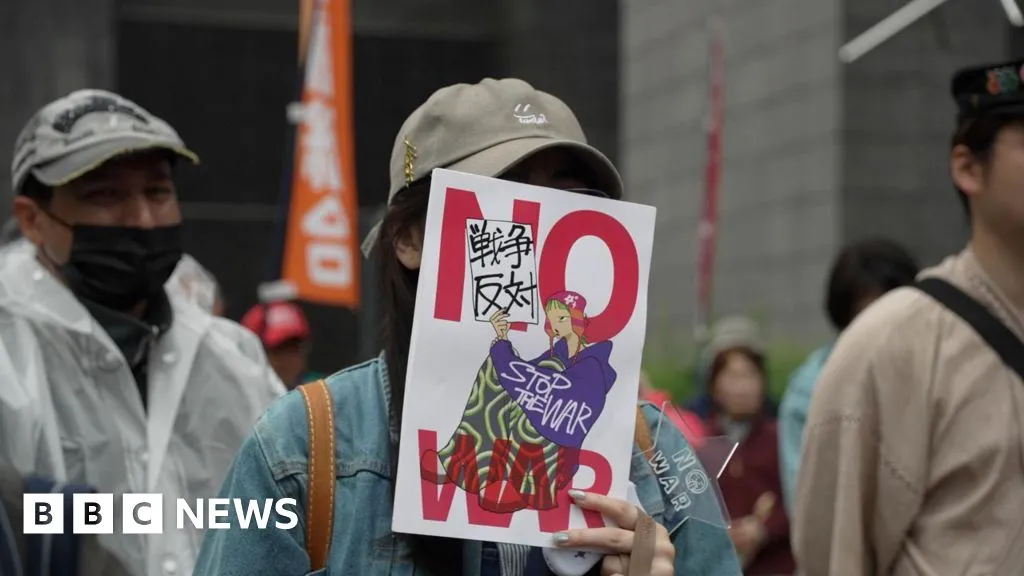
BBC News - WorldFIG 01
Reading time
3min
Word count
600words
Sources cited
3cited
Entities identified
12entities
Quality score
100%
§ 01
Briefing Summary
AI-generatedNEWSAR · AI
Anti-war protests are occurring across Japan as Prime Minister Fumio Kishida's government pushes for a stronger national defence. Demonstrations, including younger generations, are voicing concerns about potential shifts away from the country's post-war pacifist constitution, particularly Article 9, which renounces war. Protesters fear this could lead Japan back into conflict, referencing the devastating impact of World War Two and the atomic bombings. These rallies, initially concentrated in Tokyo, are now spreading to other major cities, with growing attendance week by week. The movement aims to protect the constitutional clause that has historically kept Japan out of foreign wars.
Confidence 0.90Sources 3Claims 5Entities 12
§ 02
Article analysis
Model · rule-basedFraming
Conflict
Human Interest
Tone
Mixed Tone
AI-assessed
CalmNeutralAlarmist
Factuality
0.60 / 1.00
Mixed
LowHigh
Sources cited
3
Well sourced
FewMany
§ 03
Key claims
5 extracted01
Survivors of the atomic bombings (hibakusha) advocate for nuclear disarmament and a society free from war.
quoteJiro Hamasumi
Confidence
0.95
02
Protesters are concerned that changes to Japan's constitution, particularly Article 9, could lead to increased military involvement and potential conflict.
quoteAkari Maezono, unnamed older gentleman
Confidence
0.95
03
Japan's 1947 constitution, Article 9, renounced war as a sovereign right and stipulated against maintaining military forces for war, though it has been reinterpreted.
factual
Confidence
0.90
04
Anti-war protests are occurring in Japan, with significant participation from younger generations.
factual
Confidence
0.90
05
Recent polls in Japan show divided public opinion regarding a stronger military, with some indicating growing support and others showing clear resistance.
factual
Confidence
0.70
§ 04
Full report
3 min read · 600 words§ 05
Entities
12 identifiedKey playerOppositionContextPositiveNeutralNegative
Locations5
§ 06
Keywords & salience
10 termsjapanese constitution
1.00
article 9
1.00
anti-war protests
1.00
pacifism
0.90
defence policy
0.80
nuclear weapons
0.70
public opinion
0.60
world war two
0.50
hibakusha
0.50
security concerns
0.40
§ 07
Topic connections
Interactive graph Network visualization showing 51 related topics
View Full Graph Person Organization Location Event|Click node to navigate|Edge numbers = shared articles