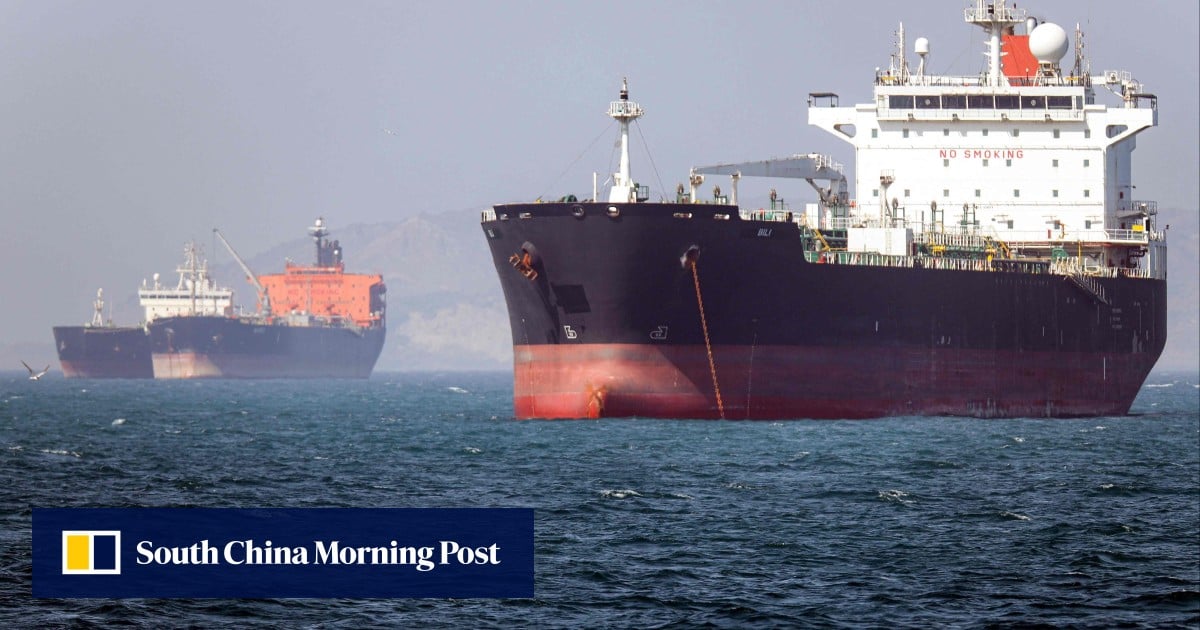
As US President Donald Trump prepares to visit Beijing next week after a six-week delay, the cause of the delay – the war on Iran and the resulting closure of the Strait of Hormuz – risks becoming a fresh point of friction in his summit with his Chinese counterpart Xi Jinping.While both China and the US stand to benefit from the reopening of the strait and a permanent end to the war, Beijing and Washington have viewed the crisis through different lenses and sharply diverged over how to achieve their goals.Washington, buoyed by America’s relative energy independence, may be betting China will be more vulnerable to Gulf energy disruptions. Beijing, meanwhile, may calculate that prolonged instability will weigh more heavily on the US and its allies.
SRCSouth China Morning Post
LANGEN
LEANCenter-Right
WORDS126
ENT9
SAT · 2026-05-09 · 09:04 GMTBRIEF NSR-2026-0509-74858
NSR-2026-0509-74858Analysis·EN·Diplomatic
Xi-Trump summit: why the Iran war could become fresh point of friction
President Donald Trump's upcoming visit to Beijing, delayed by six weeks, faces a potential point of friction with Chinese President Xi Jinping: the war in Iran and the closure of the Strait of Hormuz. While both nations desire the strait's reopening and an end to the conflict, their approaches differ significantly.
Laura Zhou,Cao JiaxuanSouth China Morning PostFiled 2026-05-09 · 09:04 GMTLean · Center-RightRead · 1 min
South China Morning PostFIG 01
Reading time
1min
Word count
126words
Sources cited
0cited
Entities identified
9entities
Quality score
100%
§ 01
Briefing Summary
AI-generatedNEWSAR · AI
President Donald Trump's upcoming visit to Beijing, delayed by six weeks, faces a potential point of friction with Chinese President Xi Jinping: the war in Iran and the closure of the Strait of Hormuz. While both nations desire the strait's reopening and an end to the conflict, their approaches differ significantly. The US, with its energy independence, may believe China is more susceptible to energy disruptions. Conversely, China might perceive prolonged instability as more detrimental to the US and its allies. This divergence in perspective on the Iran crisis could complicate discussions during the summit.
Confidence 0.85Claims 5Entities 9
§ 02
Article analysis
Model · rule-basedFraming
Diplomatic
Political Strategy
Tone
Measured
AI-assessed
CalmNeutralAlarmist
Factuality
0.40 / 1.00
Mixed
LowHigh
Sources cited
0
No named sources
FewMany
§ 03
Key claims
5 extracted01
Beijing and Washington have viewed the crisis through different lenses and sharply diverged over how to achieve their goals.
factual
Confidence
0.95
02
Both China and the US stand to benefit from the reopening of the strait and a permanent end to the war.
factual
Confidence
0.90
03
The war on Iran and closure of the Strait of Hormuz risks becoming a fresh point of friction in the Trump-Xi summit.
prediction
Confidence
0.80
04
Beijing may calculate that prolonged instability will weigh more heavily on the US and its allies.
prediction
Confidence
0.70
05
Washington may be betting China will be more vulnerable to Gulf energy disruptions.
prediction
Confidence
0.70
§ 04
Full report
1 min read · 126 words§ 05
Entities
9 identifiedKey playerOppositionContextPositiveNeutralNegative
§ 06
Keywords & salience
8 termsstrait of hormuz
1.00
iran war
1.00
xi-trump summit
0.90
us-china relations
0.80
energy disruptions
0.70
energy independence
0.60
geopolitical friction
0.50
gulf energy
0.40
§ 07
Topic connections
Interactive graph Network visualization showing 51 related topics
View Full Graph Person Organization Location Event|Click node to navigate|Edge numbers = shared articles