EXPLAINERTrump and Xi meet as trade, Taiwan and the Iran-war" class="entity-link entity-event" data-entity-id="38748" data-entity-type="event">Iran war dominate a high-stakes China-summit" class="entity-link entity-event" data-entity-id="125573" data-entity-type="event">US-China summit.Published On 13 May 2026United States President Donald Trump has departed for Beijing ahead of a high-stakes summit with Chinese President Xi Jinping, after weeks of unsuccessful US efforts to persuade China to help bring Iran back to negotiations and ease tensions around the Strait of Hormuz.The leaders of the world’s two largest economies are due to meet on Thursday and Friday during Trump’s first visit to China since 2017, with talks expected to focus on trade, Taiwan, artificial intelligence and the war involving Iran.Recommended Stories list of 3 itemslist 1 of 3Trump and Xi: The history of encounters between two superpower leaderslist 2 of 3Trump-Xi meeting: Could China, US form a ‘G2’?list 3 of 3Trump says he does not need Xi’s help on Iran-war" class="entity-link entity-event" data-entity-id="38748" data-entity-type="event">Iran war as he heads to Chinaend of listHere is what we know about the upcoming summit and the key issues expected to dominate the agenda.Why does the Trump-Xi summit matter?The Trump-Xi summit is a high-level meeting between Trump and Xi Jinping taking place in Beijing as the world’s two largest economies face growing tensions over trade, technology, Taiwan and the Iran-war" class="entity-link entity-event" data-entity-id="38748" data-entity-type="event">Iran war.The summit is particularly significant because Trump will be the first US leader to visit China in nearly a decade, while the talks also come at a time of heightened geopolitical and economic uncertainty. Originally expected earlier this year, the meeting was delayed by the war on Iran.Before departing for Beijing, Trump said he and Xi would have a “long talk” about Iran, although he stressed that trade would remain the central focus of the visit.“Trade remains politically powerful, especially for Trump, because it gives rivalry a language that voters can easily understand,” said Salvador Santino Regilme, associate professor and programme chair of international relations at Leiden University. “Yet the deeper conflict concerns hierarchy, legitimacy and the future architecture of global order.”Regilme added that both countries remain locked in a relationship shaped by strategic rivalry and deep economic dependence.“The United States still relies heavily on China’s manufacturing capacity and low-cost production, while China depends on access to US consumers, technology, capital markets and the wider stability of the dollar-centred global economy.”“This is the paradox of US-China rivalry: each side wants greater autonomy, yet both remain tied to a structure of mutual dependence that neither can easily dismantle without hurting itself,” Regilme added.What are the biggest issues at the Trump-Xi summit?Analysts say the US and China are entering the summit with different priorities.Trump is expected to focus heavily on trade with the aim of securing what he can present as economic wins ahead of November’s midterm elections. Washington has pushed for China to increase purchases of American goods, including Boeing aircraft, beef and soya beans, while also seeking closer investment and trade cooperation.Beijing, meanwhile, is expected to press the US to ease restrictions on advanced semiconductor exports and roll back measures limiting China’s access to critical chip-making technology. Taiwan is also likely to remain one of the most sensitive and contested issues in the summit.Trump has also said he plans to raise the case of Jimmy Lai, the jailed Hong Kong media tycoon and pro-democracy figure sentenced earlier this year under Beijing’s national security law.Beyond bilateral disputes, the two leaders are also expected to discuss the war on Iran, tensions around the Strait of Hormuz and the growing risks linked to artificial intelligence.The biggest flashpoints include:Tech vs rare earthsTechnology and supply chains are expected to be among the key issues at the summit, as Washington and Beijing remain locked in a widening battle over semiconductors and critical minerals.The US has tightened restrictions on advanced chips and chip-making equipment going to China, saying the measures are needed to slow Beijing’s military and AI development.China, meanwhile, controls roughly 90 percent of global rare earth refining, materials essential for semiconductors, electric vehicles, military equipment and electronics, and has responded with tighter export controls on several critical minerals.Beijing is expected to push for fewer US technology restrictions, while Washington wants China to resume shipments of rare earths and critical minerals after export controls disrupted parts of the American automotive and aerospace sectors. Iran-war" class="entity-link entity-event" data-entity-id="38748" data-entity-type="event">Iran war and the Strait of HormuzThe Iran-war" class="entity-link entity-event" data-entity-id="38748" data-entity-type="event">Iran war is expected to be one of the most closely watched issues at the summit.Analysts expect Washington to press Beijing to use its influence over Tehran, particularly because China remains the largest buyer of Iranian oil — by far — purchasing more than 80 percent of Iran’s shipped crude exports. US officials have also urged China to support efforts to reopen and secure the Strait of Hormuz, a vital route for global energy supplies.The conflict has also increased pressure on China’s economy and energy security. About half of China’s crude oil imports come from the Middle East, while disruptions in the Gulf have left commercial shipping vulnerable to attacks and delays.“I have no doubt that Trump is going to at least try to enlist Xi Jinping to assert some pressure for the Iranians to come back to the table and agree to a settlement,” said Dan Grazier, a senior fellow and director of the National Security Reform programme at the Stimson Center.Experts say Iran may be one of the few areas where US and Chinese interests overlap, as both countries benefit from stable energy flows through the Gulf.“Both sides would like to see the strait opened,” said Gregory Poling, director and senior fellow at the Center for Strategic and International Studies (CSIS), but he noted Beijing is unlikely to align itself too closely with Washington’s approach towards Tehran.While China wants shipping through the Strait of Hormuz restored, Poling argued the diplomatic and strategic pressure created by the disruption is falling far more heavily on Washington.“It is not China being humiliated in the strait … It’s the US.”Taiwan: An existential problemTaiwan is expected to be one of the most sensitive issues, with Beijing repeatedly warning that it remains the biggest source of tension in US-China relations.China claims the self-ruled island as part of its territory and has increased military pressure on Taiwan in recent years through regular air and naval operations around the island.Tensions have risen further under Taiwanese President William Lai Ching-te, whom Beijing has sharply criticised because his party views Taiwan as already sovereign.The US officially recognises the communist mainland as China but is legally committed under the Taiwan Relations Act to support Taiwan’s self-defence, a policy that has long angered China. Washington has approved tens of billions of dollars in military sales to Taiwan over the years, including an $11bn package announced last year, and Trump recently said he discussed the issue with Xi ahead of the summit.Analysts say Taiwan will be paying close attention to what Trump and Xi say publicly after the summit, especially on defence and arms sales.“What matters is the precise wording,” Regilme said. “Whether Trump reaffirms support for Taiwan’s defence, whether he sounds ambiguous on arms sales, and whether he gives Xi any rhetorical opening to claim that Washington is restraining Taipei.”Regilme said Beijing is likely to push for limits on US arms sales and stronger political restrictions on Taiwan, while also discouraging any movement towards formal independence. At the same time, Taipei fears it could become part of a broader geopolitical bargain between Washington and Beijing.
SRCAl Jazeera
LANGEN
LEANCenter
WORDS1 220
ENT12
WED · 2026-05-13 · 07:08 GMTBRIEF NSR-2026-0513-75834
NSR-2026-0513-75834News Report·EN·Diplomatic
Trump and Xi to meet in Beijing: The key issues shaping the China summit
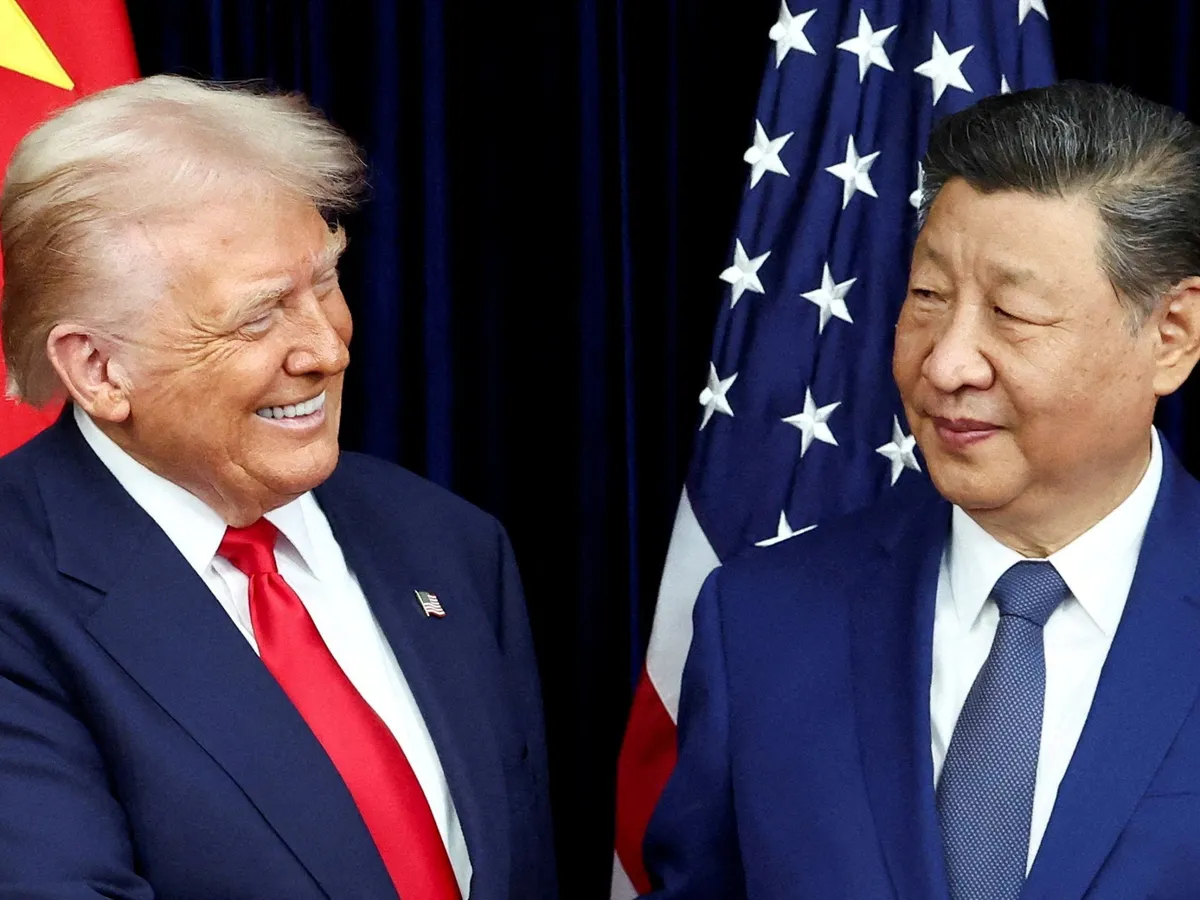
US President Donald Trump is traveling to Beijing for a high-stakes summit with Chinese President Xi Jinping on Thursday and Friday. The meeting, Trump's first visit to China since 2017, will address growing tensions between the world's two largest economies.
Al JazeeraFiled 2026-05-13 · 07:08 GMTLean · CenterRead · 5 min
Al JazeeraFIG 01
Reading time
5min
Word count
1 220words
Sources cited
1cited
Entities identified
12entities
Quality score
100%
§ 01
Briefing Summary
AI-generatedNEWSAR · AI
US President Donald Trump is traveling to Beijing for a high-stakes summit with Chinese President Xi Jinping on Thursday and Friday. The meeting, Trump's first visit to China since 2017, will address growing tensions between the world's two largest economies. Key issues on the agenda include trade, Taiwan, artificial intelligence, and the war involving Iran. The summit is significant due to the ongoing geopolitical and economic uncertainty, and the delayed meeting was partly attributed to the Iran war. While trade is expected to be a central focus, the underlying conflict involves strategic rivalry and deep economic interdependence between the two nations.
Confidence 0.90Sources 1Claims 5Entities 12
§ 02
Article analysis
Model · rule-basedFraming
Diplomatic
Political Strategy
Tone
Measured
AI-assessed
CalmNeutralAlarmist
Factuality
0.70 / 1.00
Factual
LowHigh
Sources cited
1
Limited
FewMany
§ 03
Key claims
5 extracted01
The US relies heavily on China's manufacturing, while China depends on US consumers and stability.
quoteSalvador Santino Regilme
Confidence
1.00
02
Trade remains politically powerful for Trump as it provides a language voters understand.
quoteSalvador Santino Regilme
Confidence
1.00
03
The summit is significant as Trump will be the first US leader to visit China in nearly a decade.
factual
Confidence
0.90
04
Trump and Xi to meet in Beijing to discuss trade, Taiwan, artificial intelligence, and the war involving Iran.
factual
Confidence
0.90
05
The meeting was delayed by the war on Iran.
factual
Confidence
0.80
§ 04
Full report
5 min read · 1 220 words§ 05
Entities
12 identifiedKey playerOppositionContextPositiveNeutralNegative
People3
Organizations1
Locations6
§ 06
Keywords & salience
8 termsus-china summit
1.00
trade
0.90
iran war
0.80
taiwan
0.70
artificial intelligence
0.60
strategic rivalry
0.50
global order
0.50
economic dependence
0.40
§ 07
Topic connections
Interactive graph Network visualization showing 51 related topics
View Full Graph Person Organization Location Event|Click node to navigate|Edge numbers = shared articles