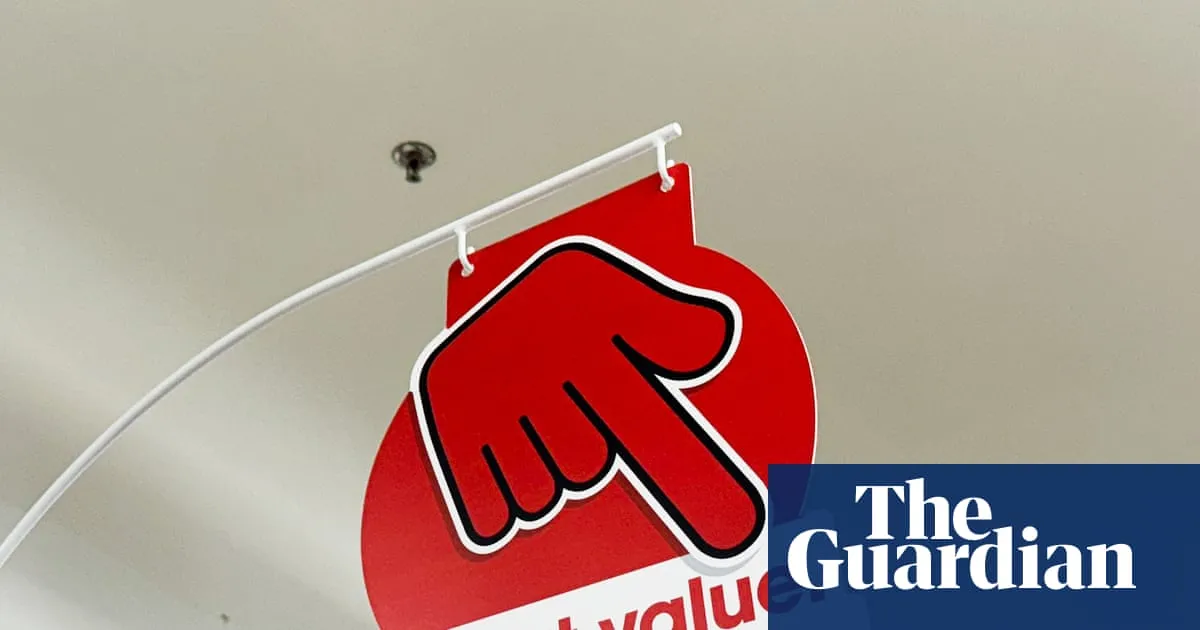
Coles’s “Down Down” promotion is one of Australia’s best known campaigns. But the supermarket has been caught red-handed after a federal court judge found Coles misled shoppers by promoting fake discounts.Through its proceedings, Australia’s competition regulator has given consumers an intriguing look-behind-the-curtain moment, exposing how a major supermarket sways shoppers to buy its products.Here’s how the case unfolded.Faulty ‘guardrails’In a ruling delivered on Thursday morning accompanied by a 523-paragraph judgment, justice Michael O’Bryan explained how Coles tripped itself up when trying to ramp up its well-known campaign.The Down Down promotion, known for its catchy jingle and large red hand, relies on a practice called “was/is” comparative pricing that claims a product is cheaper than it used to be.This promotional tactic has been scrutinised by the Australian Competition and Consumer Commission at Coles and other retailers.The concern is that it is prone to abuse by creating misleading discounts, often achieved by temporarily increasing a price only to immediately drop it again, fooling customers into believing they are getting a good deal.The court heard that Coles has internal business rules called “guardrails” that meant products needed to stay at the non-promotional “was” price for an extended period, before prices were dropped and the product was marked with a “Down Down” sticker.The guardrails are more than guidelines given they were developed to account for consumer law and avoid the accusation that the “was” price was not genuine.In late 2021 and early 2022, Coles started to tamper with its guardrails because of two main factors, according to the judgment.First, it was receiving price increase requests from suppliers in an inflationary period and therefore no longer wanted to sell the products at discounted prices.But it also had an eye on its rival Woolworths, which was using a shortened timeframe to establish a “was” price, before placing products in its “Prices Dropped” promotion.By January 2022, Coles was using a “was” price length of 12 weeks. In March, it dropped the guardrail requirement to just four weeks.Consumers noticed and started sending the regulator examples of items that were promoted as discounts, despite being more expensive than they had been just weeks earlier.The court found Coles engaged in conduct that has misled its customers. Photograph: Asanka Ratnayake/Getty ImagesThe ACCC’s interest was piqued and it went on to find hundreds of affected products, including everything from deodorant to butter.O’Bryan said on Thursday that Coles changed its practices “in response to perceived competitive pressure from its closest competitor”.“I have concluded that the ‘Down Down’ tickets for the sample products would not have been misleading if the products had been sold at the ‘was’ price for a minimum period of 12 weeks immediately preceding the ‘Down Down’ promotion,” O’Bryan said.Fat supermarket profitsThere is still much to be worked out, including legal discussions over penalties that could result in tens of millions of dollars of fines for Coles.Given Coles’s current guardrails are not public, it’s unclear whether the supermarket will need to overhaul its promotional practices.The supermarket said it was reviewing the judgment.There’s also a question over whether 12 weeks will be read as a standard timeframe to establish a “was” price in the broader industry, or whether the judgment is specific to Coles.Woolworths is facing very similar accusations from the ACCC in the federal court, and is awaiting judgment.It is clear, however, that the reputation of Australia’s big supermarkets has been rightly shot to pieces in recent years.They have gone from being the early pandemic heroes that fed Australia, to a duopoly that fattens profit margins during periods of high living costs at the expense of shoppers and farmers.The court has now found Coles to have engaged in conduct that has misled its customers, contravening consumer law.In a candid comment in his judgment, O’Bryan said there had been a “race to the bottom” in compliance to consumer laws due to the competitive pressure Coles was facing from Woolworths.In other words, Coles put its commercial interests above its customers and was caught red-handed.
SRCThe Guardian - World News
LANGEN
LEANCenter-Left
WORDS661
ENT7
THU · 2026-05-14 · 06:19 GMTBRIEF NSR-2026-0514-76147
NSR-2026-0514-76147News Report·EN·Legal & Judicial
Coles put commercial interests above its customers – and was caught red-handed
Coles has been found by a federal court judge to have misled customers through its "Down Down" promotion by falsely advertising discounts. The Australian Competition and Consumer Commission (ACCC) investigated Coles's use of "was/is" comparative pricing, which claims products are cheaper than they previously were.
Jonathan Barrett Business editorThe Guardian - World NewsFiled 2026-05-14 · 06:19 GMTLean · Center-LeftRead · 3 min
The Guardian - World NewsFIG 01
Reading time
3min
Word count
661words
Sources cited
1cited
Entities identified
7entities
Quality score
100%
§ 01
Briefing Summary
AI-generatedNEWSAR · AI
Coles has been found by a federal court judge to have misled customers through its "Down Down" promotion by falsely advertising discounts. The Australian Competition and Consumer Commission (ACCC) investigated Coles's use of "was/is" comparative pricing, which claims products are cheaper than they previously were. In late 2021 and early 2022, Coles weakened its internal "guardrails" that ensured a product remained at its original price for a sufficient period before being advertised as discounted. This was done to manage supplier price increases and compete with rival Woolworths' promotional tactics. The court ruled that Coles's actions misled consumers, as products were advertised as discounted when they had been more expensive just weeks prior.
Confidence 0.90Sources 1Claims 5Entities 7
§ 02
Article analysis
Model · rule-basedFraming
Legal & Judicial
Economic Impact
Tone
Mixed Tone
AI-assessed
CalmNeutralAlarmist
Factuality
0.80 / 1.00
Factual
LowHigh
Sources cited
1
Limited
FewMany
§ 03
Key claims
5 extracted01
The court found that Coles changed its practices in response to perceived competitive pressure from its closest competitor.
quoteJustice Michael O’Bryan
Confidence
1.00
02
Coles shortened the required 'was' price period from 12 weeks to four weeks due to supplier price increases and competitive pressure from Woolworths.
factualthe judgment
Confidence
1.00
03
Coles tampered with its internal business rules ('guardrails') for its 'Down Down' promotion in late 2021 and early 2022.
factualthe judgment
Confidence
1.00
04
Coles has been found by a federal court judge to have misled shoppers by promoting fake discounts through its 'Down Down' campaign.
factualfederal court judge
Confidence
1.00
05
Consumers noticed and reported items promoted as discounts that were more expensive than they had been just weeks earlier.
factualarticle
Confidence
0.90
§ 04
Full report
3 min read · 661 words§ 05
Entities
7 identifiedKey playerOppositionContextPositiveNeutralNegative
Organizations4
Locations1
§ 06
Keywords & salience
8 termsmisleading discounts
1.00
comparative pricing
0.90
consumer law
0.80
accc
0.70
coles
0.70
down down promotion
0.60
retailers
0.50
court ruling
0.40
§ 07
Topic connections
Interactive graph Network visualization showing 3 related topics
View Full Graph Person Organization Location Event|Click node to navigate|Edge numbers = shared articles