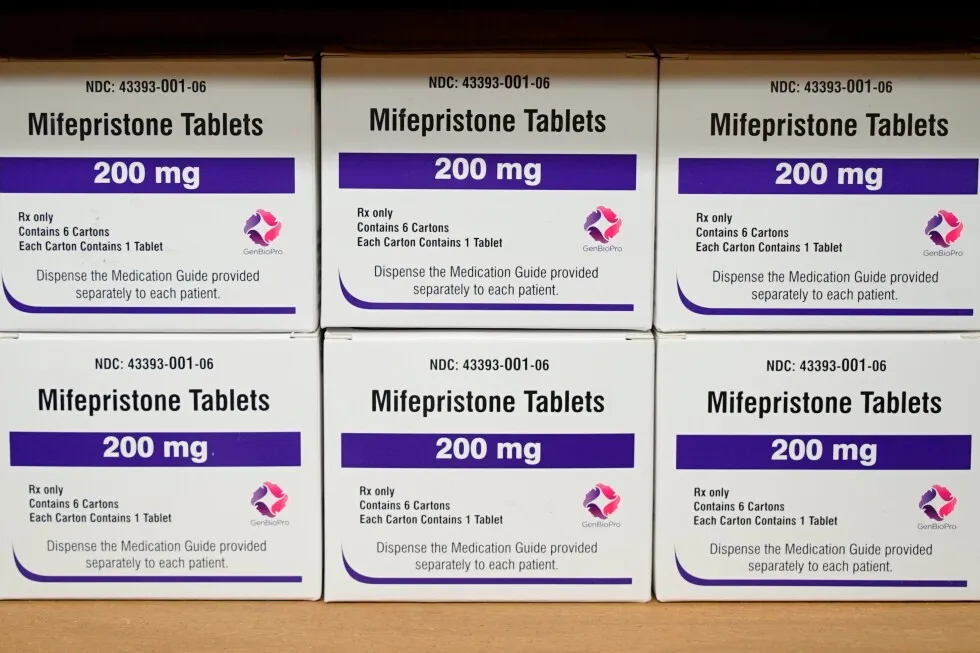
Boxes of the drug mifepristone sit on a shelf at the West Alabama Women's Center in Tuscaloosa, Ala., March 16, 2022. (AP Photo/Allen G. Breed, File) 2026-05-14T21:31:32Z WASHINGTON (AP) — The Supreme Court on Thursday preserved women’s access to a drug used in the most common method of abortion , rejecting lower-court restrictions while a lawsuit continues. The court’s order allows women seeking abortions to continue obtaining the drug, mifepristone, at pharmacies or through the mail, without an in-person visit to a doctor. Access is likely to remain uninterrupted at least until into next year as the case plays out, including a potential appeal to the high court. The justices granted emergency requests from makers of mifepristone, who are appealing a federal appeals court ruling that would require women to see a doctor in person and halt delivery of mifepristone through the mail. The federal Food and Drug Administration, which first approved mifepristone for use in abortion in 2000, stopped requiring in-person visits five years ago. Justices Clarence Thomas and Samuel Alito dissented, with Thomas writing that the two companies, Danco Laboratories and GenBioPro, are not entitled to the court’s action to spare them “lost profits from their criminal enterprise.” Anti-abortion groups, frustrated with President Donald Trump’s administration, are pushing the FDA to move faster with a review that they hope will result in restrictions on mifepristone, including blocking its prescribing via telehealth platforms. The Republican administration says the work takes time. (
SRCAssociated Press (AP)
LANGEN
LEANCenter
WORDS243
ENT11
THU · 2026-05-14 · 21:53 GMTBRIEF NSR-2026-0514-76368
NSR-2026-0514-76368News Report·EN·Legal & Judicial
Supreme Court preserves access to widely used abortion pill, while lawsuit plays out
The Supreme Court has preserved access to mifepristone, a widely used abortion pill, while a lawsuit challenging its availability proceeds. The court rejected lower-court restrictions that would have required in-person doctor visits and halted mail delivery of the drug.
Associated Press (AP)Filed 2026-05-14 · 21:53 GMTLean · CenterRead · 1 min
Associated Press (AP)FIG 01
Reading time
1min
Word count
243words
Sources cited
3cited
Entities identified
11entities
Quality score
100%
§ 01
Briefing Summary
AI-generatedNEWSAR · AI
The Supreme Court has preserved access to mifepristone, a widely used abortion pill, while a lawsuit challenging its availability proceeds. The court rejected lower-court restrictions that would have required in-person doctor visits and halted mail delivery of the drug. This decision allows women to continue obtaining mifepristone through pharmacies or mail, with access likely uninterrupted until at least next year. The justices granted emergency requests from mifepristone makers appealing a federal appeals court ruling. Justices Clarence Thomas and Samuel Alito dissented. Anti-abortion groups are seeking FDA restrictions on the drug, while the Republican administration states the review process takes time.
Confidence 0.90Sources 3Claims 5Entities 11
§ 02
Article analysis
Model · rule-basedFraming
Legal & Judicial
Public Health
Tone
Measured
AI-assessed
CalmNeutralAlarmist
Factuality
0.80 / 1.00
Factual
LowHigh
Sources cited
3
Well sourced
FewMany
§ 03
Key claims
5 extracted01
The FDA first approved mifepristone for abortion use in 2000 and stopped requiring in-person visits five years ago.
factualFDA
Confidence
1.00
02
Thomas wrote that the companies are not entitled to court action to spare them 'lost profits from their criminal enterprise.'
quoteClarence Thomas
Confidence
1.00
03
Justices Clarence Thomas and Samuel Alito dissented.
factual
Confidence
1.00
04
The court's order allows continued access to mifepristone through pharmacies or mail without an in-person doctor visit.
factual
Confidence
1.00
05
The Supreme Court preserved women's access to mifepristone, rejecting lower-court restrictions.
factual
Confidence
1.00
§ 04
Full report
1 min read · 243 words§ 05
Entities
11 identifiedKey playerOppositionContextPositiveNeutralNegative
People3
Organizations6
§ 06
Keywords & salience
10 termsmifepristone
1.00
abortion pill
1.00
supreme court
0.90
access to medication
0.80
fda
0.70
legal challenge
0.70
telehealth
0.60
anti-abortion groups
0.50
pharmacies
0.40
mail delivery
0.40
§ 07
Topic connections
Interactive graph No topic relationship data available yet. This graph will appear once topic relationships have been computed.