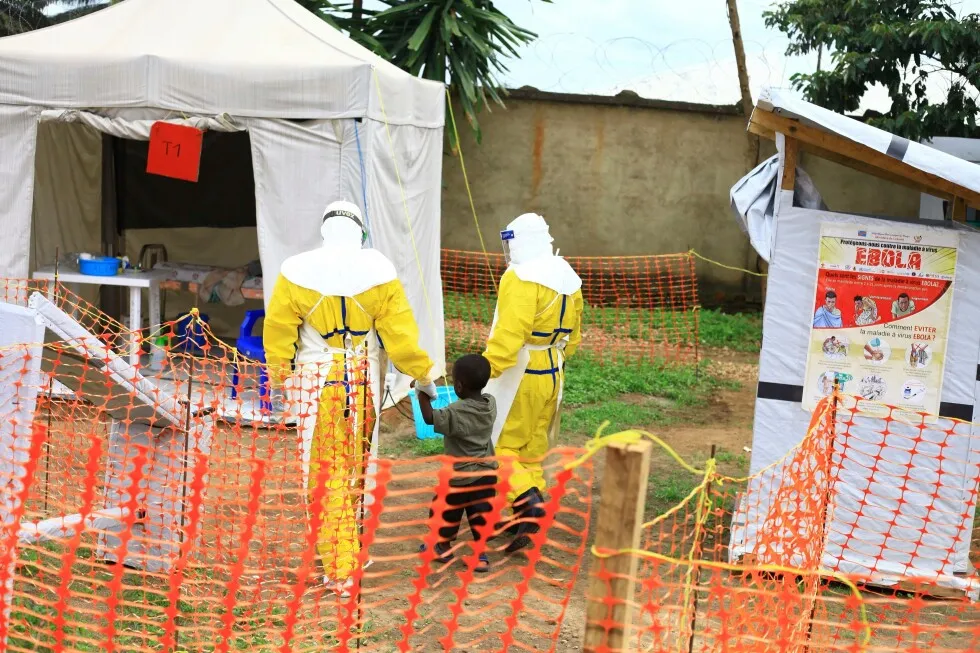
Health workers walk with a boy suspected of having the
Ebola virus at an
Ebola treatment center in Beni, eastern Congo, Sept 9, 2018. (AP Photo/Al-hadji Kudra Maliro, File) 2026-05-15T07:11:15Z KINSHASA, Congo (AP) — Africa’s top public health body on Friday confirmed a new
Ebola outbreak in Congo’s remote
Ituri province, with 246 suspected cases and 65 deaths recorded so far. The deaths and suspected cases have been recorded mainly in the
Mongwalu and
Rwampara health zones, the
Africa Centres for Disease Control and Prevention said in a statement. The
Ebola virus is highly contagious and can be contracted through bodily fluids such as vomit, blood or semen. The disease it causes is rare, but severe and often fatal. “Four deaths have been reported among laboratory-confirmed cases. Suspected cases have also been reported in
Bunia, pending confirmation,” the agency said, referring to the capital of
Ituri province, near the border with
Uganda. It said preliminary laboratory results had detected the
Ebola virus in 13 of 20 samples. The results suggest a non-
Ebola Zaire strain of the virus with sequencing ongoing to further characterize the strain, the agency said. The
Ebola Zaire strain has been prominent in Congo’s past outbreaks. freestar.queue.push(function () { window.fsAdCount = window.fsAdCount + 1 || 0; let customChannel = '/dynamic_' + fsAdCount; let adList = document.querySelectorAll(".fs-feed-ad") let thisAd = adList[fsAdCount]; let randId = Math.random().toString(36).slice(2); thisAd.id = randId; let thisPlacement = fsAdCount == 0 ? "apnews_story_feed" : "apnews_story_feed_dynamic"; freestar.newAdSlots({ placementName: thisPlacement, slotId: randId }, customChannel); }); The
World Health Organization said last year that Congo has a stockpile of treatments and some 2,000 doses of the
Ervebo Ebola vaccine, However, the vaccine is effective against the
Ebola Zaire strain of the virus, it said. The Africa CDC said results confirming the strain in the new outbreak are expected within the 24 hours. /* Desktop-first: fully collapse by default */ #ap-readmore-embed { display: none; margin: 0; padding: 0; height: 0; min-height: 0; overflow: hidden; text-align: center; position: relative; z-index: 2; } /* Only show on mobile */ @media (max-width: 767px) { #ap-readmore-embed { display: block; margin: 28px 0; height: auto; overflow: visible; } } #ap-readmore-embed .ap-readmore-btn { appearance: none; -webkit-appearance: none; border: 0; background: #000; color: #fff; cursor: pointer; display: inline-flex; align-items: center; justify-content: center; gap: 10px; padding: 14px 22px; border-radius: 999px; font-family: inherit, "AP Sans", -apple-system, BlinkMacSystemFont, "Helvetica Neue", Arial, sans-serif; font-weight: 700; font-size: 16px; letter-spacing: 0.2px; line-height: 1; box-shadow: 0 10px 18px rgba(0,0,0,0.12); transition: transform 120ms ease, box-shadow 120ms ease, opacity 120ms ease; touch-action: manipulation; -webkit-tap-highlight-color: transparent; position: relative; z-index: 3; } #ap-readmore-embed .ap-readmore-btn:hover { transform: translateY(-1px); box-shadow: 0 14px 22px rgba(0,0,0,0.16); } #ap-readmore-embed .ap-readmore-btn:active { transform: translateY(0); box-shadow: 0 10px 18px rgba(0,0,0,0.12); opacity: 0.95; } #ap-readmore-embed .ap-readmore-btn:focus-visible { outline: 3px solid rgba(228, 0, 43, 0.35); outline-offset: 3px; } #ap-readmore-embed .ap-readmore-icon { width: 10px; height: 10px; border-right: 2px solid currentColor; border-bottom: 2px solid currentColor; transform: rotate(45deg); margin-top: -2px; } #ap-readmore-embed .ap-readmore-fade { display: none; height: 48px; margin-top: -48px; pointer-events: none; background: linear-gradient(to bottom, rgba(255,255,255,0), rgba(255,255,255,1)); } Read More (function () { var APRM_EMBED_ID = "ap-readmore-embed"; var APRM_MOBILE_MQ = "(max-width: 767px)"; function APRM_onReady(fn) { if (document.readyState === "loading") { document.addEventListener("DOMContentLoaded", fn); } else { fn(); } } APRM_onReady(function () { var APRM_embedEl = document.getElementById(APRM_EMBED_ID); if (!APRM_embedEl) return; // 🚨 DESKTOP: remove entire module wrapper and bail early if (!window.matchMedia(APRM_MOBILE_MQ).matches) { var APRM_rootModule = APRM_embedEl.closest(".HTMLModuleEnhancement") || APRM_embedEl.closest(".HtmlModule"); if (APRM_rootModule && APRM_rootModule.parentNode) { APRM_rootModule.parentNode.removeChild(APRM_rootModule); } else if (APRM_embedEl.parentNode) { APRM_embedEl.parentNode.removeChild(APRM_embedEl); } return; // stop the rest of the script from running } }); })(); (function () { var EMBED_ID = "ap-readmore-embed"; var BTN_ID = "apReadMoreBtn"; var FADE_ID = "apReadMoreFade"; var STOP_SELECTOR = ".Page-below"; var SIGN_IN_GATE_SELECTOR = ".sign-in-gate-content"; var HIDDEN_ATTR = "data-ap-readmore-hidden"; var MOBILE_MQ = "(max-width: 767px)"; function ready(fn) { if (document.readyState === "loading") { document.addEventListener("DOMContentLoaded", fn); } else { fn(); } } function isElementNode(n) { return n && n.nodeType === 1; } function cancelEvent(e) { if (!e) return; if (typeof e.preventDefault === "function") e.preventDefault(); if (typeof e.stopPropagation === "function") e.stopPropagation(); if (typeof e.stopImmediatePropagation === "function") e.stopImmediatePropagation(); e.cancelBubble = true; e.returnValue = false; } function collapseDesktopEmbed(embed) { if (!embed) return true; if (!window.matchMedia(MOBILE_MQ).matches) { var maybeWrappers = [ embed.parentElement, embed.closest(".html-embed"), embed.closest("[data-type='htmlembed']"), embed.closest("[class*='embed']"), embed.closest("[class*='Embed']") ].filter(Boolean); embed.style.display = "none"; embed.style.margin = "0"; embed.style.padding = "0"; embed.style.height = "0"; embed.style.minHeight = "0"; embed.style.overflow = "hidden"; maybeWrappers.forEach(function (el) { el.style.margin = "0"; el.style.padding = "0"; el.style.height = "0"; el.style.minHeight = "0"; el.style.overflow = "hidden"; }); if (embed.parentNode) { embed.parentNode.removeChild(embed); } return true; } return false; } ready(function () { var embed = document.getElementById(EMBED_ID); var btn = document.getElementById(BTN_ID); var fade = document.getElementById(FADE_ID); if (!embed || !btn) return; if (collapseDesktopEmbed(embed)) return; var signInGate = document.querySelector(SIGN_IN_GATE_SELECTOR); if (signInGate) { embed.innerHTML = ""; return; } // — Analytics: impression when embed enters viewport — if ("IntersectionObserver" in window) { var io = new IntersectionObserver(function (entries, observer) { if (entries[0].isIntersecting) { window.dataLayer = window.dataLayer || []; window.dataLayer.push({ event: "ap_readmore_impression" }); observer.disconnect(); } }, { threshold: 0 }); io.observe(btn); } var stopEl = document.querySelector(STOP_SELECTOR); if (!stopEl) return; var rootCandidates = [ embed.closest(".Page"), embed.closest("article"), embed.closest("main"), document.body ].filter(Boolean); var root = rootCandidates.find(function (c) { return c.contains(stopEl); }) || document.body; var all = root.getElementsByTagName("*"); var hidden = []; for (var i = 0; i The latest outbreak comes around five months after Congo’s last
Ebola outbreak was declared over after 43 deaths. Ituri is in a remote eastern part of Congo characterized by poor road networks, and is more than 1,000 kilometers (620 miles) from the nation’s capital of Kinshasa. !function(){"use strict";window.addEventListener("message",(function(e){if(void 0!==e.data["datawrapper-height"]){var t=document.querySelectorAll("iframe");for(var a in e.data["datawrapper-height"])for(var r=0;r Africa CDC said it is concerned about the risk of further spread due to intense population movement, mining-related mobility in
Mongwalu, insecurity in affected areas, gaps in contact listing and control challenges. freestar.queue.push(function () { window.fsAdCount = window.fsAdCount + 1 || 0; let customChannel = '/dynamic_' + fsAdCount; let adList = document.querySelectorAll(".fs-feed-ad") let thisAd = adList[fsAdCount]; let randId = Math.random().toString(36).slice(2); thisAd.id = randId; let thisPlacement = fsAdCount == 0 ? "apnews_story_feed" : "apnews_story_feed_dynamic"; freestar.newAdSlots({ placementName: thisPlacement, slotId: randId }, customChannel); }); The proximity of affected areas to
Uganda and South Sudan also raises concerns, it said. The agency said it is convening an urgent high-level coordination meeting Friday with health authorities from Congo,
Uganda and South Sudan, together with key partners including U.N. agencies and other countries. “The meeting will focus on immediate response priorities, cross-border coordination, surveillance, laboratory support, infection prevention and control, risk communication, safe and dignified burials, and resource mobilization,” it said. Congo has seen more than a dozen
Ebola outbreaks This is the 17th outbreak in Congo since the disease first emerged in the country in 1976. An
Ebola outbreak from 2018 to 2020 in eastern Congo killed more than 1,000 people. The WHO said that outbreak was characterized by the
Ebola Zaire strain. An earlier outbreak that swept across West Africa from 2014 to 2016 also killed more than 11,000 people. The new outbreak will create more worry for the Central African country, which has been battling various armed groups in the east, including the M23 rebel group, which launched a rapid assault in January last year and has since occupied key cities. freestar.queue.push(function () { window.fsAdCount = window.fsAdCount + 1 || 0; let customChannel = '/dynamic_' + fsAdCount; let adList = document.querySelectorAll(".fs-feed-ad") let thisAd = adList[fsAdCount]; let randId = Math.random().toString(36).slice(2); thisAd.id = randId; let thisPlacement = fsAdCount == 0 ? "apnews_story_feed" : "apnews_story_feed_dynamic"; freestar.newAdSlots({ placementName: thisPlacement, slotId: randId }, customChannel); }); Ituri in particular is also battling violence from the Allied Democratic Force, an Islamic State-linked militant group which has killed dozens there and in other parts of the east. Congo, Africa’s second-largest country by land area, often faces logistical challenges in responding to disease outbreaks. During last year’s outbreak, which lasted three months, the
World Health Organization initially faced significant challenges in delivering vaccines due to limited access and scarce funds. Dr. Gabriel Nsakala, a professor of public health who has been involved in past
Ebola outbreak responses in Congo, said the country and health workers on the ground have a high level of experience from past outbreaks, in addition to existing infrastructure such as laboratories. “In terms of training, people already know what they can do. Now, the expertise and equipment need to be delivered quickly,” Nsakala added.