Gulf states have pushed Trump to avoid any escalation in the Israel-war-against-Iran" class="entity-link entity-event" data-entity-id="41639" data-entity-type="event">US-Israel war against Iran, which prompted regional attacks.US President Donald Trump gestures to reporters as he walks across the South Lawn of the White House on May 15 [Jacquelyn Martin/AP Photo]Published On 18 May 2026United States President Donald Trump has announced he will postpone a “scheduled attack” against Iran at the request of regional leaders in the Middle East.The reversal, he said, came in light of the fact that “serious negotiations are now taking place”.Recommended Stories list of 3 itemslist 1 of 3Iran sends response to US proposal to end war via mediator Pakistanlist 2 of 3Former US negotiator with Iran: Trump falling into Vietnam traplist 3 of 3Pakistan’s mediation faces limits as Iran-US tensions deepenend of list“A Deal will be made, which will be very acceptable to the United States of America, as well as all Countries in the Middle East, and beyond,” Trump wrote on his Truth Social account.It is unclear what, if any, breakthrough has been made in the stalled negotiations to end the conflict between the US, Israel and Iran.But Trump credited the intervention of leaders including Qatari Emir Tamim bin Hamad Al Thani and Saudi Crown Prince Mohammed bin Salman with changing his mind.“I have instructed Secretary of War, Pete Hegseth, The Chairman of The Joint Chiefs of Staff, General Daniel Caine, and The United States Military, that we will NOT be doing the scheduled attack of Iran tomorrow,” Trump added.Still, he noted that he “instructed them to be prepared to go forward with a full, large scale assault of Iran, on a moment’s notice, in the event that an acceptable Deal is not reached”.Trump’s latest post comes after days of increasingly hostile rhetoric towards Iran, with the president writing just one day earlier that the “clock is ticking” for Iranian officials to strike a deal, or else “there won’t be anything left of them”.Pakistan has been acting as a mediator since the US joined Israel in attacking Iran on February 28, triggering the war.Sputtering negotiationsTrump has argued that the war was necessary to prevent Iran from acquiring a nuclear weapon, though the country has denied seeking one. The US president reprised that theme in Monday’s post, calling nuclear weaponry a red line.“This Deal will include, importantly, NO nuclear weapons FOR Iran,” he wrote.In addition to limiting Iran’s ability to enrich uranium, the Trump administration has sought to sever Iran’s ties to regional allies and dismantle its missile arsenal and navy.But Iran has described Trump’s demands as excessive. For its part, Iran has called for frozen Iranian assets to be released and foreign sanctions on its economy to be lifted.Control over the Strait of Hormuz has also been a sticking point, with Iran choking off trade through the vital waterway and the US responding with its own naval blockade.Earlier on Monday, Iran’s President Masoud Pezeshkian wrote on social media that his government would protect his country’s interests, no matter what.“Dialogue does not mean surrender,” Pezeshkian said. “The Islamic Republic of Iran enters into dialogue with dignity, authority, and protection of the rights of the nation, and will not retreat from the legal rights of the people and the country in any way.”Iran and the US struck a ceasefire deal on April 8, following a series of threats from Trump, including that “a whole civilization will die” unless Iran changes its governance.But that ceasefire has been fragile, with both sides accusing the other of violations.In late April, for instance, Trump announced he would send his envoy Steve Witkoff and son-in-law Jared Kushner to Pakistan for conflict negotiations, only to reverse course and withdraw their participation out of frustration with the state of the dialogue.A political liabilityThe war with Iran has also proven to be a political liability for Trump, whose Republican Party faces stiff competition in November’s midterm elections in the US.A poll from The New York Times, released on Monday morning, found that 64 percent of US adults believed it was the wrong decision to go to war with Iran.The war has cost the country at least $29bn so far, according to Pentagon officials, with some experts estimating that the price tag could be much higher.Reporting from Tehran, Al Jazeera correspondent Almigdad Alruhaid said that Trump’s rhetoric has done little to sway Iranian leaders.“ They are projecting defiance rather than concessions against this type of rhetoric from Donald Trump. And also they are insisting about mutual trust, mutual respect,” he said. “This type of language is not acceptable here.”But some analysts noted that Trump’s most recent message seemed directed at Gulf states like Qatar, Saudi Arabia and the United Arab Emirates, which have found themselves facing missile fire as a result of the ongoing war.Dania Thafer, the executive director of the Gulf International Forum, an institute that provides analysis on the Gulf region, said that those countries are hoping to avoid further escalation in the conflict.“What they want is a solution to the crisis that they are facing,” she said.Thafer added that Trump’s priorities for the war were not necessarily shared by the US’s allies in the Gulf.“It’s noteworthy to mention, from the Gulf states’ perspective, the nuclear issue is not the priority,” Thafer explained.“From their perspective, the opening of the Strait of Hormuz and addressing Iran’s missile programme that has launched thousands of missiles at the Gulf States are the core issues.”As the closure of the strait drives fuel prices higher, US Treasury Secretary Scott Bessent announced that the Trump administration would allow “the most vulnerable nations” to temporarily access blocked Russian oil for 30 days.“This extension will provide additional flexibility, and we will work with these nations to provide specific licenses as needed,” Bessent said.“This general license will help stabilize the physical crude market and ensure oil reaches the most energy-vulnerable countries.”
SRCAl Jazeera
LANGEN
LEANCenter
WORDS970
ENT12
MON · 2026-05-18 · 20:12 GMTBRIEF NSR-2026-0518-77342
NSR-2026-0518-77342News Report·EN·Conflict
Trump delays ‘scheduled attack’ on Iran, crediting ‘serious negotiations’
US President Donald Trump announced he is postponing a "scheduled attack" on Iran, stating that "serious negotiations" are now underway. This decision came after Gulf states, including Qatar and Saudi Arabia, urged Trump to avoid further escalation of the conflict.
Al Jazeera StaffAl JazeeraFiled 2026-05-18 · 20:12 GMTLean · CenterRead · 4 min
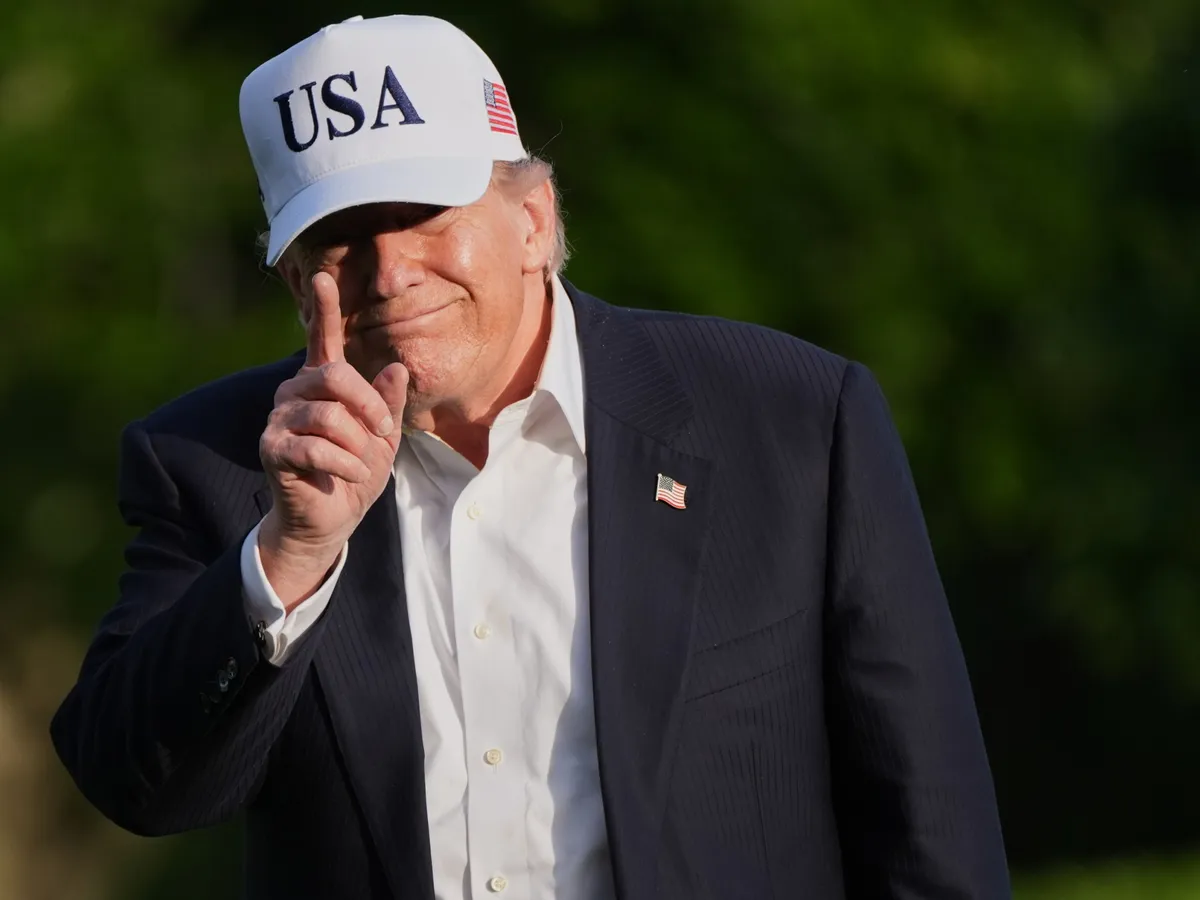
Al JazeeraFIG 01
Reading time
4min
Word count
970words
Sources cited
3cited
Entities identified
12entities
Quality score
100%
§ 01
Briefing Summary
AI-generatedNEWSAR · AI
US President Donald Trump announced he is postponing a "scheduled attack" on Iran, stating that "serious negotiations" are now underway. This decision came after Gulf states, including Qatar and Saudi Arabia, urged Trump to avoid further escalation of the conflict. Trump indicated that a deal is expected, which would include Iran not acquiring nuclear weapons. The war, which began on February 28, has been mediated by Pakistan, with stalled negotiations focusing on Iran's nuclear program, regional ties, and missile arsenal. Despite the postponement, Trump warned that the US military remains prepared for a large-scale assault if an acceptable deal is not reached. The conflict has been a political liability for Trump, with a recent poll indicating that a majority of US adults believe the war was the wrong decision.
Confidence 0.90Sources 3Claims 5Entities 12
§ 02
Article analysis
Model · rule-basedFraming
Conflict
Diplomatic
Tone
Mixed Tone
AI-assessed
CalmNeutralAlarmist
Factuality
0.60 / 1.00
Mixed
LowHigh
Sources cited
3
Well sourced
FewMany
§ 03
Key claims
5 extracted01
The clock is ticking for Iranian officials to strike a deal, or else there won’t be anything left of them.
quoteDonald Trump
Confidence
1.00
02
President Trump announced he will postpone a "scheduled attack" against Iran at the request of regional leaders.
quoteDonald Trump
Confidence
1.00
03
Serious negotiations are now taking place regarding a deal that will include no nuclear weapons for Iran.
quoteDonald Trump
Confidence
0.90
04
Iran has described Trump’s demands as excessive and called for frozen assets to be released and sanctions lifted.
factualarticle
Confidence
0.80
05
The US joined Israel in attacking Iran on February 28, triggering the war.
factualarticle
Confidence
0.80
§ 04
Full report
4 min read · 970 words§ 05
Entities
12 identifiedKey playerOppositionContextPositiveNeutralNegative
People5
Locations5
§ 06
Keywords & salience
8 termsiran negotiations
1.00
us-iran conflict
0.90
scheduled attack
0.80
nuclear weapons
0.70
regional leaders
0.60
middle east
0.50
pakistan mediation
0.40
escalation
0.40
§ 07
Topic connections
Interactive graph Network visualization showing 51 related topics
View Full Graph Person Organization Location Event|Click node to navigate|Edge numbers = shared articles