Beijing has since claimed the self-governed island. But after Xi came to power, the Chinese government has doubled down on its threats and sought ways to stamp out what it sees as separatism. Taiwan's "reunification" with China has become a key goal - Xi himself has called it an "unstoppable" reality.In recent years, China has stepped up various forms of pressure, through military drills that have simulated blockades; the diplomatic isolation of Taiwan; and greyzone warfare where it sends warships and fighter jets close to Taiwanese waters and airspace on a regular basis.During last week's summit, Xi had told Trump that the issue of Taiwan was the most important one in US-China relations, and that mishandling it could lead to conflict.As the US is Taiwan's closest ally - it is bound by law to provide the island with the means to defend itself - observers have long worried that any attack on Taiwan would draw the US into direct conflict with China.China has made clear its stance on Taiwan in its Anti-Secession Law, introduced in 2005, in which it states that it wants "peaceful reunification" with the island.But the Anti-Secession Law also states that should "Taiwan independence" forces cause secession from China, or the possibility of "peaceful reunification" has been exhausted, China can employ "non-peaceful means" to protect its territorial integrity.What this means is that China does not rule out the use of military force to take Taiwan if it deems it necessary. Most people believe that a formal declaration of independence by Taiwan's government would trigger this response.Does Taiwan want independence?Taiwan has close economic and cultural ties with China. But most people in Taiwan, which has a robust democratic system, see themselves as politically distinct from China, which has become increasingly authoritarian in recent years. Most also want to maintain the status quo - which means neither formally declaring independence nor unifying with China.The official position of the Taiwanese government under the Democratic Progressive Party (DPP), which has ruled Taiwan since 2016, caters to this view.President Lai, and his predecessor Tsai Ing-wen, have insisted that since Taiwan considers itself an independent country, there is no need to formally declare independence.Getty ImagesBeijing has accused Taiwan's president Lai Ching-te (pictured) of being a separatistThis is essentially a way of asserting Taiwan's sovereignty while also ensuring they do not cross China's red line.Even if they wanted to, neither the president nor the government can easily declare independence - it can only be done formally if Taiwan's parliament-like Legislative Yuan passes a constitutional amendment and if a majority of citizens vote for it in a referendum.But Beijing remains wary of the DPP, which in its early days advocated for sovereignty, and particularly reviles Lai who made strong comments against Beijing in the past before taking office. It often lambasts him and his party as "pro-independence" separatists. Does the US support Taiwan independence?While Trump's recent comments about Taiwan have generated headlines, no US government has ever stated explicitly that Taiwan should be independent. Following his summit with Xi, Trump said the Chinese leader "doesn't want a movement for independence" in Taiwan and that Trump "heard him out" but "didn't make a comment on it".The US, on the whole, tries to maintain a delicate balancing act when it comes to the hugely sensitive issue of Taiwan.In 1979, the US severed formal ties with the island when Washington established diplomatic relations with Beijing. This means that the US acknowledges Beijing's position that there is only one Chinese government - in Beijing.But in the same year, the US passed the Taiwan Relations Act which states that the US can "provide Taiwan with arms of a defensive character" - which is why it continues to sell weapons to Taiwan to this day.The act also states that peace in the area is in the US's interests and that it maintains the capacity "to resist any resort to force or other forms of coercion that would jeopardise the security or the social or economic system" of Taiwan.This is why Trump's latest warning to Taiwan has surprised some observers, who see it as a sign that the US may be wavering in its commitment to the island - and suggest that Xi may have made inroads in influencing the US president.Ryan Hass, an analyst with the US think tank Brookings Institution, said that Trump had "elevated the risk of confrontation" as his "visible sympathy for Xi's framing on Taiwan will embolden Beijing to increase pressure on Taipei".
SRCBBC News - World
LANGEN
LEANCenter
WORDS746
ENT9
MON · 2026-05-18 · 22:29 GMTBRIEF NSR-2026-0519-77366
NSR-2026-0519-77366Analysis·EN·Conflict
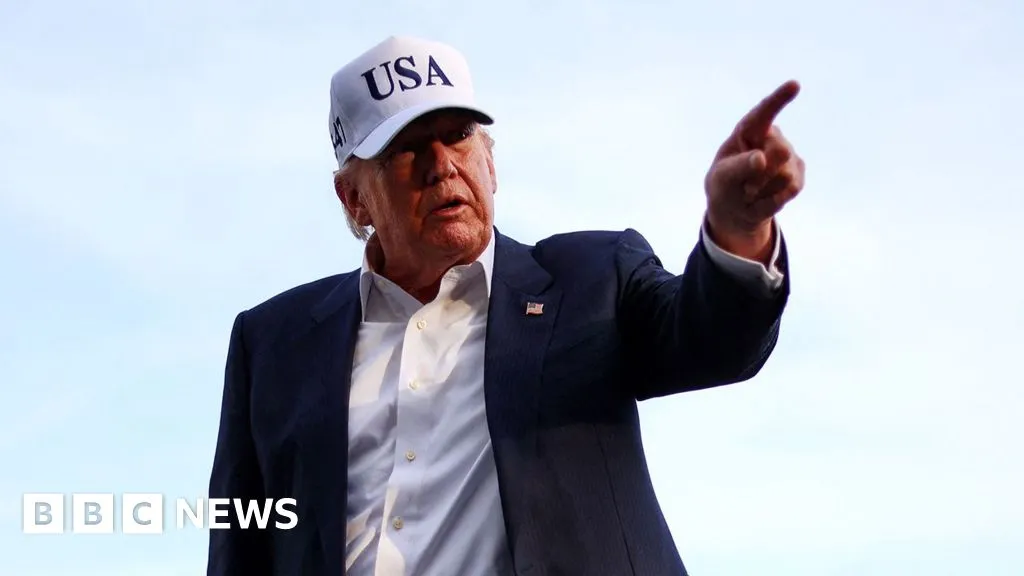
Trump told Taiwan not to 'go independent' - but does it want to?
China views Taiwan as a breakaway province and has intensified pressure, including military drills and diplomatic isolation, to achieve "reunification." Beijing considers Taiwan independence a "red line" and has stated it may use force if peaceful reunification is exhausted. Taiwan's government, while asserting its de facto independence, aims to maintain the status quo, avoiding a formal declaration that could provoke China.
BBC News - WorldFiled 2026-05-18 · 22:29 GMTLean · CenterRead · 3 min
BBC News - WorldFIG 01
Reading time
3min
Word count
746words
Sources cited
0cited
Entities identified
9entities
Quality score
100%
§ 01
Briefing Summary
AI-generatedNEWSAR · AI
China views Taiwan as a breakaway province and has intensified pressure, including military drills and diplomatic isolation, to achieve "reunification." Beijing considers Taiwan independence a "red line" and has stated it may use force if peaceful reunification is exhausted. Taiwan's government, while asserting its de facto independence, aims to maintain the status quo, avoiding a formal declaration that could provoke China. The United States, Taiwan's closest ally, acknowledges Beijing's "one China" policy but provides Taiwan with defensive arms and is committed to its security. Former President Trump's recent comments suggesting Taiwan should not "go independent" have raised concerns about potential shifts in US policy and emboldening Beijing.
Confidence 0.90Claims 5Entities 9
§ 02
Article analysis
Model · rule-basedFraming
Conflict
Diplomatic
Tone
Measured
AI-assessed
CalmNeutralAlarmist
Factuality
0.70 / 1.00
Factual
LowHigh
Sources cited
0
No named sources
FewMany
§ 03
Key claims
5 extracted01
China's Anti-Secession Law allows for "non-peaceful means" to protect territorial integrity if "Taiwan independence" forces cause secession or peaceful reunification is exhausted.
factual
Confidence
1.00
02
Beijing has claimed the self-governed island of Taiwan.
factual
Confidence
1.00
03
Taiwan's "reunification" with China has become a key goal for Xi Jinping.
factual
Confidence
0.90
04
China has doubled down on its threats and sought ways to stamp out what it sees as separatism since Xi came to power.
factual
Confidence
0.90
05
Most people in Taiwan want to maintain the status quo, neither declaring independence nor unifying with China.
factual
Confidence
0.80
§ 04
Full report
3 min read · 746 words§ 05
Entities
9 identifiedKey playerOppositionContextPositiveNeutralNegative
People4
Organizations1
Locations3
§ 06
Keywords & salience
10 termschina taiwan relations
1.00
taiwan independence
1.00
us china relations
0.90
reunification
0.80
separatism
0.70
military force
0.60
status quo
0.50
sovereignty
0.50
xi jinping
0.40
donald trump
0.40
§ 07
Topic connections
Interactive graph Network visualization showing 51 related topics
View Full Graph Person Organization Location Event|Click node to navigate|Edge numbers = shared articles