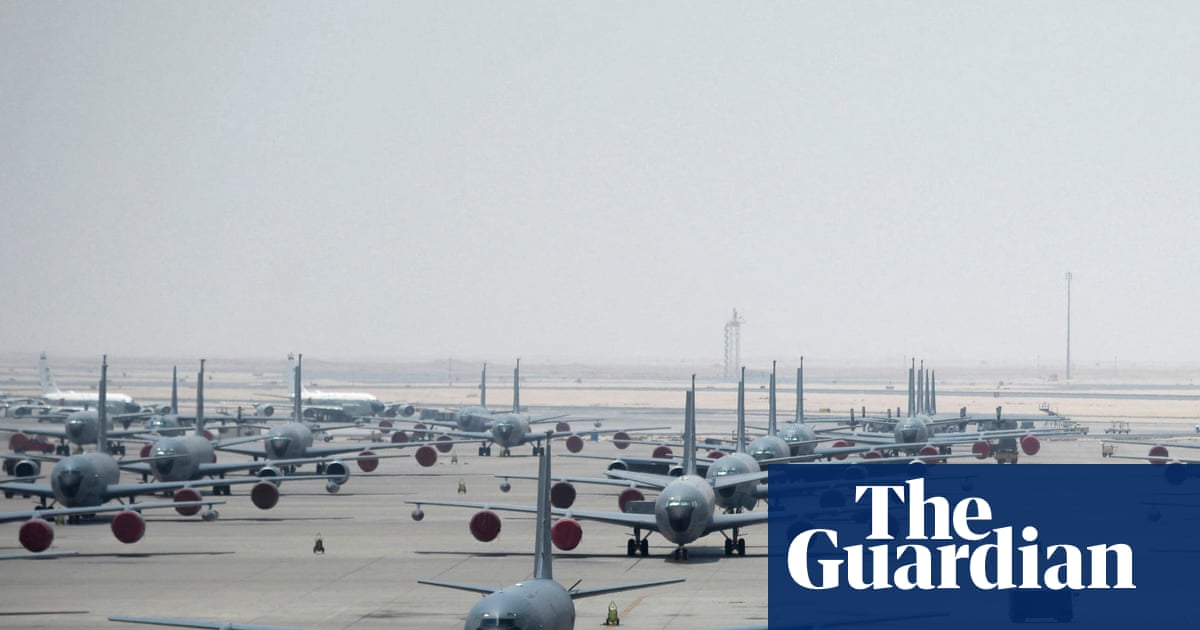
Saudi Arabia, Qatar, Turkey and Oman urged Donald Trump not to launch airstrikes against Iran in a last-minute lobbying campaign prompted by fears that an attack by Washington would lead to a major and intractable conflict across the Middle East.The warnings of chaos from the longstanding US allies appear to have helped persuade Trump late on Wednesday to hold off for the moment on a military assault. In the case of Saudi Arabia, its reticence led it to deny the US use of its airspace to mount any attacks.Continuing discussions, the Saudi Arabian foreign minister, Prince Faisal bin Farhan, conferred by phone with his counterparts from Iran, Oman and Turkey on Thursday.Iran remains politically apart from the Gulf states, partly owing to its continued support for its weakened network of regional proxies, known as the axis of resistance, and its refusal to back a two state-solution for Palestine as well as disputes over three islands in the Gulf claimed by the United Arab Emirates, a claim backed by the Gulf Cooperation Council.But Iran’s foreign minister, Abbas Araghchi, has also undertaken a series of visits to Arab capitals that are said to have improved relations. Last year, for instance, he visited Bahrain, the first Iranian minister to do since 2010. He also visited Cairo four times last year in an effort to improve relations. The two sides had severed diplomatic relations in 2016.The Saudi-Iranian relationship, once the most fraught in the Middle East, has been on a recovery path for three years. Araghchi makes a point of being photographed sampling local cuisine in the Arab capitals he visits.All the Gulf states are further aware of the disruption Iran could cause to maritime traffic in the Gulf.Araghchi has recently been trying to persuade the Gulf states than Iran is less of a risk to global stability than Israel, a case made more plausible after Israel bombed Doha last September with the intent to kill the Hamas negotiators that have lived in the Qatari capital for nearly a decade. The Israelis failed to hit their primary targets, but reportedly killed five lower-ranking members of the group.The US, not informed of the strikes in advance, apologised directly to Qatar’s emir and offered new security guarantees for Doha designed to protect Qatar from further Israeli attacks. At the time, Qatar accused Israel of trying to sabotage every opportunity for peace in the region.The US special envoy, Steve Witkoff, is a supporter of the Qatari state’s self-appointed but often effective role as a global mediator.The US al-Udeid airbase, its largest in the region, is in Qatar, and as tensions mounted on Wednesday the US withdrew key personnel from the base.The withdrawal, after Tehran’s open threats to hit US bases in the region if attacked, underscores how static American land and naval bases in the region designed to project US power could also be a source of vulnerability. Iran persistently claims that the US ordered Israel to end its 12-day assault in the summer on Iran’s leadership and nuclear programme after Iran struck the US base.Araghchi has also managed to exploit the political capital he has invested in diplomatic outreach by ringing Arab leaders to explain Tehran’s rationale for the crackdown.Many of the states deeply resent the interference of Iranian proxy forces in Lebanon, Iraq and Yemen. Yet by the same measure, few of them would welcome the example of an authoritarian regime being toppled by street protests riled by falling living standards, and leading to a new democratic transition, or even the fragmentation of a unified Iranian state.Saudi Arabia for instance has recently put down a rebellion in the south of Yemen that would have broken up the country. The Egyptian military leadership dedicates much its energy to suppressing calls for human rights reforms.The spokesperson for Qatar’s foreign ministry, Majed al-Ansari, told reporters on Tuesday: “The big challenges in the region – and we are talking about internal and external challenges in different countries – require all of us to return to the negotiating table.”The Turkish foreign minister, Hakan Fidan, has called for dialogue. “Hopefully, the United States and Iran will resolve this issue among themselves – whether through mediators, other actors, or direct dialogue. We are closely following these developments.”
SRCThe Guardian - World News
LANGEN
LEANCenter-Left
WORDS705
ENT11
THU · 2026-01-15 · 17:39 GMTBRIEF NSR-2026-0115-7789
NSR-2026-0115-7789News Report·EN·Diplomatic
Gulf states and Turkey warned Trump strikes on Iran could lead to major conflict
In response to fears of a wider Middle East conflict, Saudi Arabia, Qatar, Turkey, and Oman lobbied Donald Trump against launching airstrikes on Iran. These US allies warned that an attack would lead to regional chaos, with Saudi Arabia even denying the US use of its airspace.
Patrick Wintour Diplomatic editorThe Guardian - World NewsFiled 2026-01-15 · 17:39 GMTLean · Center-LeftRead · 3 min
The Guardian - World NewsFIG 01
Reading time
3min
Word count
705words
Sources cited
7cited
Entities identified
11entities
Quality score
100%
§ 01
Briefing Summary
AI-generatedNEWSAR · AI
In response to fears of a wider Middle East conflict, Saudi Arabia, Qatar, Turkey, and Oman lobbied Donald Trump against launching airstrikes on Iran. These US allies warned that an attack would lead to regional chaos, with Saudi Arabia even denying the US use of its airspace. This lobbying effort appears to have contributed to Trump's decision to hold off on military action. Simultaneously, Saudi Arabia and Iran have been working to improve relations over the past three years, with Iranian officials visiting Arab capitals. All Gulf states are aware of the potential disruption Iran could cause to maritime traffic in the Gulf. Recently, Iran has been trying to persuade Gulf states that Israel is more of a risk to global stability than Iran.
Confidence 0.90Sources 7Claims 5Entities 11
§ 02
Article analysis
Model · rule-basedFraming
Diplomatic
National Security
Tone
Measured
AI-assessed
CalmNeutralAlarmist
Factuality
0.80 / 1.00
Factual
LowHigh
Sources cited
7
Well sourced
FewMany
§ 03
Key claims
5 extracted01
Iran's foreign minister, Abbas Araghchi, visited Bahrain last year, the first Iranian minister to do so since 2010.
factualArticle
Confidence
1.00
02
Prince Faisal bin Farhan conferred by phone with his counterparts from Iran, Oman and Turkey on Thursday.
factualArticle
Confidence
1.00
03
Saudi Arabia denied the US use of its airspace to mount any attacks on Iran.
factualArticle
Confidence
1.00
04
Saudi Arabia, Qatar, Turkey and Oman urged Donald Trump not to launch airstrikes against Iran.
factualArticle
Confidence
1.00
05
Israel bombed Doha last September with the intent to kill Hamas negotiators.
factualArticle
Confidence
0.90
§ 04
Full report
3 min read · 705 words§ 05
Entities
11 identifiedKey playerOppositionContext
I
Iran location · Opposition
90
DT
Donald Trump person · Key Player
80
Q
Qatar location
70
SA
Saudi Arabia location
70
T
Turkey location
70
O
Oman location
60
ME
Middle East location · Context
60
I
Israel location · Opposition
60
AA
Abbas Araghchi person
60
UA
United Arab Emirates location
50
GC
Gulf Cooperation Council organization · Context
40
§ 06
Keywords & salience
9 termsiran
1.00
middle east conflict
0.90
us airstrikes
0.80
gulf states
0.80
saudi arabia
0.70
diplomatic relations
0.60
regional proxies
0.50
maritime traffic
0.40
israel
0.40
§ 07
Topic connections
Interactive graph Network visualization showing 51 related topics
View Full Graph Person Organization Location Event|Click node to navigate|Edge numbers = shared articles