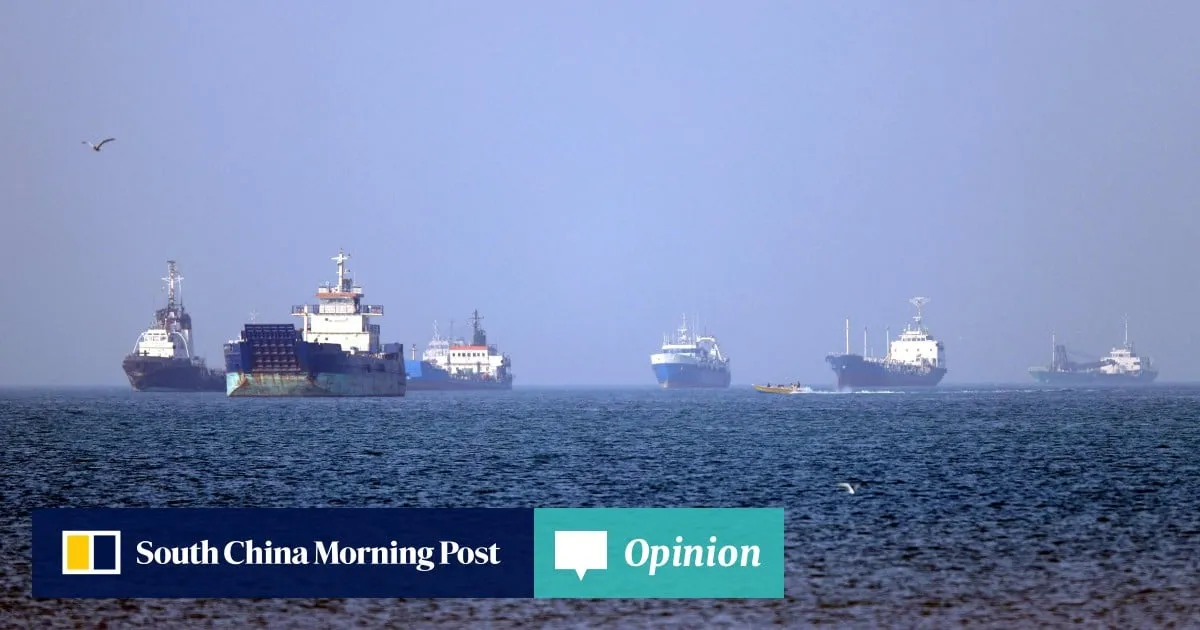
Dr Andy Xie is a Shanghai-based independent economist specialising in China and Asia, and writes, speaks and consults on global economics and financial markets.The Iran-war" class="entity-link entity-event" data-entity-id="38748" data-entity-type="event">Iran war has baked in stagflation and starvation through big reductions in the supply of oil and fertilisers. This inflationary pressure will only increase. As inflation sucks liquidity out of financial markets and into the real economy, bond yields are being pushed up across the world. If bond yields rise by more than a percentage point, a likely scenario before the year’s end, the liquidity diversion could be big enough to pop the AI bubble.The US-Israeli war on Iran has disrupted the global oil supply, cutting it by as much as a billion barrels. The impact has so far been offset mostly by running down supply already in floating storage. Releases of strategic reserves have also helped. When these two sources are exhausted, oil prices will spike.Compared with the oil shock of 2007-8, which sent prices towards US$150 per barrel, the shock this time could be of a greater magnitude.Having significantly depleted its missile stocks, the US is keeping up pressure on Iran by blocking its ports. But Iran borders seven countries: the sea blockade is unlikely to make life impossible; Iran can hold on for years. The fact the US has the option to continue the war is due to financial markets’ mild reaction. If petrol prices reach US$10 a gallon or the US stock market falls by 20 per cent, America would have to fold its hand.And the petrol price could indeed hit US$10 a gallon this summer. The cushions that have kept the price rise contained are dissipating. The oil in the tankers on the water is likely to have been used by then. Countries will become less willing to release strategic reserves as the conflict drags on and expectations of a quick resolution fade.The US can halt its petroleum exports to keep domestic petrol prices low. But this will trigger a massive spike in international oil prices, which would see Europe and Japan suffer a collapse. Would the US sacrifice its allies for the small chance of destroying Iran?The Dow Jones briefly hit the 50,000 mark, closing up over 600 points on May 6, as a potential easing of the conflict in Iran lifted global stocks. Photo: Getty Images via AFP
SRCSouth China Morning Post
LANGEN
LEANCenter-Right
WORDS389
ENT12
THU · 2026-05-21 · 21:30 GMTBRIEF NSR-2026-0521-78252
NSR-2026-0521-78252Opinion·EN·Economic Impact
Not even a quick end to Iran war can save AI stock bubble now
An economist warns that the ongoing Iran war is causing stagflation and potential starvation due to reduced oil and fertilizer supplies. This inflationary pressure is expected to increase, drawing liquidity from financial markets into the real economy and pushing up global bond yields.
Andy XieSouth China Morning PostFiled 2026-05-21 · 21:30 GMTLean · Center-RightRead · 2 min
South China Morning PostFIG 01
Reading time
2min
Word count
389words
Sources cited
1cited
Entities identified
12entities
Quality score
100%
§ 01
Briefing Summary
AI-generatedNEWSAR · AI
An economist warns that the ongoing Iran war is causing stagflation and potential starvation due to reduced oil and fertilizer supplies. This inflationary pressure is expected to increase, drawing liquidity from financial markets into the real economy and pushing up global bond yields. If bond yields rise by over a percentage point, this liquidity diversion could burst the AI stock bubble. The war has disrupted global oil supply, with current buffers like floating storage and strategic reserves nearing depletion. While the US can block Iranian ports, Iran's extensive borders suggest the conflict could persist for years. Rising oil prices, potentially reaching $10 a gallon, and a significant stock market decline could force the US to end its involvement.
Confidence 0.90Sources 1Claims 5Entities 12
§ 02
Article analysis
Model · rule-basedFraming
Economic Impact
Conflict
Tone
Sensational
AI-assessed
CalmNeutralAlarmist
Factuality
0.20 / 1.00
Opinion-Heavy
LowHigh
Sources cited
1
Limited
FewMany
§ 03
Key claims
5 extracted01
The Dow Jones briefly hit the 50,000 mark, closing up over 600 points on May 6, as a potential easing of the conflict in Iran lifted global stocks.
statisticGetty Images via AFP
Confidence
1.00
02
If bond yields rise by more than a percentage point, a likely scenario before the year’s end, the liquidity diversion could be big enough to pop the AI bubble.
predictionDr Andy Xie
Confidence
0.70
03
Petrol prices could hit US$10 a gallon this summer.
predictionDr Andy Xie
Confidence
0.60
04
The Iran war has baked in stagflation and starvation through big reductions in the supply of oil and fertilisers.
predictionDr Andy Xie
Confidence
0.60
05
The US-Israeli war on Iran has disrupted the global oil supply, cutting it by as much as a billion barrels.
factualDr Andy Xie
Confidence
0.50
§ 04
Full report
2 min read · 389 words§ 05
Entities
12 identifiedKey playerOppositionContextPositiveNeutralNegative
People1
Organizations1
Locations7
§ 06
Keywords & salience
10 termsiran war
1.00
ai stock bubble
1.00
stagflation
0.90
oil prices
0.90
inflationary pressure
0.80
bond yields
0.70
liquidity
0.70
global oil supply
0.60
petrol prices
0.50
us stock market
0.40
§ 07
Topic connections
Interactive graph Network visualization showing 51 related topics
View Full Graph Person Organization Location Event|Click node to navigate|Edge numbers = shared articles