There has been no announcement of plans for any military intervention but Cuba is on edge, especially as surveillance activity in the Caribbean increases.Over the past week, the US military has been publicly broadcasting the location of its aircrafts near Cuba on plane-tracking websites.Leaving the flight transponders on "is likely deliberate", said UK drone expert Dr Steve Wright, with the US intending to send "a clear message it has eyes in the sky to maintain the squeeze".Flight-tracking data does not give a complete picture as military aircrafts often only share their location for portions of a flight.Meanwhile, US news site Axios, citing classified intelligence, reported that Cuba possessed 300 drones and was discussing striking nearby US targets - including Guantanamo Bay, Key West in Florida, and naval vessels.It also quoted a US official who said the intelligence - which it characterised as a potential pretext for US military intervention - suggested Iranian military advisers were in Havana.Cuba's foreign minister, Bruno Rodríguez, responded by saying the country "neither threatens nor desires war" and accused Washington of building a "fraudulent case" for military intervention.US Secretary of State Marco Rubio said on Thursday that the White House's preference was "a diplomatic solution" but added that Trump had the right and obligation to protect his country against any threat.Raúl - who at nearly 95 years old bears the official title "Leader of the Cuban Revolution" - served as Cuba's president between 2008 and 2018.Prominent party apparatchik Miguel Díaz-Canel, 66, currently holds both the Cuban presidency and leads the Communist Party, but it is the Castro family name that still represents real power on the island and commands respect among its military and security services. These forces effectively run much of the economy and maintain internal order, repressing internal dissent and opposition.The Trump administration's talks with Cuba and other recent outreach have even included Raúl Castro's 41-year-old grandson and bodyguard, Raúl Guillermo Rodríguez Castro. An Interior Ministry colonel, he is widely considered the "ear" of his grandfather, even though he holds no formal government or party leadership posts.Still, Díaz-Canel himself has indicated an element of "collegiate" decision-making exists among the political-military elite ruling the country.Castro loyalist and military technocrat Manuel Marrero, 62, serves as Cuba's prime minister, and Foreign Minister Rodríguez, 68, is often the most heard-from "voice" of the government in responding to the US. Marrero is linked to the shadowy military conglomerate GAESA, run by Cuban generals, which is seen as the opaque operator of the economic assets that underpin the country's military and political elite.Rubio specifically focused on this power structure in a video message to Cubans on 20 May, saying: "Cuba is not controlled by any revolution. Cuba is controlled by GAESA, a 'state within a state".Earlier this week, Raúl and five others were indicted by the US with varying charges, including: conspiracy to kill US nationals, murder and the destruction of US aircrafts. If found guilty, he could face life in prison or the death penalty.While announcing the charges, Acting Attorney General Todd Blanche said the US "does not, and will not, forget its citizens". But the US is notably taking aim at a key Cuban figure.Díaz-Canel said the charges were being used to "justify the folly of a military aggression against Cuba".Calling the indictment "a political manoeuvre, devoid of any legal foundation", he said Cuba had acted in "legitimate self-defence within its jurisdictional waters" in taking down the planes.Cuba roiled by extensive blackouts from US blockade and sanctionsMost of Washington's pressure has come through its oil blockade and sanctions.Cuba has been suffering from extensive blackouts for months, caused by chronic fuel shortage.Venezuela and Mexico in the past supplied most of Cuba's oil and fuel, but they have largely stopped since January, when the US removed Venezuela's president and Trump threatened tariffs on countries that send petroleum to Cuba.Washington has seized a number of oil shipments bound for Cuba, with only one Russian oil tanker reaching the country since the blockade was imposed.Discontent among Cubans has been mounting from the blackouts as well as shortages of food, fuel and medicine. Hospitals are struggling to function normally and schools and government offices are having to close.Protesters have repeatedly taken to the streets in the capital, Havana, and in a demonstration on Wednesday blocked roads with burning rubbish and shouted anti-government slogans.This month the US fresh sanctions put on senior Cuban officials who the US accused of committing human rights abuses or corruption, targeting officials in the energy, defence, financial or security sectors of Cuba's economy.Meanwhile, the US has continued to offer $100m (£74m) of aid, but on the condition it will be distributed through the Catholic Church and independent humanitarian organisations, bypassing the Cuban government.Washington has said Cuba denied the help, but the island's foreign minister said it does not reject aid "offered in good faith" and the best way the US could help would be lifting the blockade. ReutersProtesters carrying pots and pans running through the streets of HavanaReutersThe Trump administration has essentially shut down all deliveries of crude oil to CubaCuba meets the pressure with fiery words - and support from friendsWhile the two countries have held some semblance of talks through back channels, confirmed by both nations in March, Cuba's response has been limited to fiery statements from leaders.Díaz-Canel has accused the US of imposing a "collective punishment" on the Cuban people and repeatedly demanded an end to the blockade, which he has described as "the intimidating and arrogant behaviour of the world's greatest military power".Responding to the report of a purported drone supply, Rodríguez said the US was constructing a justification for a "ruthless economic war against the Cuban people and the eventual military aggression". While he insisted Cuba did not wish for war, he said it was preparing for "external aggression".Meanwhile, China and Russia - both allies of Cuba - have condemned the US over its continued pressure, particularly regarding the Castro indictment.The Chinese foreign ministry called on the US to stop using "coercion" and "threats" against its ally, while the Kremlin said the pressure being exerted on Havana "borders on violence".
SRCBBC News - World
LANGEN
LEANCenter
WORDS1 016
ENT12
FRI · 2026-05-22 · 18:33 GMTBRIEF NSR-2026-0522-78517
NSR-2026-0522-78517Analysis·EN·National Security
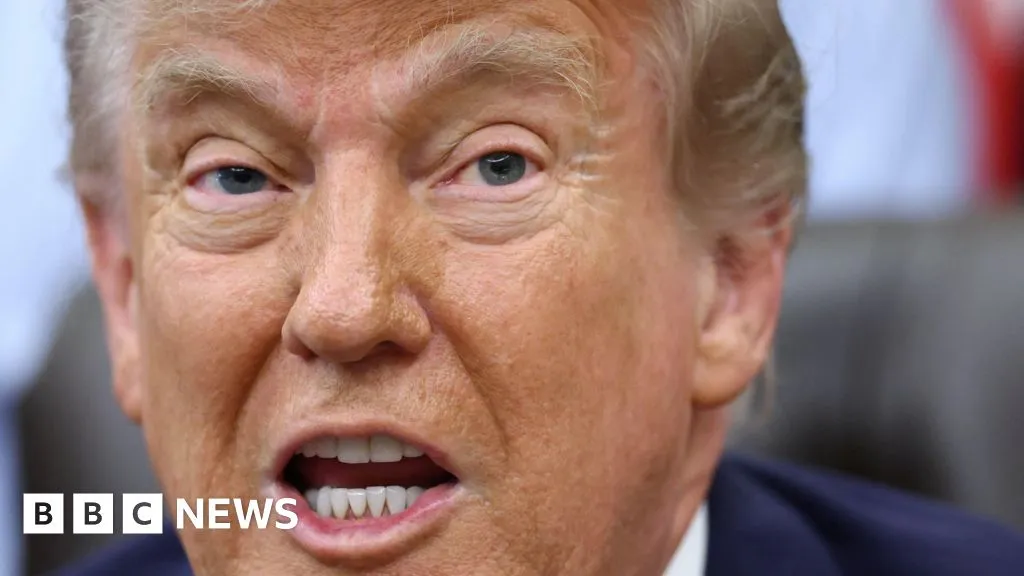
Trump is putting pressure on Cuba - why and to what end?
The US is increasing pressure on Cuba, citing intelligence that suggests Cuba possesses drones and is discussing striking US targets, including Guantanamo Bay. Cuba denies these claims, calling them a "fraudulent case" to justify military intervention, and insists it does not threaten war.
BBC News - WorldFiled 2026-05-22 · 18:33 GMTLean · CenterRead · 5 min
BBC News - WorldFIG 01
Reading time
5min
Word count
1 016words
Sources cited
5cited
Entities identified
12entities
Quality score
100%
§ 01
Briefing Summary
AI-generatedNEWSAR · AI
The US is increasing pressure on Cuba, citing intelligence that suggests Cuba possesses drones and is discussing striking US targets, including Guantanamo Bay. Cuba denies these claims, calling them a "fraudulent case" to justify military intervention, and insists it does not threaten war. This heightened tension follows increased US military surveillance activity near Cuba and new US sanctions targeting Cuban officials. The US has also indicted Raúl Castro and others on charges including conspiracy to kill US nationals. Meanwhile, Cuba is experiencing severe blackouts and shortages due to US oil blockades and sanctions, leading to growing public discontent and protests.
Confidence 0.90Sources 5Claims 5Entities 12
§ 02
Article analysis
Model · rule-basedFraming
National Security
Political Strategy
Tone
Mixed Tone
AI-assessed
CalmNeutralAlarmist
Factuality
0.60 / 1.00
Mixed
LowHigh
Sources cited
5
Well sourced
FewMany
§ 03
Key claims
5 extracted01
Cuba is controlled by GAESA, a 'state w
quoteMarco Rubio
Confidence
1.00
02
The White House's preference was 'a diplomatic solution' but Trump had the right and obligation to protect his country against any threat.
quoteMarco Rubio (US Secretary of State)
Confidence
1.00
03
Cuba 'neither threatens nor desires war' and accuses Washington of building a 'fraudulent case' for military intervention.
quoteBruno Rodríguez (Cuba's foreign minister)
Confidence
1.00
04
US military is publicly broadcasting the location of its aircrafts near Cuba on plane-tracking websites.
factual
Confidence
0.90
05
Cuba possessed 300 drones and was discussing striking nearby US targets.
factualAxios, citing classified intelligence
Confidence
0.70
§ 04
Full report
5 min read · 1 016 words§ 05
Entities
12 identifiedKey playerOppositionContextPositiveNeutralNegative
People7
Organizations1
§ 06
Keywords & salience
10 termsus-cuba relations
1.00
military intervention
0.90
surveillance activity
0.80
trump administration
0.70
drones
0.70
intelligence reports
0.60
diplomatic solution
0.50
pretext
0.50
castro family
0.40
political-military elite
0.40
§ 07
Topic connections
Interactive graph Network visualization showing 51 related topics
View Full Graph Person Organization Location Event|Click node to navigate|Edge numbers = shared articles