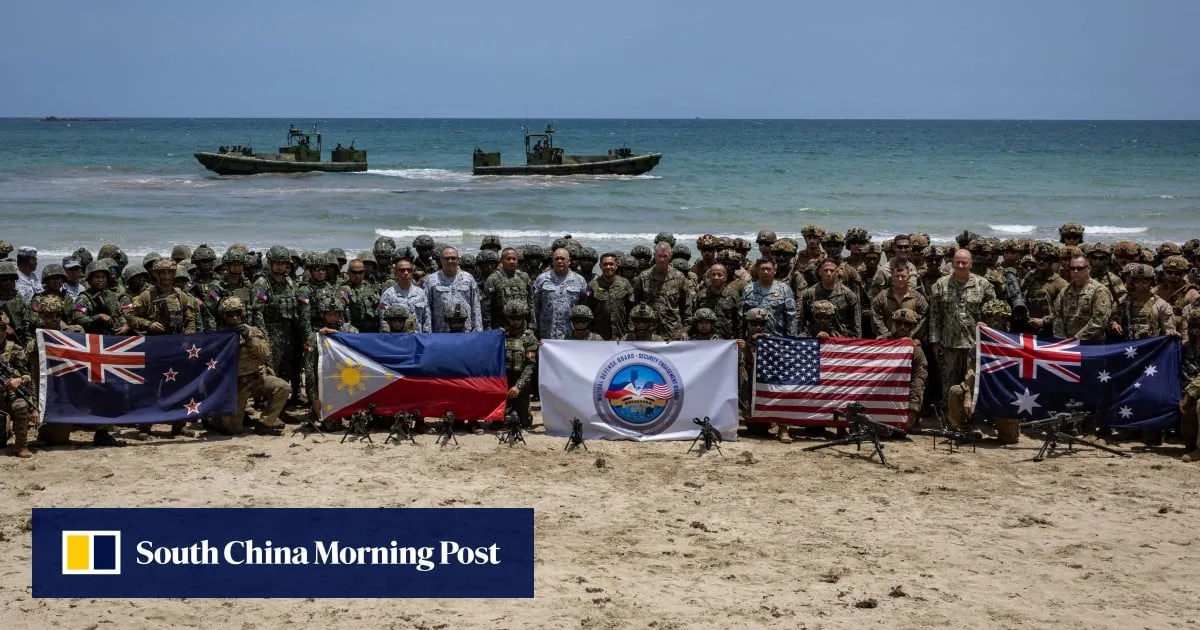
A US and Philippine-led military drill seen as targeting China grew this year into the largest yet, prompting Chinese experts to warn that the annual event will exacerbate regional instability amid heightened tensions in the Indo-Pacific.The decades-old drill called Balikatan, which means shoulder to shoulder, reached record highs in terms of scale, scope of participation and training complexity this year, according to a report published by the China-sea-strategic-situation-probing-initiative" class="entity-link entity-organization" data-entity-id="39421" data-entity-type="organization">South China Sea Strategic Situation Probing Initiative (SCSPI) this week.From April 20 to May 8, seven countries – the Philippines, the US, Canada, France, Japan, Australia and New Zealand – sent 17,000 personnel to train along the Philippines’ western sealine, stretching from the South China Sea to the northern Philippine island of Itbayat, just 155km (96 miles) from Taiwan’s main island.
SRCSouth China Morning Post
LANGEN
LEANCenter-Right
WORDS128
ENT12
SAT · 2026-05-23 · 10:00 GMTBRIEF NSR-2026-0523-78656
NSR-2026-0523-78656News Report·EN·National Security
Why the largest-ever US-Philippine drill, and Japan’s role in it, is making China uneasy
The annual Balikatan military exercise, a joint US-Philippine endeavor, recently concluded its largest iteration yet, involving 17,000 personnel from seven countries: the Philippines, US, Canada, France, Japan, Australia, and New Zealand. Conducted from April 20 to May 8 along the Philippines' western coastline, the drills extended from the South China Sea to an island near Taiwan.
Albee ZhangSouth China Morning PostFiled 2026-05-23 · 10:00 GMTLean · Center-RightRead · 1 min
South China Morning PostFIG 01
Reading time
1min
Word count
128words
Sources cited
1cited
Entities identified
12entities
Quality score
100%
§ 01
Briefing Summary
AI-generatedNEWSAR · AI
The annual Balikatan military exercise, a joint US-Philippine endeavor, recently concluded its largest iteration yet, involving 17,000 personnel from seven countries: the Philippines, US, Canada, France, Japan, Australia, and New Zealand. Conducted from April 20 to May 8 along the Philippines' western coastline, the drills extended from the South China Sea to an island near Taiwan. Chinese experts have expressed concern, warning that the expanded scale and complexity of the exercise will increase regional instability amidst heightened Indo-Pacific tensions. This year's drill marked record highs in participation and training complexity.
Confidence 0.85Sources 1Claims 5Entities 12
§ 02
Article analysis
Model · rule-basedFraming
National Security
Diplomatic
Tone
Mixed Tone
AI-assessed
CalmNeutralAlarmist
Factuality
0.70 / 1.00
Factual
LowHigh
Sources cited
1
Limited
FewMany
§ 03
Key claims
5 extracted01
The drill took place along the Philippines’ western sealine, extending from the South China Sea to Itbayat island.
factualArticle
Confidence
1.00
02
Seven countries participated in the Balikatan drill from April 20 to May 8, involving 17,000 personnel.
statisticArticle
Confidence
1.00
03
The US and Philippine-led military drill, Balikatan, reached record highs in scale, scope, and complexity this year.
statisticSouth China Sea Strategic Situation Probing Initiative (SCSPI)
Confidence
1.00
04
Chinese experts warn that the annual event will exacerbate regional instability amid heightened tensions in the Indo-Pacific.
quoteChinese experts
Confidence
0.90
05
The drill is seen as targeting China.
factualArticle
Confidence
0.80
§ 04
Full report
1 min read · 128 words§ 05
Entities
12 identifiedKey playerOppositionContextPositiveNeutralNegative
Locations10
§ 06
Keywords & salience
8 termsus-philippine military drill
1.00
china
0.90
indo-pacific
0.80
regional instability
0.70
balikatan drill
0.60
japan
0.60
taiwan
0.50
south china sea
0.40
§ 07
Topic connections
Interactive graph Network visualization showing 51 related topics
View Full Graph Person Organization Location Event|Click node to navigate|Edge numbers = shared articles