Thailand’s navy has to watch two seas at once.To the east lies the Thailand" class="entity-link entity-location" data-entity-id="19574" data-entity-type="location">Gulf of Thailand, with its busy shipping lanes, offshore energy interests and long coastal frontier with Cambodia. To the west is the Andaman Sea, a gateway to the Indian Ocean with its own trade routes, chokepoints and strategic pressures.That twin-sea geography has long given the Royal Thai Navy a role larger than its public profile might suggest. It also underpins the navy’s stated goal, laid out in a 2023 white paper, to operate eight modern frigates by 2037, up from the current four.
SRCSouth China Morning Post
LANGEN
LEANCenter-Right
WORDS96
ENT8
SUN · 2026-05-24 · 00:00 GMTBRIEF NSR-2026-0524-78751
NSR-2026-0524-78751News Report·EN·National Security
Budget cuts leave Thailand’s twin-sea navy at risk of falling behind
Thailand's Royal Thai Navy faces challenges due to budget cuts, potentially hindering its ability to maintain its strategic responsibilities across two vital maritime areas. The navy is tasked with monitoring both the Gulf of Thailand, crucial for shipping lanes and energy interests, and the Andaman Sea, a gateway to the Indian Ocean with significant trade routes and strategic pressures.
Maria SiowSouth China Morning PostFiled 2026-05-24 · 00:00 GMTLean · Center-RightRead · 1 min
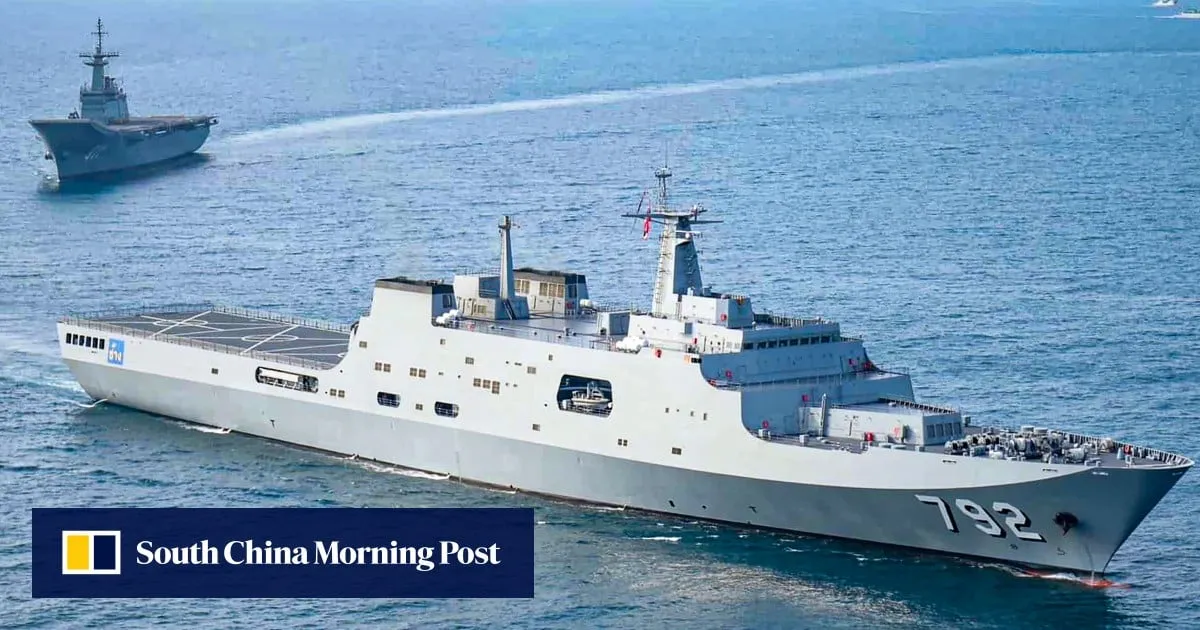
South China Morning PostFIG 01
Reading time
1min
Word count
96words
Sources cited
0cited
Entities identified
8entities
Quality score
100%
§ 01
Briefing Summary
AI-generatedNEWSAR · AI
Thailand's Royal Thai Navy faces challenges due to budget cuts, potentially hindering its ability to maintain its strategic responsibilities across two vital maritime areas. The navy is tasked with monitoring both the Gulf of Thailand, crucial for shipping lanes and energy interests, and the Andaman Sea, a gateway to the Indian Ocean with significant trade routes and strategic pressures. This dual-sea geography necessitates a robust naval presence. In a 2023 white paper, the navy outlined a goal to operate eight modern frigates by 2037, an increase from its current fleet of four. However, budget constraints now put this modernization plan and the navy's overall capacity at risk.
Confidence 0.85Claims 5Entities 8
§ 02
Article analysis
Model · rule-basedFraming
National Security
Political Strategy
Tone
Measured
AI-assessed
CalmNeutralAlarmist
Factuality
0.70 / 1.00
Factual
LowHigh
Sources cited
0
No named sources
FewMany
§ 03
Key claims
5 extracted01
The Andaman Sea serves as a gateway to the Indian Ocean with trade routes and strategic pressures.
factual
Confidence
1.00
02
The Gulf of Thailand contains busy shipping lanes, offshore energy interests, and a border with Cambodia.
factual
Confidence
1.00
03
The Royal Thai Navy aims to operate eight modern frigates by 2037, an increase from the current four.
factualRoyal Thai Navy (via 2023 white paper)
Confidence
1.00
04
Thailand's navy is responsible for monitoring both the Gulf of Thailand and the Andaman Sea.
factual
Confidence
1.00
05
Budget cuts may put Thailand's navy at risk of falling behind.
factual
Confidence
0.80
§ 04
Full report
1 min read · 96 words§ 05
Entities
8 identifiedKey playerOppositionContextPositiveNeutralNegative
Organizations1
Locations5
§ 06
Keywords & salience
9 termsthailand navy
1.00
budget cuts
0.90
twin-sea geography
0.80
strategic pressures
0.70
modern frigates
0.60
andaman sea
0.50
gulf of thailand
0.50
shipping lanes
0.40
offshore energy
0.40
§ 07
Topic connections
Interactive graph Network visualization showing 5 related topics
View Full Graph Person Organization Location Event|Click node to navigate|Edge numbers = shared articles