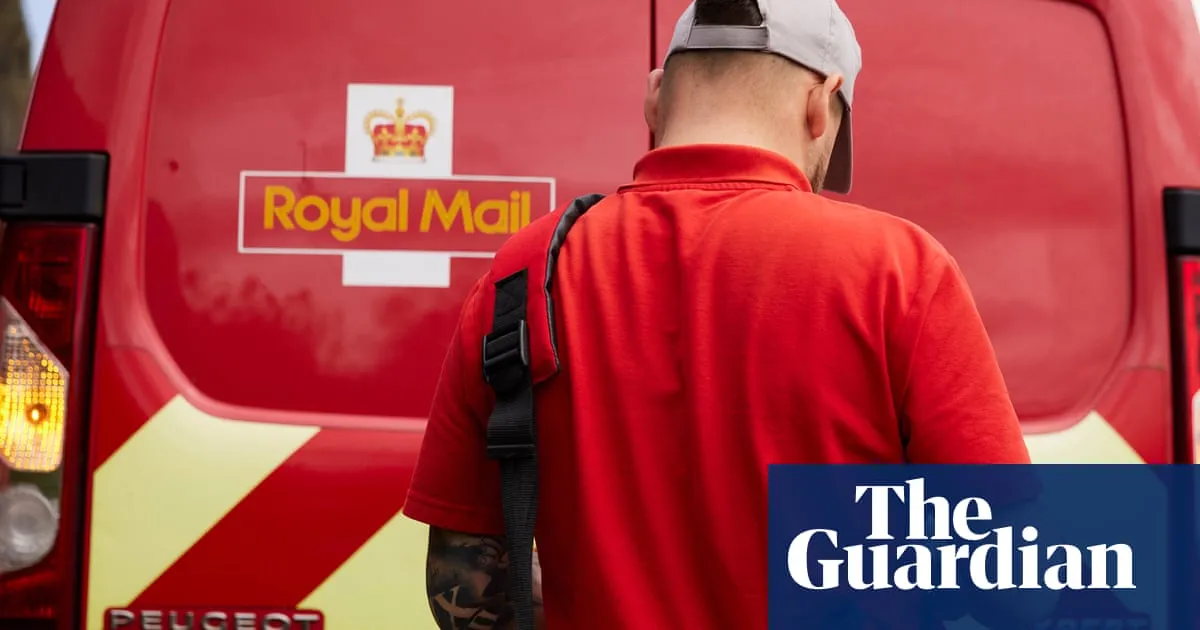
The postal regulator has launched an investigation into Royal Mail for once again missing its annual delivery targets, with almost a quarter of first-class mail arriving late.The company, which has been fined £37m since 2023 for routinely failing to meet delivery targets set by Ofcom, revealed on Friday that 24.3% of first-class mail failed to arrive on time in the year to the end of March.The figures show that Royal Mail’s performance has worsened compared with the previous year, when 23.5% of first-class mail failed to arrive within the one-working-day target set by the regulator.Under the watchdog’s rules, 93% of first-class mail must be delivered within one working day of collection, excluding Christmas.The latest delivery figures published by Royal Mail showed that it managed to deliver 90.2% of second-class mail within the three-working-day limit, well short of Ofcom’s target of 98.5%.In October, Ofcom fined Royal Mail £21m for missing annual delivery targets, the third-biggest financial penalty it has ever issued to any company.On Monday, Ofcom said that as part of its investigation it will look at whether Royal Mail is prioritising parcel delivery over letters, a practice which whistleblowers and unions have alleged but the company denies.“In deciding whether Royal Mail breached its regulatory obligations, we will consider all relevant factors,” Ofcom said. “This will include the question of parcel prioritisation, as well as identifying whether there were any exceptional events beyond the company’s control that may have affected its performance. Where we determine a breach of Royal Mail’s obligations during our investigation, we will consider whether to impose a financial penalty.”Royal Mail has not hit its Ofcom-mandated delivery target for first-class post since 2017, or for second-class mail since 2020.Last year, the Czech billionaire Daniel Křetínský completed a drawn-out £3.6bn purchase of Royal Mail’s owner, International Distribution Services (IDS), after the takeover was approved by a UK government national security review.In April, Royal Mail faced a barrage of criticism as it raised the price of a first-class stamp by 10p, or 6%, to £1.80. The cost of a first-class stamp has more than doubled since 2020.The cost of the second-class service rose by 4p, or 5%, to 91p. Royal Mail blamed the need for price increases on the “continued rise in the cost of delivery for every letter”.Last July, Ofcom gave IDS permission to loosen Royal Mail’s universal service obligation (USO), ending second-class post on Saturdays and reducing the service to alternating weekdays from Monday to Friday.A decade ago Royal Mail was delivering 20bn letters a year, but that has shrunk to 6.7bn and could drop to 4bn within four years. Over the same timeframe the number of addresses it serves has risen by 4m.A spokesperson for Royal Mail said it would “engage fully with Ofcom”, that improving its quality of service was “a top priority” and that it was delivering a significant programme of change, backed by £500m of investment over five years.“These reforms are designed to deliver long-term quality improvements for customers as we modernise the postal service and deploy the new delivery model, enabled by the changes to the universal service regulations that Ofcom introduced in July 2025,” they added.
SRCThe Guardian - World News
LANGEN
LEANCenter-Left
WORDS524
ENT10
MON · 2026-06-01 · 11:45 GMTBRIEF NSR-2026-0601-80819
NSR-2026-0601-80819News Report·EN·Legal & Judicial
Royal Mail investigated again as almost a quarter of first-class mail arrives late
The postal regulator, Ofcom, has launched an investigation into Royal Mail for failing to meet its annual delivery targets. In the year to March, 24.3% of first-class mail arrived late, a worsening performance from the previous year.
Mark SweneyThe Guardian - World NewsFiled 2026-06-01 · 11:45 GMTLean · Center-LeftRead · 3 min
The Guardian - World NewsFIG 01
Reading time
3min
Word count
524words
Sources cited
2cited
Entities identified
10entities
Quality score
100%
§ 01
Briefing Summary
AI-generatedNEWSAR · AI
The postal regulator, Ofcom, has launched an investigation into Royal Mail for failing to meet its annual delivery targets. In the year to March, 24.3% of first-class mail arrived late, a worsening performance from the previous year. Ofcom's rules require 93% of first-class mail to be delivered within one working day. Royal Mail also missed its target for second-class mail, with only 90.2% delivered within three working days, falling short of the 98.5% target. This investigation will examine potential parcel prioritization and any exceptional events impacting performance. Royal Mail has not met its first-class target since 2017 and its second-class target since 2020.
Confidence 0.90Sources 2Claims 5Entities 10
§ 02
Article analysis
Model · rule-basedFraming
Legal & Judicial
Economic Impact
Tone
Mixed Tone
AI-assessed
CalmNeutralAlarmist
Factuality
0.90 / 1.00
Factual
LowHigh
Sources cited
2
Limited
FewMany
§ 03
Key claims
5 extracted01
The price of a first-class stamp has more than doubled since 2020, now costing £1.80.
statisticRoyal Mail
Confidence
1.00
02
Royal Mail has not hit its first-class post delivery target since 2017.
factualRoyal Mail
Confidence
1.00
03
Ofcom will investigate whether Royal Mail is prioritizing parcel delivery over letters.
factualOfcom
Confidence
1.00
04
Royal Mail has been fined £37m since 2023 for failing to meet delivery targets.
statisticOfcom
Confidence
1.00
05
Royal Mail is under investigation by Ofcom for failing to meet annual delivery targets, with 24.3% of first-class mail arriving late.
statisticOfcom
Confidence
1.00
§ 04
Full report
3 min read · 524 words§ 05
Entities
10 identifiedKey playerOppositionContextPositiveNeutralNegative
Organizations3
Locations1
§ 06
Keywords & salience
8 termsdelivery targets
1.00
royal mail investigation
1.00
ofcom
0.90
late mail
0.80
postal service
0.70
delivery performance
0.60
parcel prioritization
0.50
stamp price increase
0.40
§ 07
Topic connections
Interactive graph Network visualization showing 17 related topics
View Full Graph Person Organization Location Event|Click node to navigate|Edge numbers = shared articles