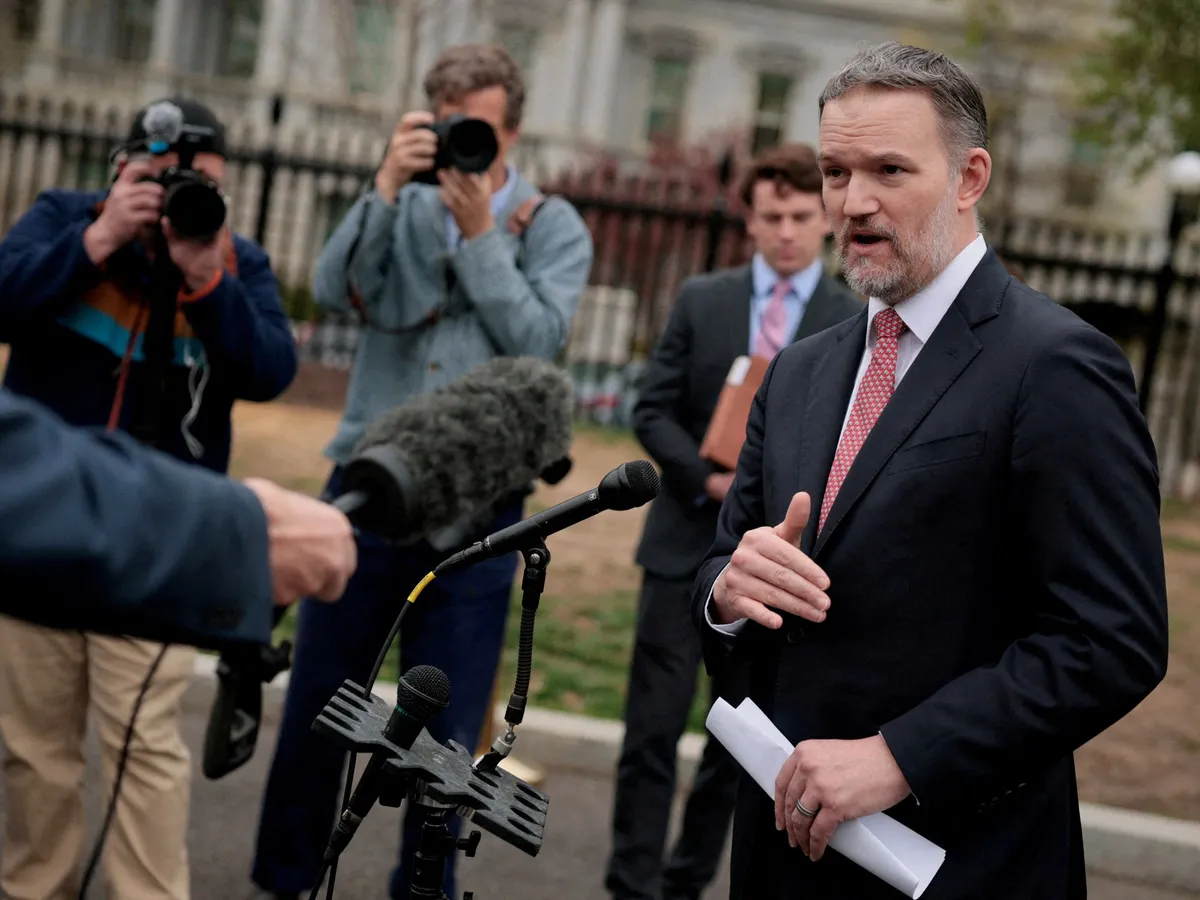
The US plans new 25 percent tariffs on brazilian imports, citing issues like deforestation and digital trade practices.United States Trade Representative Jamieson Greer said the tariffs follow a nearly year long investigation into "unfair" trade practices [File: Evan Vucci/Reuters]Published On 2 Jun 2026The administration of United States President Donald Trump has proposed a new 25 percent tariff on imports from Brazil amid allegations of unfair trading practices.US Trade Representative Jamieson Greer announced the new punitive tariffs late on Monday, stemming from issues including digital trade and illegal deforestation.Recommended Stories list of 4 itemslist 1 of 4US Defense Department bars journalists from its press officelist 2 of 4Google parent Alphabet to sell $80bn in stock to fund AI planslist 3 of 4Relief for Indian football fans as FIFA signs World Cup broadcast deallist 4 of 4Every world leader who has visited China in 2026 in one chartend of listThe new tariffs would be imposed under Section 301 of US trade policy — a statute that gives the US government broad authority to impose trade sanctions based on violations of trade agreements, as well as what it deems “unfair” trade practices under the Trade Act of 1974.Greer said there has been an investigation that began in July. The practices under investigation were related to issues such as illegal deforestation, ethanol market access, and anticorruption enforcement, among other key issues, according to the summary released by the US Department of Commerce on Tuesday.In the 107-page document, the US government said that trade practices between the two nations “are unreasonable and burden or restrict US commerce”, and pointed to agreements that Brazil has with Mexico and India.“Brazil’s trade arrangements with Mexico and India also create incentives to offshore US production by creating a financial advantage to exporting to Brazil from these countries, as opposed to exporting from the United States,” the document says.There is a comment period for the general public to weigh in on the proposed tariffs, which begins on Thursday. The written comment period ends on July 1, and there will be a public hearing in Washington on July 6.Beef, coffee, rare earths, other metals, energy, and aircraft parts are among the products that would be exempt from the tariffs.On CNBC, Greer said that it would release more findings on unfair trade practices in the next several weeks in order to address what Greer called a “giant” trade deficit.However, the data shows that the US maintains a trade surplus with Brazil. In March, Brazil bought more goods, worth $3.3bn, from the US than it exported at $2.9bn, representing a $420m trade surplus.Other countries under investigation include China and Vietnam.The new tariff would partially replace a tariff of 50 percent on many Brazilian goods imposed last year by Trump, with 40 percent serving as a punishment for Brazil’s prosecution of former President Jair Bolsonaro, a Trump ally.The White House also recently dropped tariffs on select aluminium, copper, and steel imports, which include agricultural equipment such as harvesters. Those tariffs will drop from 25 percent to 15 percent. The tariffs expire in December 2027.The new tariffs come after the Supreme Court, in February, struck down the use of the International Emergency Economic Powers Act (IEEPA), which the White House used to impose its sweeping global tariffs.“They are the first of many new tariffs to replace the IEPPA national security tariffs. The period of public comment will allow for potential modest tweaks and exemptions. Ultimately, it will add to some inflation pressure compared to the last few months but not compared to a year earlier,” Rachel Ziemba, a senior adjunct fellow at the Center for a New American Security, told Al Jazeera.Political tensionsThe changes come despite President Luiz Inacio Lula da Silva’s visit to Washington last month, as relations have deteriorated in recent months.The US State Department has also designated two of Brazil’s criminal gangs as “terrorist organisations”, a move that supported Senator Flavio Bolsonaro’s position, Lula’s main rival in October’s election, and over the objections of Brazilian officials.“I expressly asked President Trump not to tariff our companies,” Bolsonaro wrote on X on Tuesday. “Tariffs are not the solution.”The White House did not respond to Al Jazeera’s request for comment.
SRCAl Jazeera
LANGEN
LEANCenter
WORDS695
ENT12
TUE · 2026-06-02 · 17:00 GMTBRIEF NSR-2026-0602-81200
NSR-2026-0602-81200News Report·EN·Economic Impact
US targets Brazil with new tariffs over trade practices
The United States plans to impose new 25 percent tariffs on Brazilian imports, citing unfair trade practices, including illegal deforestation and digital trade issues. The tariffs, announced by US Trade Representative Jamieson Greer, stem from a nearly year-long investigation under Section 301 of US trade policy.
Andy HirschfeldAl JazeeraFiled 2026-06-02 · 17:00 GMTLean · CenterRead · 3 min
Al JazeeraFIG 01
Reading time
3min
Word count
695words
Sources cited
2cited
Entities identified
12entities
Quality score
100%
§ 01
Briefing Summary
AI-generatedNEWSAR · AI
The United States plans to impose new 25 percent tariffs on Brazilian imports, citing unfair trade practices, including illegal deforestation and digital trade issues. The tariffs, announced by US Trade Representative Jamieson Greer, stem from a nearly year-long investigation under Section 301 of US trade policy. The US government contends that Brazil's trade practices are unreasonable and restrict US commerce, pointing to agreements Brazil has with Mexico and India. A public comment period is open until July 1, with a hearing scheduled for July 6. While beef, coffee, and rare earths are among potential exemptions, the move follows a deterioration in US-Brazil relations.
Confidence 0.90Sources 2Claims 5Entities 12
§ 02
Article analysis
Model · rule-basedFraming
Economic Impact
Environmental
Tone
Measured
AI-assessed
CalmNeutralAlarmist
Factuality
0.70 / 1.00
Factual
LowHigh
Sources cited
2
Limited
FewMany
§ 03
Key claims
5 extracted01
The new tariff would partially replace a 50 percent tariff on many Brazilian goods imposed last year.
factualarticle
Confidence
1.00
02
Data shows the US maintains a trade surplus with Brazil, with Brazil buying more goods from the US than it exported in March.
statisticarticle
Confidence
1.00
03
The US government stated that Brazil's trade practices "are unreasonable and burden or restrict US commerce".
quoteUS Department of Commerce
Confidence
1.00
04
The new tariffs would be imposed under Section 301 of US trade policy, allowing sanctions for "unfair" trade practices.
factualUS government
Confidence
1.00
05
The US plans new 25 percent tariffs on Brazilian imports, citing issues like deforestation and digital trade practices.
factualUS Trade Representative Jamieson Greer
Confidence
1.00
§ 04
Full report
3 min read · 695 words§ 05
Entities
12 identifiedKey playerOppositionContextPositiveNeutralNegative
Organizations3
Locations4
§ 06
Keywords & salience
9 termstrade practices
1.00
tariffs
1.00
deforestation
0.90
digital trade
0.80
us imports
0.70
section 301
0.60
trade sanctions
0.50
ethanol market access
0.40
anticorruption enforcement
0.40
§ 07
Topic connections
Interactive graph Network visualization showing 51 related topics
View Full Graph Person Organization Location Event|Click node to navigate|Edge numbers = shared articles