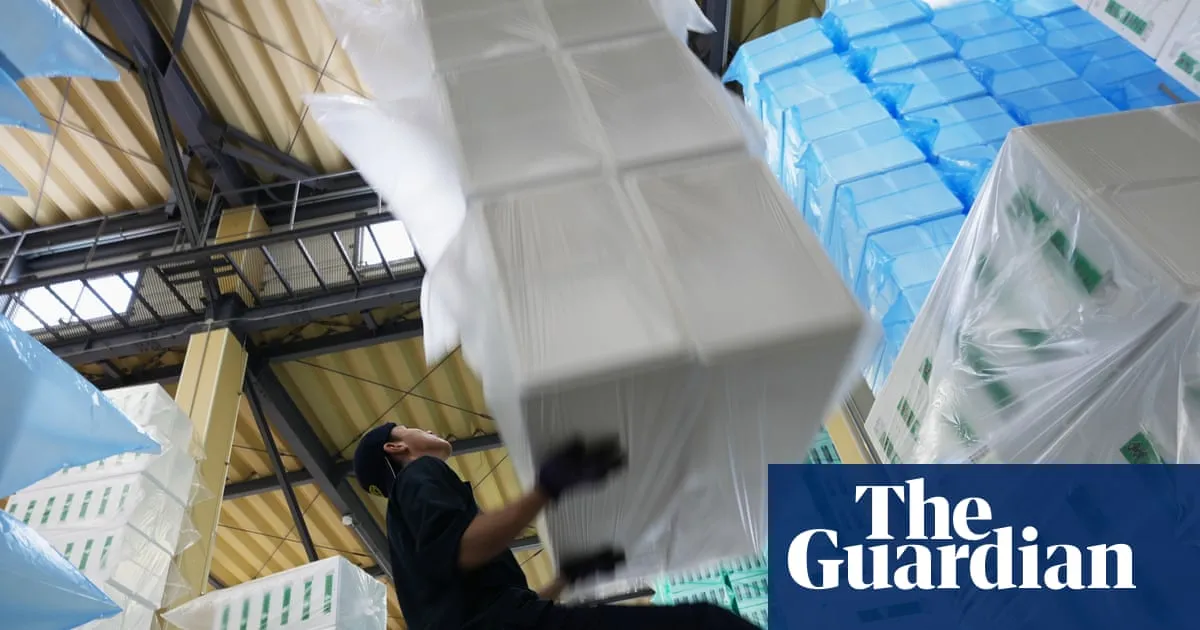
Takeaways, supermarkets, and bakeries in Japan are running out of plastic bags, trays and food service gloves amid widening shortages of the key plastic ingredient, naphtha, due to the Middle East crisis.The food sector accounts for nearly one-third of Japan’s annual plastic use of more than 8m tonnes, and price rises and shortages are hitting hard across the industry and beyond. Some outlets have begun offering perks to customers who bring their own bags, plates or containers.The Middle East is Japan’s main source of crude oil, from which naphtha is extracted and then used to make a wide variety of items including printing ink, plastics, adhesives and medical supplies.Data from the Japan-petrochemical-industry-association" class="entity-link entity-organization" data-entity-id="139930" data-entity-type="organization">Japan Petrochemical Industry Association (JPCA) showed that production of the polyethylene used in shopping and garbage bags was down 62% in March compared with 2025, with large drops also recorded for manufacturing of other plastics.Prime minister Sanae Takaichi’s government is facing mounting pressure over the shortages, which are also affecting other sectors. The government has assured the public that the issue is a supply “bottleneck” rather than a shortage, but industry leaders and commentators have contradicted this, saying the situation will worsen throughout June. Opinion polls show the public see the issue as one of its most pressing worries.Japanese retailers have been mandated to charge for plastic shopping bags since 2020. But multiple layers of plastic packaging and wrapping on products are still commonplace and seen as part of Japan’s service culture. That culture is coming under pressure as supplies run low.At the ColekoVer supermarket in a suburb of Kawasaki, in Tokyo’s south, manager Takeshi Takanohira has been asking his staff to avoid putting fruit and vegetables in the individual plastic bags that his customers are used to because prices are up and supply is down.“Since last month, we haven’t been able to get any of the little plastic trays we use for some produce, so we just have to make do without them,” said Takanohira.He said customers had so far been understanding about the situation, which has been on the news almost nightly.One station away at the Le Main Qui Pense bakery, a sign on the wall explains that naphtha shortages caused by the war in the Middle East mean that it has run out of plastic bags to keep baguettes fresh.“We got some stock in mid-May but our supplier says they don’t know when the next batch is arriving,” said Shisou Tanoshiri, who runs the bakery with her husband. “And the plastic gloves for handling food are in very short supply as well … Japanese people are very particular about hygiene and cleanliness and many don’t like to reuse bags that directly touch food.”In Kofu City, west of Tokyo, the Hinode Delica is rewarding customers who bring their own plates or containers with free side dishes and extra toppings to its bento lunchboxes.The shop’s manager said its container supplier had notified it that prices would be going up by 30% in June.Municipal rubbish collection systems, many of which rely on strict separation of household waste into designated plastic bags of different colours, are also being affected. The situation has been exacerbated by panic-buying of the required bags, leading stores to restricts sales to a maximum of two bags per customers. Some mMunicipalities are allowing residents to use non-approved bags to dispose of rubbish.It is not only Japan that is struggling with shortages. Countries across east Asia source most of their oil and naphtha from the Middle East.Daily sales of plastic garbage bags in the South Korean capital jumped nearly fivefold back in March, according to Seoul Metropolitan Government, leading to purchase restrictions and government assurances.“There is no need to worry about the supply of standard garbage bags,” posted energy and environment minister Kim Sung-whan on social media at the end of March.Taiwan is one of the largest per capita users of plastic bags in the world, the small island nation going through around 9bn a year. It imports about 70% of its crude oil from the Middle East and wholesale prices for plastics have surged up to 40% this year, the Straits Times reported.The Taiwanese government has also urged its citizens to remain calm and avoid hoarding plastic bags and is monitoring companies for any evidence of profiteering.
SRCThe Guardian - World News
LANGEN
LEANCenter-Left
WORDS711
ENT11
THU · 2026-06-04 · 00:12 GMTBRIEF NSR-2026-0604-81582
NSR-2026-0604-81582News Report·EN·Economic Impact
Japan sees shortage of plastic bags, trays and gloves, as Iran war-induced naphtha shortage worsens
Japan is experiencing a shortage of plastic bags, trays, and gloves, impacting takeaways, supermarkets, and bakeries. This is due to a widening shortage of naphtha, a key plastic ingredient, caused by the Middle East crisis.
Gavin Blair in TokyoThe Guardian - World NewsFiled 2026-06-04 · 00:12 GMTLean · Center-LeftRead · 3 min
The Guardian - World NewsFIG 01
Reading time
3min
Word count
711words
Sources cited
4cited
Entities identified
11entities
Quality score
100%
§ 01
Briefing Summary
AI-generatedNEWSAR · AI
Japan is experiencing a shortage of plastic bags, trays, and gloves, impacting takeaways, supermarkets, and bakeries. This is due to a widening shortage of naphtha, a key plastic ingredient, caused by the Middle East crisis. The food sector, a significant consumer of plastic, is particularly affected by price increases and supply issues. Some businesses are incentivizing customers to bring their own reusable containers. The Japanese government acknowledges a supply "bottleneck," but industry experts predict the situation will worsen. Similar shortages are also occurring in other East Asian countries that rely on Middle Eastern oil for naphtha.
Confidence 0.90Sources 4Claims 5Entities 11
§ 02
Article analysis
Model · rule-basedFraming
Economic Impact
Human Interest
Tone
Mixed Tone
AI-assessed
CalmNeutralAlarmist
Factuality
0.70 / 1.00
Factual
LowHigh
Sources cited
4
Well sourced
FewMany
§ 03
Key claims
5 extracted01
Production of polyethylene for bags was down 62% in March compared to 2025, according to the Japan Petrochemical Industry Association.
statisticJapan Petrochemical Industry Association (JPCA)
Confidence
0.90
02
Japan faces shortages of plastic bags, trays, and gloves due to a naphtha shortage caused by the Middle East crisis.
factual
Confidence
0.90
03
Retailers are offering incentives for customers to bring their own bags and containers due to low supply and high prices.
factual
Confidence
0.80
04
The food sector uses nearly one-third of Japan's annual plastic, impacting prices and availability.
factual
Confidence
0.80
05
Prime Minister Takaichi's government calls the issue a supply 'bottleneck,' but industry leaders predict worsening shortages.
factual
Confidence
0.70
§ 04
Full report
3 min read · 711 words§ 05
Entities
11 identifiedKey playerOppositionContextPositiveNeutralNegative
People3
Locations5
§ 06
Keywords & salience
8 termsnaphtha shortage
1.00
plastic supply chain
0.90
middle east crisis
0.80
japan economy
0.70
petrochemical industry
0.60
food service industry
0.50
consumer behavior
0.40
supply bottleneck
0.40
§ 07
Topic connections
Interactive graph Network visualization showing 2 related topics
View Full Graph Person Organization Location Event|Click node to navigate|Edge numbers = shared articles