Lebanon’s army chief Rodolphe Haykal left for Pakistan in a surprise visit as fighting continues.Smoke billows from southern Lebanon following an Israeli strike, as seen from Nabatieh, Lebanon, June 6, 2026. [Reuters]Published On 7 Jun 2026Funerals will be held for Lebanese officers killed in an Israeli attack in southern Lebanon, as Beirut’s army chief headed to Pakistan on a surprise visit amid ongoing mediation efforts in the wider United States-Israel war on Iran.The Lebanese soldiers will be laid to rest on Sunday, a day after the brigadier general, captain and soldier were killed in an Israeli strike on a military vehicle on the Khardali-Nabatieh road, in an incident the Israeli army said it was investigating.Recommended Stories list of 4 itemslist 1 of 4Lebanon and Israel’s perpetual war machinelist 2 of 4Israeli attacks in Lebanon kill 12 people, including high-ranking officerslist 3 of 4How many times were the US and Iran on the verge of a deal?list 4 of 4By the numbers: 100 days of the US-Israel war on Iranend of listA ceasefire agreed on April 17 was meant to halt the fighting between Israel and Hezbollah, but Israel has continued to carry out near-daily attacks, prompting retaliatory ones from the Lebanese group. The violence has taken a disproportionate toll on civilians in Lebanon, where more than 3,500 people have been killed since hostilities resumed on March 2.A further conditional ceasefire was announced by Lebanese and Israeli envoys last week in Washington, but was rejected by Hezbollah as it did not include the group or provide for Israel’s withdrawal from southern Lebanon.Lebanese army chief Rodolphe Haykal left on Saturday for Pakistan, which has emerged as a central mediator between the US and Iran.The visit is notable given the insistence by Washington – and by Lebanese leaders, including the president – that Lebanon" class="entity-link entity-event" data-entity-id="141793" data-entity-type="event">ceasefire talks for Lebanon remain separate from the US-Iran negotiations mediated by Pakistan.Fighting continues in southern LebanonMeanwhile, Israeli attacks hit several towns across southern Lebanon and the western Bekaa overnight, while Hezbollah said it launched rockets, artillery fire, and drone attacks against Israeli forces, including near the Beaufort Castle in Yohmor al-Shaqif.Lebanon’s Ministry of Public Health said on Sunday that an Israeli raid on the town of Saksakiyeh a day earlier killed at least two people. The ministry added that 22 people were wounded in the attack, including three children and a woman.Two others were wounded following an Israeli drone attack on the town of Shahabiyeh, Lebanon’s National News Agency (NNA) reported.Israeli air attacks also hit the town of Qalawiya at dawn, and the towns of al-Qatrani, Byblos and Rihan in the Jezzine district overnight. The town of Deir Kifa in the Tyre district was also bombed, while Barashit and Chaqra in the same district were subjected to intermittent artillery shelling overnight.NNA also reported artillery shelling in the towns of al-Mansouri and Bayt al-Sayyad in the Tyre district.Israeli warplanes launched an attack on the town of Srifa. Local media also reported that Israeli fighter jets attacked Dweir, near Nabatieh, north of the Litani River.Paramedics, meanwhile, continue to look for survivors under the rubble following Israeli attacks.“The pattern is part of what is being called the Gazafication of Lebanon, or Israel using actions normalised by the Gaza genocide,” said Al Jazeera’s Nour Odeh, reporting from Ramallah in the occupied West Bank.“The targeting of schools in southern Lebanon, just like Gaza. Bombing Lebanese hospitals and clinics, also like Gaza. And the murder of journalists. Then there’s these so-called double-tap attacks against paramedics and rescue workers. Hundreds of Palestinian and Lebanese paramedics have been killed with this unlawful practice.”Gazafication extends to the ceasefire, too, she added.“The ‘Yellow Line’, first introduced in Gaza, has now swallowed 60 percent of the territory. In Lebanon, the ‘Yellow Line’ now includes nearly a fifth of the country. Both invisible lines keep expanding,” said Odeh.No choice but negotiations, says Lebanese lawmakerNajat Aoun Saliba, an independent member of Lebanon’s parliament, meanwhile, condemned Israel’s killing of the Lebanese soldiers and said President Joseph Aoun has no choice but to enter into negotiations with Israel.“If we don’t have negotiations, what is the alternative? Is the alternative going to war? The war is not going to give us peace,” she told Al Jazeera.Saliba said dialogue was the only viable path given the imbalance of power between Israel and Lebanon’s armies.“The balance of power between the armies is not to be compared. Israel has a very strong army backed up by the United States. The Lebanese Armed Forces have been sidelined by a political will for 30 years, because they wanted to strengthen the presence of Hezbollah,” she said.The lawmaker added that Hezbollah has not been able to stop Israeli aggression.“Hezbollah is not able to stop any of these war crimes, and it’s not able to stop any of the invasions that Israel is doing. I think with … all these massacres and destruction, I don’t think we have a choice.”The killing of Brigadier General Wissam Sabra, Captain Elie Khoury and soldier Hussein Ghozal came at a tense moment amid broader efforts to strike a deal between the US, Iran, Hezbollah, the Lebanese government and Israel.Lebanese President Joseph Aoun said the attack was “aimed at thwarting all efforts to reach a solution”, while Prime Minister Nawaf Salam described it as “a heinous crime and an attack on Lebanon and all Lebanese people”.Lebanon was drawn into the Middle East war when Iran-backed Hezbollah attacked Israel on March 2, following joint US-Israeli attacks on Iran.Tehran has made a ceasefire in Lebanon between Israel and Hezbollah a condition for any peace deal with Washington.
SRCAl Jazeera
LANGEN
LEANCenter
WORDS928
ENT12
SUN · 2026-06-07 · 07:59 GMTBRIEF NSR-2026-0607-82396
NSR-2026-0607-82396News Report·EN·Conflict
Lebanon army chief in Pakistan, funeral plans for soldiers killed by Israel
Lebanon's army chief, Rodolphe Haykal, made a surprise visit to Pakistan amid ongoing fighting between Lebanon and Israel. Funerals are scheduled for three Lebanese officers killed in an Israeli strike on a military vehicle.
Al Jazeera StaffAl JazeeraFiled 2026-06-07 · 07:59 GMTLean · CenterRead · 4 min
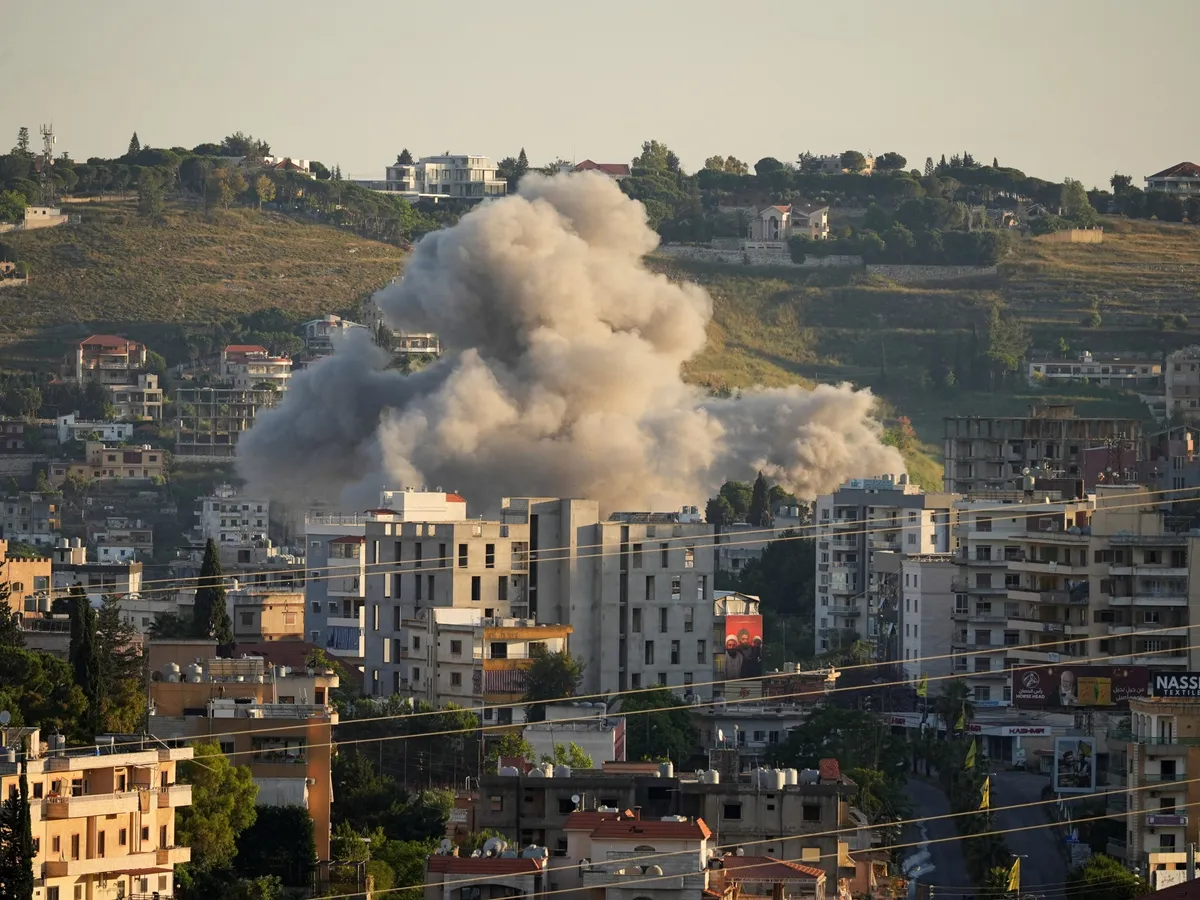
Al JazeeraFIG 01
Reading time
4min
Word count
928words
Sources cited
2cited
Entities identified
12entities
Quality score
100%
§ 01
Briefing Summary
AI-generatedNEWSAR · AI
Lebanon's army chief, Rodolphe Haykal, made a surprise visit to Pakistan amid ongoing fighting between Lebanon and Israel. Funerals are scheduled for three Lebanese officers killed in an Israeli strike on a military vehicle. Despite a prior ceasefire, Israel continues near-daily attacks, causing significant civilian casualties in Lebanon. A recent conditional ceasefire proposed by Lebanese and Israeli envoys was rejected by Hezbollah. Haykal's visit to Pakistan, a mediator in US-Iran negotiations, is notable as Lebanon insists its ceasefire talks remain separate. Fighting persists in southern Lebanon, with both sides exchanging fire, and Israeli raids have resulted in civilian deaths and injuries.
Confidence 0.90Sources 2Claims 5Entities 12
§ 02
Article analysis
Model · rule-basedFraming
Conflict
Diplomatic
Tone
Measured
AI-assessed
CalmNeutralAlarmist
Factuality
0.70 / 1.00
Factual
LowHigh
Sources cited
2
Limited
FewMany
§ 03
Key claims
5 extracted01
Hezbollah rejected a conditional ceasefire proposed by Lebanese and Israeli envoys as it did not include the group or provide for Israel’s withdrawal.
factual
Confidence
1.00
02
A ceasefire agreed on April 17 was meant to halt fighting between Israel and Hezbollah, but Israel has continued near-daily attacks.
factual
Confidence
1.00
03
Three Lebanese officers were killed in an Israeli strike on a military vehicle on the Khardali-Nabatieh road.
factual
Confidence
1.00
04
Lebanon's army chief Rodolphe Haykal is on a surprise visit to Pakistan amid ongoing mediation efforts.
factual
Confidence
1.00
05
An Israeli raid on Saksakiyeh killed at least two people and wounded 22, including three children.
factualLebanon’s Ministry of Public Health
Confidence
0.90
§ 04
Full report
4 min read · 928 words§ 05
Entities
12 identifiedKey playerOppositionContextPositiveNeutralNegative
Organizations1
Locations7
§ 06
Keywords & salience
8 termslebanon israel conflict
1.00
israeli strike
0.90
ceasefire talks
0.80
pakistan mediation
0.70
us iran war
0.60
lebanese army chief
0.50
hezbollah
0.50
southern lebanon
0.40
§ 07
Topic connections
Interactive graph Network visualization showing 51 related topics
View Full Graph Person Organization Location Event|Click node to navigate|Edge numbers = shared articles