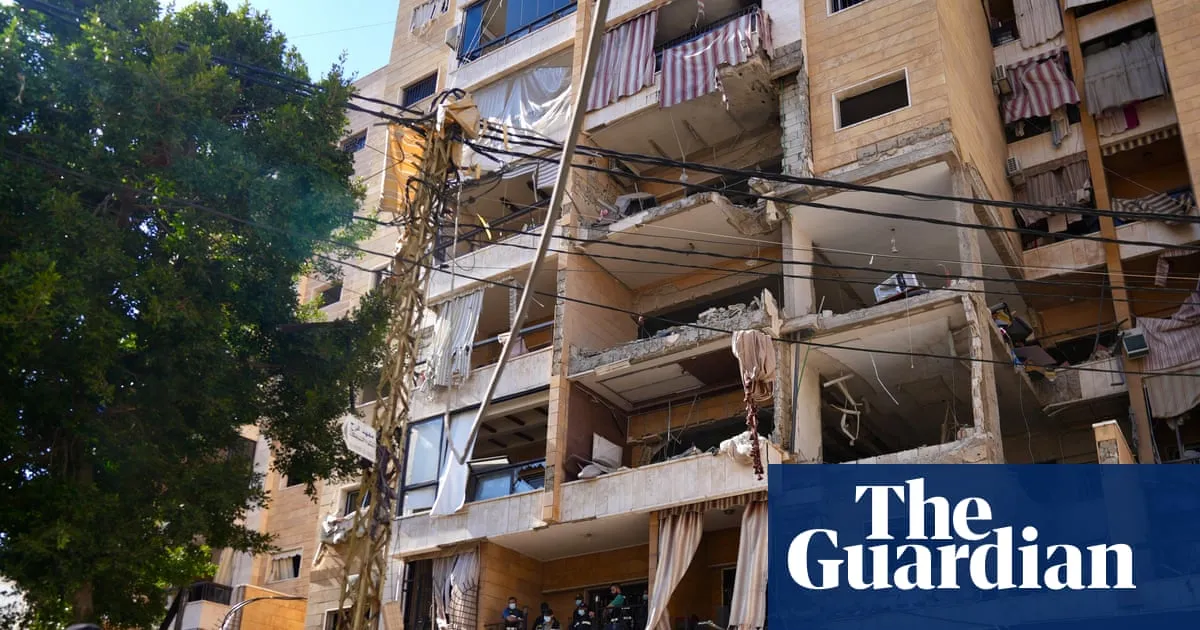
Israel launched airstrikes on central and western Iran on Monday in apparent defiance of Donald Trump after he urged restraint over a reprisal attack by Tehran in an escalation that threatens to drag the Middle East back into a regional war.It was the first exchange of direct strikes between the two enemies since a ceasefire paused the US-Israel war with Iran in April. Iran’s attack came in response to earlier strikes on Beirut by Israel.Israel’s strikes on Monday were launched just hours after Trump had called the Israeli prime minister, Benjamin Netanyahu, to urge him not to retaliate immediately for an Iranian missile attack on Sunday night, with the US president saying: “I call all the shots. He [Netanyahu] doesn’t call the shots.”Iranian state media reported explosions in Tehran, Isfahan, Karaj and Tabriz, and Iran’s Revolutionary Guards said Israel had used air-launched ballistic missiles in its attack.Iran closed the airspace around Tehran’s Imam Khomeini international airport – the country’s main airfield – after the Israeli attack.The White House did not respond to messages about the strikes and whether they were done in coordination with the US.In a sign of further destabilisation after the trading of strikes, Saudi Arabia sounded missile alert sirens in an area home to Prince Sultan airbase that hosts US forces; and the Israeli army said it was working to intercept a missile launched from Yemen. Yemen’s Houthi rebels, who joined the Middle East war in March in support of Iran, have previously launched attacks on Israel.Earlier, Tehran launched about 10 ballistic missiles at northern Israel in response to Israel bombing a target in southern Beirut. All Iran’s missiles were intercepted or struck open areas, according to Israel’s military. Netanyahu’s office announced Israel’s army had “struck a militant command centre in Beirut’s Dahiyeh district, in response to Hezbollah’s fire towards Israeli territory”. Two people were killed and 20 wounded, Lebanon’s health ministry said.Israel had warned it would hit the area if Hezbollah attacked northern Israel, and Hezbollah later confirmed it had launched missiles and drones at Israeli army barracks early Sunday.Mohammad Bagher Ghalibaf, Iran’s parliament speaker and its chief negotiator in talks with Washington, accused the US of having given a “green light” for the Beirut attack, saying US and Israeli assets were now “legitimate targets”.After the Beirut bombing and Iran’s retaliation, Trump told a Fox News reporter he wanted Iran to stop firing missiles and return to the negotiating table. He said Israel’s strikes in Lebanon were not coordinated with the US and “I’m not happy about it.”A senior US official said Trump had called Netanyahu to urge him not to retaliate immediately for the Iranian missile attack. The official, who spoke on condition of anonymity to describe a private phone call, said that Trump believed he had convinced Netanyahu to wait.Trump “got Bibi to hold off for the time being,” the official said. The official would not offer any other details of the call, and there was no immediate comment from Netanyahu’s office.Speaking to the Financial Times before Israel hit Iran, Trump insisted he dictated terms to Netanyahu on how the war should be prosecuted. “He won’t have any choice,” Trump told the newspaper in a telephone interview, adding that he calls “all the shots”, not Netanyahu.The skirmishes in Lebanon have been an obstacle for Iran-US negotiations. Tehran insists Lebanon be included in a broader ceasefire deal.On Sunday, Donald Trump told NBC News he was not demanding that Lebanon be part of any peace deal with Iran, claiming again that such an agreement, which has so far proved elusive, was near.“I think they’d like to see it, but I’m not demanding,” Trump said in the interview recorded on Friday. He added: “We’re very close to a deal, or I’m going to blow the hell out of them [Iran].”Brent crude jumped $3.50 to $96.59 a barrel on Monday, while stocks in Asia, a region heavily dependent on oil imports, fell sharply in early trading.Before the strike on Sunday, Israel had issued a forced evacuation order for most of the city of Tyre, one of the largest cities in southern Lebanon, which is hosting thousands of people displaced from villages in the surrounding area. Plumes of smoke were later seen rising from the city.Fighting in Lebanon started on 2 March when Hezbollah launched rockets at Israel in retaliation for the killing of Iran’s supreme leader Ali Khamenei, triggering an Israeli invasion. Israeli strikes have killed more than 3,613 people in Lebanon, while Hezbollah has killed at least 30 Israeli soldiers in Lebanon and three Israeli civilians.Additional reporting from Lorenzo Tondo, William Christou and Associated Press
SRCThe Guardian - World News
LANGEN
LEANCenter-Left
WORDS768
ENT12
MON · 2026-06-08 · 04:49 GMTBRIEF NSR-2026-0608-82596
NSR-2026-0608-82596News Report·EN·Conflict
Israel strikes Iran despite Trump plea as Middle East crisis threatens to escalate
Israel launched airstrikes on central and western Iran on Monday, marking the first direct exchange of strikes between the two nations since a ceasefire in April. This escalation followed an Iranian missile attack on Israel, which was a response to earlier Israeli strikes on Beirut.
Mark SaunokonokoThe Guardian - World NewsFiled 2026-06-08 · 04:49 GMTLean · Center-LeftRead · 4 min
The Guardian - World NewsFIG 01
Reading time
4min
Word count
768words
Sources cited
4cited
Entities identified
12entities
Quality score
100%
§ 01
Briefing Summary
AI-generatedNEWSAR · AI
Israel launched airstrikes on central and western Iran on Monday, marking the first direct exchange of strikes between the two nations since a ceasefire in April. This escalation followed an Iranian missile attack on Israel, which was a response to earlier Israeli strikes on Beirut. The article states that US President Donald Trump had urged Israeli Prime Minister Benjamin Netanyahu to show restraint, asserting his own control over such decisions. Iranian state media reported explosions and the use of ballistic missiles, leading to the closure of airspace around Tehran's international airport. The exchange of attacks has heightened fears of a wider regional conflict, with missile alert sirens also sounding in Saudi Arabia and Israel working to intercept a missile from Yemen.
Confidence 0.90Sources 4Claims 5Entities 12
§ 02
Article analysis
Model · rule-basedFraming
Conflict
Political Strategy
Tone
Mixed Tone
AI-assessed
CalmNeutralAlarmist
Factuality
0.70 / 1.00
Factual
LowHigh
Sources cited
4
Well sourced
FewMany
§ 03
Key claims
5 extracted01
Two people were killed and 20 wounded in Israel's bombing of a target in southern Beirut.
factualLebanon’s health ministry
Confidence
0.90
02
Iran closed the airspace around Tehran’s Imam Khomeini international airport after the Israeli attack.
factual
Confidence
0.90
03
Israel launched airstrikes on central and western Iran on Monday.
factual
Confidence
0.90
04
Iran launched about 10 ballistic missiles at northern Israel in response to Israel bombing a target in southern Beirut.
factual
Confidence
0.80
05
Donald Trump urged Israeli Prime Minister Benjamin Netanyahu to show restraint.
factualsenior US official
Confidence
0.80
§ 04
Full report
4 min read · 768 words§ 05
Entities
12 identifiedKey playerOppositionContextPositiveNeutralNegative
Organizations3
§ 06
Keywords & salience
10 termsmiddle east crisis
1.00
regional war
0.90
israel strikes iran
0.90
escalation
0.80
reprisal attack
0.70
iran missile attack
0.60
benjamin netanyahu
0.50
donald trump
0.50
hezbollah
0.40
houthi rebels
0.40
§ 07
Topic connections
Interactive graph Network visualization showing 51 related topics
View Full Graph Person Organization Location Event|Click node to navigate|Edge numbers = shared articles