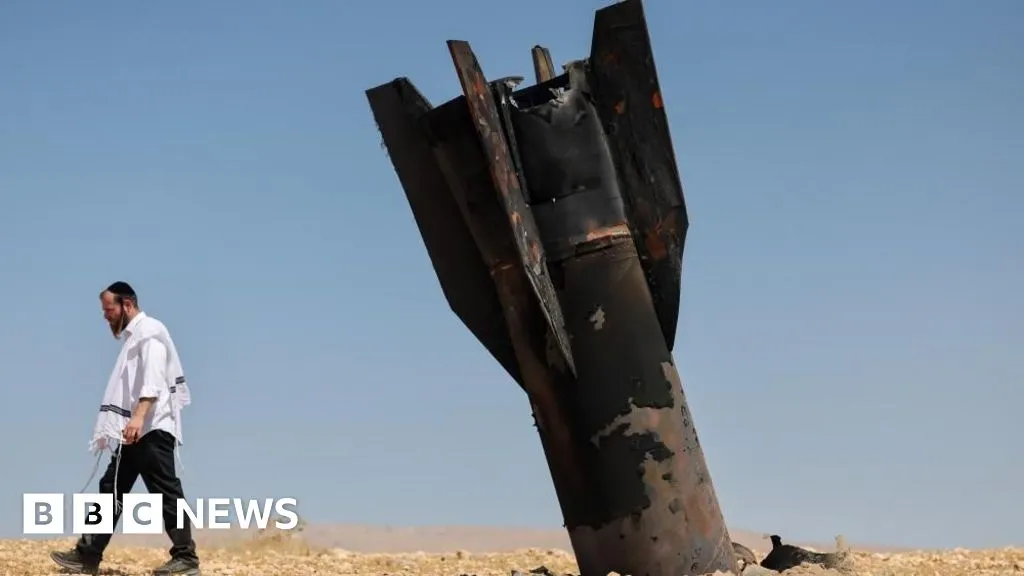
When Iran launched missiles and drones at Israel overnight in response to Israeli attacks on Hezbollah in Lebanon, the immediate military significance of the attack appeared to be limited. The political significance, however, may be far greater.For years, Iran has generally justified direct attacks on Israel as retaliation for actions against Iranian territory, commanders or interests. This time was different. Tehran acted after an attack on one of its allies, following an Israeli strike on what it said was a Hezbollah-linked building in southern Beirut.On Monday, Iran's military said it would stop strikes on Israel, but the decision to strike at all raises an important question: why did Iran's leadership feel that the time was right to take such a step, knowing it risked renewed Israeli military action and potentially jeopardising fragile peace negotiations with the United States?Part of the answer may lie in how Iran's leaders assess their position after months of conflict.The Islamic Republic emerged from the war weakened in some respects but also with a stronger sense of its own resilience. Despite extensive Israeli and American military pressure, economic sanctions and a US naval blockade, the state survived. The government is still in power, its security apparatus remains intact, and no mass uprising materialised despite repeated predictions from its opponents.That experience may have altered Tehran's calculations.
SRCBBC News - World
LANGEN
LEANCenter
WORDS219
ENT8
MON · 2026-06-08 · 14:11 GMTBRIEF NSR-2026-0608-82742
NSR-2026-0608-82742Analysis·EN·Political Strategy
Iran's strike on Israel suggests the regime's sense of resilience is growing
Iran launched missiles and drones at Israel in response to an Israeli strike on a Hezbollah-linked building in Beirut. This marked a shift from Iran's usual justification of direct attacks as retaliation for actions against its own territory or interests.
BBC News - WorldFiled 2026-06-08 · 14:11 GMTLean · CenterRead · 1 min
BBC News - WorldFIG 01
Reading time
1min
Word count
219words
Sources cited
0cited
Entities identified
8entities
Quality score
100%
§ 01
Briefing Summary
AI-generatedNEWSAR · AI
Iran launched missiles and drones at Israel in response to an Israeli strike on a Hezbollah-linked building in Beirut. This marked a shift from Iran's usual justification of direct attacks as retaliation for actions against its own territory or interests. The article suggests Iran's leadership felt the time was right to take this step, despite the risks of renewed Israeli military action and jeopardizing peace negotiations. This decision may stem from Iran's assessment of its own resilience after surviving months of conflict, including Israeli and American military pressure, economic sanctions, and a US naval blockade. The state and its security apparatus remain intact, and no mass uprising occurred, potentially altering Tehran's calculations.
Confidence 0.90Claims 5Entities 8
§ 02
Article analysis
Model · rule-basedFraming
Political Strategy
Conflict
Tone
Measured
AI-assessed
CalmNeutralAlarmist
Factuality
0.40 / 1.00
Mixed
LowHigh
Sources cited
0
No named sources
FewMany
§ 03
Key claims
5 extracted01
Iran launched missiles and drones at Israel in response to Israeli attacks on Hezbollah in Lebanon.
factual
Confidence
1.00
02
The government is still in power, its security apparatus remains intact, and no mass uprising materialised despite repeated predictions from its opponents.
factual
Confidence
0.90
03
Despite extensive Israeli and American military pressure, economic sanctions and a US naval blockade, the state survived.
factual
Confidence
0.90
04
Iran has generally justified direct attacks on Israel as retaliation for actions against Iranian territory, commanders or interests.
factual
Confidence
0.90
05
The Islamic Republic emerged from the war weakened in some respects but also with a stronger sense of its own resilience.
factual
Confidence
0.80
§ 04
Full report
1 min read · 219 words§ 05
Entities
8 identifiedKey playerOppositionContextPositiveNeutralNegative
Organizations3
§ 06
Keywords & salience
8 termsiran israel conflict
1.00
regime resilience
0.90
hezbollah
0.80
iranian retaliation
0.70
military pressure
0.60
economic sanctions
0.50
us naval blockade
0.40
peace negotiations
0.40
§ 07
Topic connections
Interactive graph Network visualization showing 51 related topics
View Full Graph Person Organization Location Event|Click node to navigate|Edge numbers = shared articles