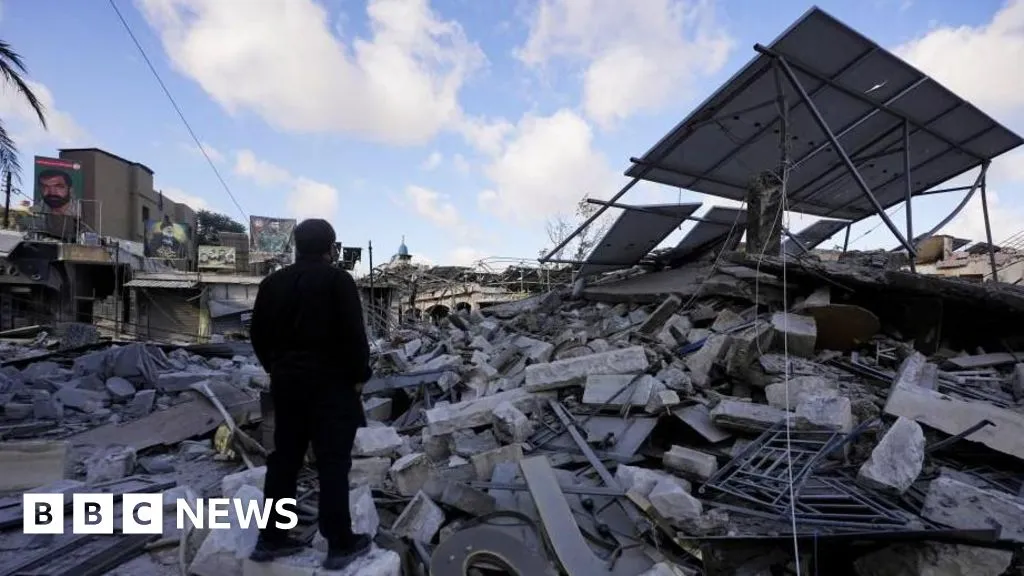
Finally, after what have seemed like countless false starts, a deal has been agreed by the US and Iran. Both sides have predictably claimed victory. President Trump has boldly declared: "This Great Deal will bring Peace and Security to the whole Region."Iran's deputy foreign minister Kazem Gharibabadi hailed what he called his country's military achievements as he confirmed that the Memorandum of Understanding had been signed. All sides, including the mediator, Pakistan, are saying that the deal will see the lifting both of Iran's closure of the Strait of Hormuz and The US blockade of Iranian ports, although this may not be immediate. That will go some way to relieving pressure on President Trump over the harm to the global economy caused by the former, while Iran's collapsing economy will gain some relief from the latter. The Pakistani prime minister Shehbaz Sharif - who was the first to announce the deal - has said that the agreement also calls for the "immediate and permanent termination of military operations on all fronts, including in Lebanon". That could be a tall order. Israeli Prime Minister Benjamin Netanyahu has shown no sign so far of being prepared to end Israel's current offensive against Hezbollah in Lebanon. Indeed, twice in just the past week, Israeli strikes on the southern suburbs of Beirut in response to Hezbollah rockets crossing into northern Israel have come close to derailing the whole process. Iran only just pulled back from responding with another missile attack on Israel in order to get the deal across the line.
SRCBBC News - World
LANGEN
LEANCenter
WORDS257
ENT12
MON · 2026-06-15 · 01:37 GMTBRIEF NSR-2026-0615-84455
NSR-2026-0615-84455Analysis·EN·Diplomatic
US-Iran deal eases uncertainty over the war - but there is much still to play out
The US and Iran have reached a deal, brokered by Pakistan, aimed at easing regional tensions. The agreement reportedly includes the lifting of Iran's closure of the Strait of Hormuz and the US blockade of Iranian ports, which could provide economic relief to both the global economy and Iran.
2 hours agoShareSaveAdd as preferred on GoogleSebastian UsherGlobal Affairs CorrespondentBBC News - WorldFiled 2026-06-15 · 01:37 GMTLean · CenterRead · 2 min
BBC News - WorldFIG 01
Reading time
2min
Word count
257words
Sources cited
3cited
Entities identified
12entities
Quality score
100%
§ 01
Briefing Summary
AI-generatedNEWSAR · AI
The US and Iran have reached a deal, brokered by Pakistan, aimed at easing regional tensions. The agreement reportedly includes the lifting of Iran's closure of the Strait of Hormuz and the US blockade of Iranian ports, which could provide economic relief to both the global economy and Iran. A key component of the deal, according to Pakistan's Prime Minister, is the immediate and permanent termination of military operations, including in Lebanon. However, Israeli Prime Minister Benjamin Netanyahu has not indicated a willingness to end Israel's offensive against Hezbollah in Lebanon, and recent Israeli strikes have nearly jeopardized the agreement. Iran reportedly refrained from further missile attacks on Israel to facilitate the deal's finalization.
Confidence 0.90Sources 3Claims 5Entities 12
§ 02
Article analysis
Model · rule-basedFraming
Diplomatic
Conflict
Tone
Mixed Tone
AI-assessed
CalmNeutralAlarmist
Factuality
0.60 / 1.00
Mixed
LowHigh
Sources cited
3
Well sourced
FewMany
§ 03
Key claims
5 extracted01
President Trump has declared: 'This Great Deal will bring Peace and Security to the whole Region.'
quotePresident Trump
Confidence
1.00
02
A deal has been agreed by the US and Iran.
factual
Confidence
1.00
03
Israeli Prime Minister Benjamin Netanyahu has shown no sign so far of being prepared to end Israel's current offensive against Hezbollah in Lebanon.
factual
Confidence
0.90
04
The agreement also calls for the 'immediate and permanent termination of military operations on all fronts, including in Lebanon'.
quotePakistani prime minister Shehbaz Sharif
Confidence
0.90
05
The deal will see the lifting of Iran's closure of the Strait of Hormuz and the US blockade of Iranian ports.
factualAll sides, including the mediator, Pakistan
Confidence
0.80
§ 04
Full report
2 min read · 257 words§ 05
Entities
12 identifiedKey playerOppositionContextPositiveNeutralNegative
People4
Organizations1
§ 06
Keywords & salience
10 termsus-iran deal
1.00
strait of hormuz
0.80
global economy
0.70
lebanon
0.60
military operations
0.60
iran's economy
0.50
pakistan
0.50
hezbollah
0.50
benjamin netanyahu
0.40
president trump
0.40
§ 07
Topic connections
Interactive graph Network visualization showing 51 related topics
View Full Graph Person Organization Location Event|Click node to navigate|Edge numbers = shared articles