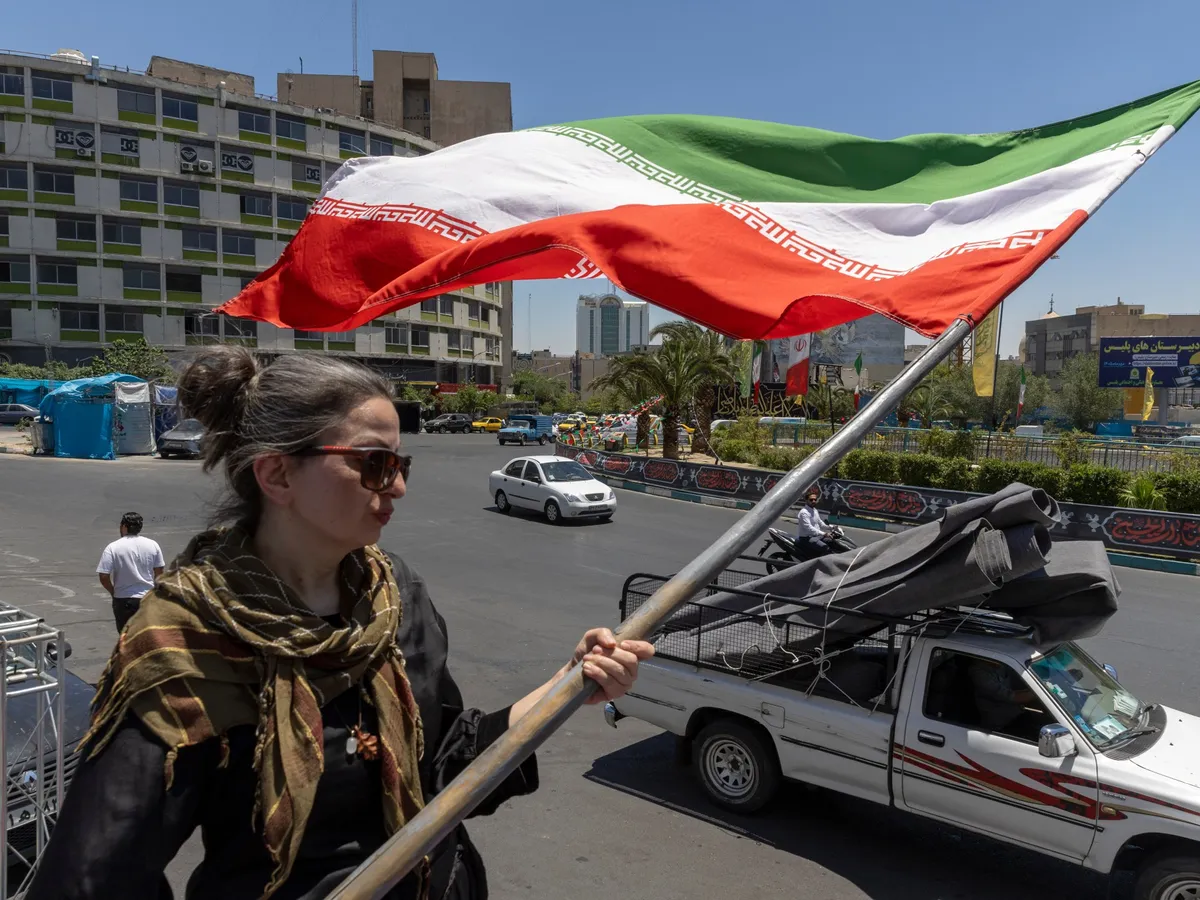
Factional divisions in Iran remain as leaders debate the implementation of deal with the US, amid fears of capitulation.A woman waves an Iranian flag on June 15, 2026 in Tehran, Iran [Majid Saeedi/Getty Images]Published On 16 Jun 2026Tehran, Iran – The road leading to the signing the memorandum of understanding between the United States and Iran has been difficult.And the announcement on Sunday that a deal had been reached does not mean that everything will be straightforward from now on, even after the planned signing of the deal on Friday in Switzerland.Recommended Stories list of 3 itemslist 1 of 3Geneva to host Iran-US deal event: What other pacts have been signed there?list 2 of 3Families return to shattered towns as fragile ceasefire holds in Lebanonlist 3 of 3Trump tells Netanyahu to be ‘more responsible with respect to Lebanon’end of listFactional differences remain in Iran, and they are likely to emerge during the implementation phase over the coming months.Here’s a look at who stands where in Iran’s political leadership and what they believe needs to happen so that Iran can avoid “capitulation” against the US and Israel.Mojtaba KhameneiThe new supreme leader replaced his powerful slain father Ayatollah Ali Khamenei, despite reportedly being wounded in the same air strike on February 28. But has not been seen or heard from publicly except for written statements attributed to him, and has not adopted a public position on the deal.In the statements, Khamenei has predominantly focused on maintaining control over the Strait of Hormuz, and guarding Iran’s nuclear and missile programmes as “national assets” that should not be surrendered.This has prompted speculation and interpretations from different stakeholders.The ultraconservative Keyhan newspaper, whose editor-in-chief was selected by the senior Khamenei decades ago, said the incumbent supreme leader has deliberately not referenced the nuclear programme since coming to power.This, the newspaper wrote in an editorial on Tuesday, could signal that the Iran believes the nuclear file to have “concluded” with no efforts necessary to reopen it – even though the US and Israel attacked Iran with a main stated goal of curtailing Tehran’s nuclear ambitions.“We are at a critical juncture in the history of the West Asia region, so there is no room for weakness or error, and no one has the right to undermine or, God forbid, surpass the red lines of the supreme leader,” Keyhan wrote.IRGC, security apparatusMany senior officials in the Islamic Revolutionary Guard Corps (IRGC) and the security and intelligence apparatus were killed during the war. But those that remain are believed to be playing a key role in shaping how negotiations proceed with Washington.Generals such as IRGC chief Ahmad Vahidi and leaders at the Khatam al-Anbiya Central Headquarters of the armed forces and affiliated bodies have repeatedly stated readiness to resume military operations if necessary, but have refrained from commenting on the provisions of the deal.After spending decades and untold billions expanding the “axis of resistance” of allied armed forces across the region to rival the US and Israel, these officials have emphasised that Tehran will not abandon its allies, especially Hezbollah in Lebanon, and that they need to be included in any deal to protect them from Israel.Esmail Qaani, the commander of the Quds Force that oversees the axis, on Monday night made his first public appearance in months to discuss the deal.“Bab al-Mandeb Strait is fully in the hands of the guys in Hezbollah, the Ansarallah [Houthis] in Yemen, and even some of the comrades and children of resistance who are not Yemeni,” Qaani told state television during a studio interview, in reference to the strategic waterway that connects the Red Sea to the Gulf of Aden, which Iran has threatened to close if the war continues.Qaani also made another significant point, explicitly backing Mohammad Bagher Ghalibaf and other figures leading the negotiating team with the US, after they came under fire from hardliners for agreeing to the deal.Ghalibaf, the incumbent parliament speaker, used to be a senior IRGC commander who later entered politics. He is believed to be among the more pragmatic conservative figures within the establishment, who have backed a deal.In a rare sobering state television message after Iran had reached a ceasefire agreement with the US in April, Ghalibaf said that the US and Israel were militarily much stronger than Iran, so they could not be “destroyed”, but a beneficial deal with them may be possible if achievements were secured on the field of battle.As the secretary of the Supreme National Security Council (SNSC), IRGC General Mohammad Bagher Zolghadr, another top figure in the process, has previously said that Tehran would not “retreat” in any way, but the SNSC ultimately ratified and publicly communicated the understanding with the US.The hardlinersA number of hardliners within the establishment have shown their anger at the prospect of signing a deal with US President Donald Trump, the man who they believe ultimately gave the green light for the killing of former Supreme Leader Ali Khamenei, and many others before him, chief among them Quds Force leader Qassem Soleimani in 2020.The hardliners believe that Tehran must not grant any major concessions in relation to its nuclear programme, must maintain control over the Strait of Hormuz and later impose a fee system for transit and environmental services rendered, and eventually expel US troops from the region.A large number of hardline members of Iran’s parliament, as well as figures affiliated with the Paydari Front political group led by Saeed Jalili, are members of this camp.Saeed Jalili, a longtime representative of Khamenei in the Supreme National Security Council with a lengthy history of failed talks with the West, is believed to be among the chief opponents of the deal.Hours before the deal was announced this week, there were rumours that Jalili had been sidelined from his position, but there was no confirmation from the authorities.In addition to Keyhan newspaper, IRGC-affiliated outlets like Tasnim, Fars, Mehr and others have maintained a tough editorial line against the US.Government and reformistsThe Iranian government, currently led by President Masoud Pezeshkian, has seen its power greatly diminished over recent years as hardliners outside the government became more prominent in the decision-making process.But Pezeshkian, who is believed to be a relative centrist, and in favour of the deal, is still the head of the SNSC by law. He told a gathering in Tehran last week that Iran needs to end the current harmful state of “no war, no peace” with the US.He also has several key ministers with voting rights placed in the council. They include Foreign Minister Abbas Araghchi, who has backed a negotiated settlement that also secures Iran’s interests, particularly through the lifting of sanctions.Then there are reformists and moderates, such as former Presidents Hassan Rouhani and Mohammad Khatami, as well as ex-Foreign Minister Javad Zarif, who have mostly been sidelined in recent years after leaving government.They have repeatedly endorsed the negotiating track to end hostilities and open up the struggling Iranian economy in order to save Iran from potential collapse.“Now is the time for the united support of the people – both supporters and critics of the system – to unite in supporting the negotiations and the negotiators, and to move towards an agreement, lasting peace, and a life free from fear and war,” Khatami said, after the memorandum of understanding with the US was announced.
SRCAl Jazeera
LANGEN
LEANCenter
WORDS1 218
ENT10
TUE · 2026-06-16 · 14:13 GMTBRIEF NSR-2026-0616-84943
NSR-2026-0616-84943Analysis·EN·Political Strategy
Hardliners and moderates: What do Iran’s factions think of deal with US?
Iran's leadership is divided over the implementation of a recent memorandum of understanding with the United States, with factions debating its terms amid fears of capitulation. The new Supreme Leader, Mojtaba Khamenei, has focused on protecting Iran's nuclear and missile programs, leading to varied interpretations of his stance on the deal.
Maziar MotamediAl JazeeraFiled 2026-06-16 · 14:13 GMTLean · CenterRead · 5 min
Al JazeeraFIG 01
Reading time
5min
Word count
1 218words
Sources cited
2cited
Entities identified
10entities
Quality score
100%
§ 01
Briefing Summary
AI-generatedNEWSAR · AI
Iran's leadership is divided over the implementation of a recent memorandum of understanding with the United States, with factions debating its terms amid fears of capitulation. The new Supreme Leader, Mojtaba Khamenei, has focused on protecting Iran's nuclear and missile programs, leading to varied interpretations of his stance on the deal. Senior officials within the Islamic Revolutionary Guard Corps (IRGC) and security apparatus, while emphasizing readiness for military operations, have stressed that Iran will not abandon its regional allies, particularly Hezbollah. Parliament Speaker Mohammad Bagher Ghalibaf, a pragmatic conservative and former IRGC commander, supports the deal, believing a beneficial agreement is possible if Iran secures achievements on the battlefield. The Supreme National Security Council, despite some hardliner opposition, ultimately ratified and communicated the understanding with the US.
Confidence 0.90Sources 2Claims 5Entities 10
§ 02
Article analysis
Model · rule-basedFraming
Political Strategy
Diplomatic
Tone
Measured
AI-assessed
CalmNeutralAlarmist
Factuality
0.40 / 1.00
Mixed
LowHigh
Sources cited
2
Limited
FewMany
§ 03
Key claims
5 extracted01
Factional divisions remain in Iran regarding the implementation of a deal with the US.
factual
Confidence
0.90
02
Generals like IRGC chief Ahmad Vahidi have stated readiness to resume military operations if necessary.
factualAhmad Vahidi (attributed statements)
Confidence
0.80
03
Mojtaba Khamenei has not publicly adopted a position on the deal, focusing on maintaining control over the Strait of Hormuz and guarding nuclear/missile programs.
factualMojtaba Khamenei (attributed statements)
Confidence
0.80
04
Senior officials in the IRGC and security apparatus are believed to be shaping negotiations with Washington.
factual
Confidence
0.70
05
The ultraconservative Keyhan newspaper suggests the supreme leader's silence on the nuclear program could signal its conclusion.
factualKeyhan newspaper
Confidence
0.70
§ 04
Full report
5 min read · 1 218 words§ 05
Entities
10 identifiedKey playerOppositionContextPositiveNeutralNegative
Organizations2
§ 06
Keywords & salience
9 termsus-iran deal
1.00
iran factions
1.00
capitulation fears
0.90
supreme leader
0.80
nuclear program
0.70
strait of hormuz
0.60
israel
0.50
irgc
0.40
ultraconservative
0.40
§ 07
Topic connections
Interactive graph Network visualization showing 51 related topics
View Full Graph Person Organization Location Event|Click node to navigate|Edge numbers = shared articles