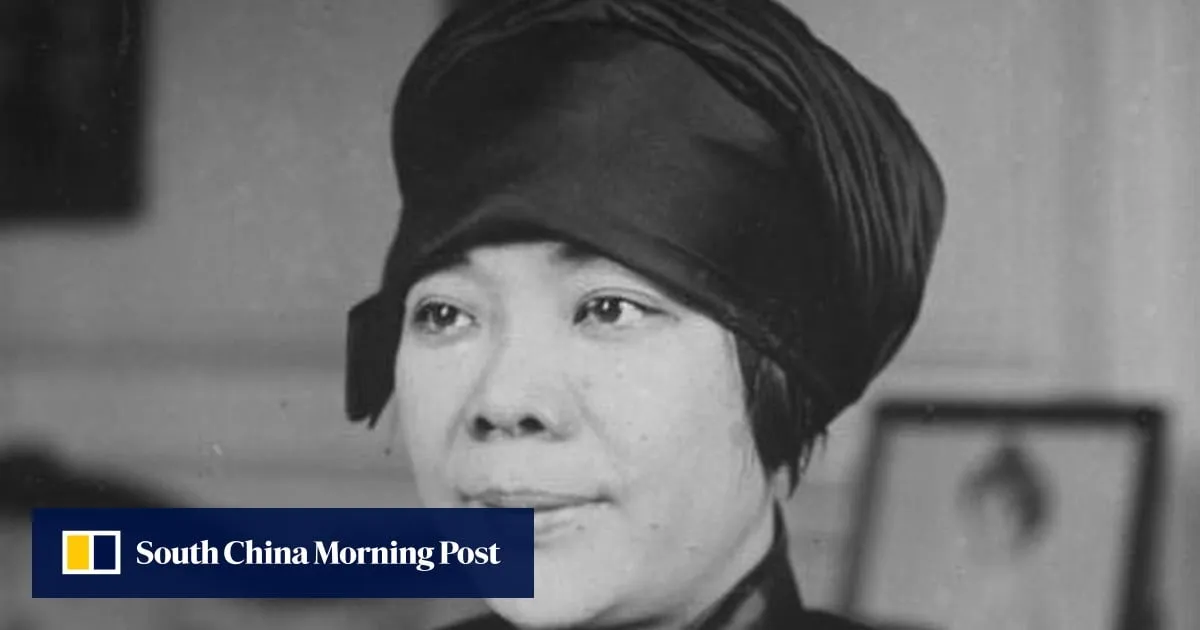
A revolutionary who once declared she was “no bird in a cage” became both an assassin and China’s first female doctor of law.Born in 1891, Zheng Yuxiu grew up in an influential household. Her father served the Qing (1644–1912) government, her grandfather was a Hong Kong merchant, and her well-educated mother came from a military family.From childhood, Zheng showed a defiant independence rare for her time.After moving to Guangzhou in southern China, she attended a local school and successfully resisted her grandmother’s attempt to bind her feet, a painful practice rooted in the old belief that tiny feet were a mark of feminine beauty.Zheng Yuxiu, above, sitting, was brought up in a privileged family. Photo: BaiduIn 1903, Zheng moved to Beijing with her mother and received a modern education at a girls’ school.A year later, aged just 13, she broke off the marriage arranged by her grandmother, writing to the fiancé she had never met: “I am no bird in a cage. Please find another virtuous lady.”In 1905, Zheng went to Japan to study, where she absorbed anti-Qing ideas and joined the Tongmenghui, the revolutionary alliance led by Sun Yat-sen, later remembered as a founding figure of modern China.After returning home, she became a Tongmenghui liaison, passing intelligence, escorting revolutionaries and even transporting bombs.Zheng, above, became the first woman in China to gain a PhD. Photo: BaiduShe also joined a “dare-to-die corps” that targeted senior Qing officials, becoming its only female member. She later helped plan the successful assassination of Aisin Gioro Liangbi, a powerful Qing minister.In 1919, Zheng travelled to France as an attaché to China’s delegation at the Paris Peace Conference, convened to redraw the global order after the First World War.When the talks produced terms widely seen as a betrayal of Chinese interests, especially over Shandong province in eastern China, Zheng helped mobilise Chinese students in France to pressure the delegation not to sign the Treaty of Versailles.Zheng, above, pictured gesticulating, could be an uncompromising figure. Photo: BaiduAccording to accounts, she confronted chief delegate Lu Zhengxiang with a rose branch hidden in her sleeve, pretending it was a pistol, and warned him not to sign.Further ReadingLu ultimately stayed away from the signing ceremony, preserving China’s claim to recover Shandong.After the episode, Zheng pursued a doctorate in law at the University of Paris, becoming China’s first female doctor of law.On returning home, she became Shanghai’s first woman lawyer, using the courtroom to defend women’s rights with rare force and skill.In one divorce case, she challenged the judge: “If the roles were reversed, would you still expect a wife to endure abuse?” The remark reportedly stunned the court.Zheng later became Jiangsu province’s first woman judge and helped draft the Civil Code of the Republic of China, pushing for women’s inheritance rights and freedom of marriage to be written into law.In the 1940s, she moved to the US with her husband, Wei Daoming. When Wei later became China’s ambassador to the US, she immersed herself in social relief work and public affairs.Zheng, middle, was a well travelled and respected woman. Photo: BaiduZheng died of illness in Los Angeles in 1959 at the age of 68. Whether she had children remains unrecorded.Today, she is remembered as modern China’s “xia nu”, a chivalrous woman who fought for justice.As one online commentator wrote, Zheng proved through her life that women could become anything they chose to be.“For women still fighting for equality today, her story remains a mirror. In moments of workplace injustice or difficult family choices, may they remember this fearless xia nu,” the person wrote.
SRCSouth China Morning Post
LANGEN
LEANCenter-Right
WORDS594
ENT12
WED · 2026-06-17 · 06:00 GMTBRIEF NSR-2026-0617-85109
NSR-2026-0617-85109News Report·EN·Human Interest
Zheng Yuxiu: modern China’s ‘xia nu’ assassin and first female PhD who fought for justice
Zheng Yuxiu, born in 1891, was a revolutionary and China's first female doctor of law. Defying traditional expectations from a young age, she studied in Japan, joined Sun Yat-sen's revolutionary alliance, and participated in anti-Qing activities, including helping plan an assassination.
Zoey ZhangSouth China Morning PostFiled 2026-06-17 · 06:00 GMTLean · Center-RightRead · 3 min
South China Morning PostFIG 01
Reading time
3min
Word count
594words
Sources cited
0cited
Entities identified
12entities
Quality score
100%
§ 01
Briefing Summary
AI-generatedNEWSAR · AI
Zheng Yuxiu, born in 1891, was a revolutionary and China's first female doctor of law. Defying traditional expectations from a young age, she studied in Japan, joined Sun Yat-sen's revolutionary alliance, and participated in anti-Qing activities, including helping plan an assassination. After studying law in France, she returned to China and became Shanghai's first woman lawyer and Jiangsu province's first woman judge, advocating for women's rights in court and in legal reform. She also played a role in pressuring China's delegation not to sign the Treaty of Versailles due to perceived betrayals of Chinese interests. Zheng Yuxiu died in 1959, remembered as a "xia nu" who fought for justice and proved women's capabilities.
Confidence 0.90Claims 5Entities 12
§ 02
Article analysis
Model · rule-basedFraming
Human Interest
Social Justice
Tone
Mixed Tone
AI-assessed
CalmNeutralAlarmist
Factuality
0.80 / 1.00
Factual
LowHigh
Sources cited
0
No named sources
FewMany
§ 03
Key claims
5 extracted01
Zheng Yuxiu became Shanghai's first woman lawyer and advocated for women's rights.
factual
Confidence
1.00
02
Zheng Yuxiu resisted her grandmother's attempt to bind her feet.
factual
Confidence
1.00
03
Zheng Yuxiu was a revolutionary who became China's first female doctor of law.
factual
Confidence
1.00
04
Zheng Yuxiu helped plan the assassination of Qing minister Aisin Gioro Liangbi.
factual
Confidence
0.90
05
Zheng Yuxiu broke off an arranged marriage at age 13, stating 'I am no bird in a cage.'
quoteZheng Yuxiu
Confidence
0.90
§ 04
Full report
3 min read · 594 words§ 05
Entities
12 identifiedKey playerOppositionContextPositiveNeutralNegative
People3
Locations5
§ 06
Keywords & salience
10 termszheng yuxiu
1.00
revolutionary
0.90
assassin
0.80
female phd
0.80
modern china
0.70
tongmenghui
0.60
qing government
0.60
treaty of versailles
0.50
paris peace conference
0.50
justice
0.40
§ 07
Topic connections
Interactive graph No topic relationship data available yet. This graph will appear once topic relationships have been computed.