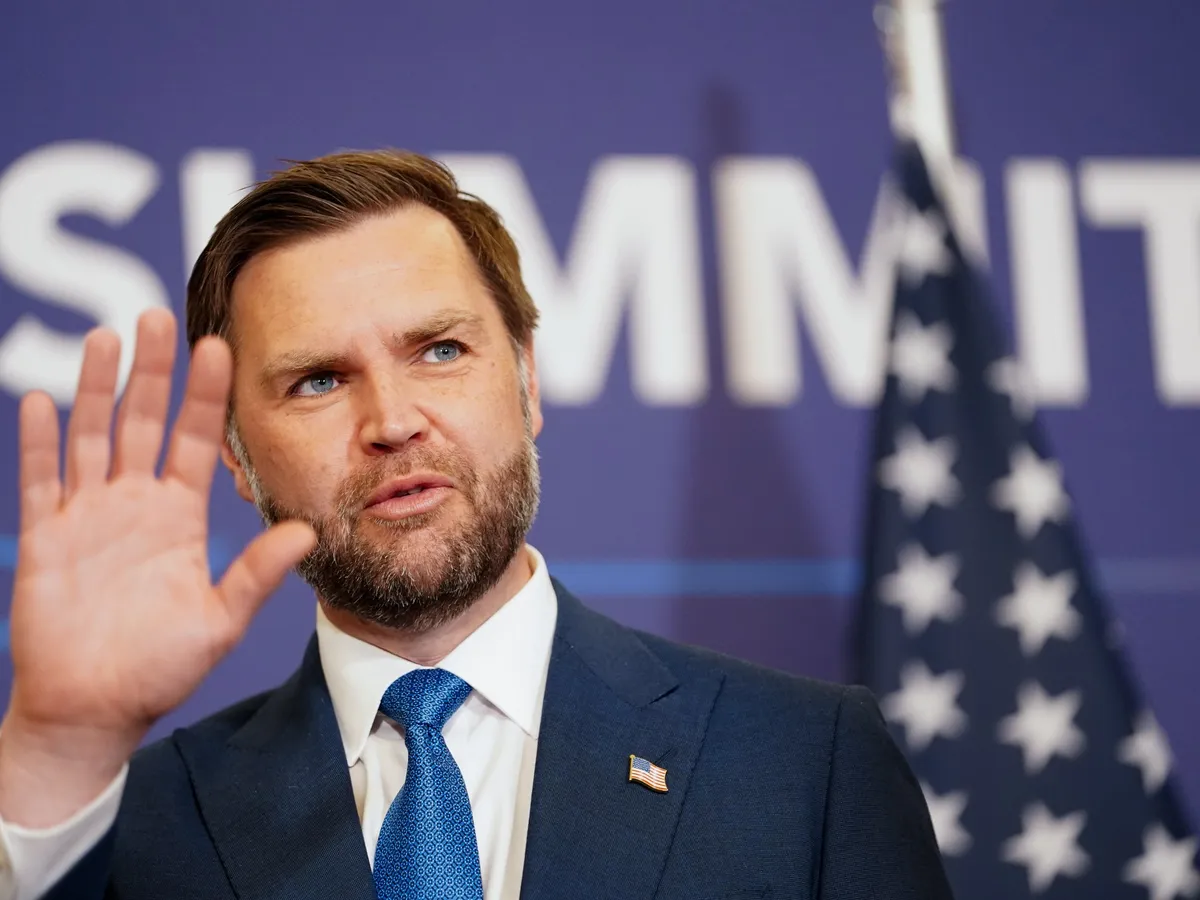
Both nations seek a durable end to their war as Iran slams Israeli attacks on Lebanon as violations of interim deal.The convoy with US Vice President JD Vance arrives at the Buergenstock resort in Obbuergen, Switzerland, 21 June 2026 [Urs Flueeler/EPA]Published On 21 Jun 2026United States Vice President JD Vance has arrived in Switzerland for talks with Iranian officials to implement a recent deal to end the US war with Iran.Vance arrived at Emmen Air Base at 5:59am (03:59 GMT) on Sunday, according to his spokesperson.Recommended Stories list of 4 itemslist 1 of 4Overplaying Strait of Hormuz card will turn Iran into a pariah statelist 2 of 4Iran closes Strait of Hormuz as Pakistan says new talks with US due Sundaylist 3 of 4Iran shuts Strait of Hormuz as Israel tests MOU with Lebanon strikeslist 4 of 4Trump vows Iran will not charge Strait of Hormuz tolls, but says US mightend of listAn Iranian delegation arrived in Switzerland late Saturday, state media and the Swiss Foreign Ministry said.Iran’s official broadcaster said it included parliamentary speaker Mohammad Bagher Ghalibaf and Foreign Minister Abbas Araghchi.Mediator Pakistan said its Prime Minister Shehbaz Sharif and the army chief, Field Marshal Syed Asim Munir, had arrived in Switzerland to participate in the talks.Vice President JD Vance speaks to reporters at Joint Base Andrews, Md., Saturday, June 20, 2026, en route to Switzerland [Elizabeth Frantz/Pool via AP]A halt to fighting in Lebanon was one of the conditions agreed this week in the interim deal to extend the US-Iran ceasefire for 60 days and start talks on Tehran’s nuclear programme and other issues.But the deal is already coming under strain, as Israel continued attacks in Lebanon on Saturday, killing dozens of people, with Iran’s Islamic Revolutionary Guard Corps (IRGC) citing the strikes as it declared the Strait of Hormuz shut. The US military said commercial vessels had continued operating in the waterway.Pointing to what it called Israeli “crimes” in Lebanon that violated US commitments to a ceasefire, the IRGC warned ships would be at risk if they approached the strait, a vital conduit for global oil and gas supplies.But US Central Command (CENTCOM) said 55 merchant ships transited the strait on Saturday, with more than 17 million barrels of oil bound for global markets. US forces will ensure commercial traffic continues, CENTCOM said.Trump said no toll would be charged for passage through the strait during or after the 60-day ceasefire – unless the US imposes one should peace talks fail.In a social media post, he cited the possibility of a toll levied by the US “for services rendered as the Guardian Angel to the countries of the Middle East” if a deal to end the war is not completed.Iran seeks implementation of the dealThe developments could complicate talks to advance the interim deal brokered by Pakistan and signed on Wednesday by presidents Donald Trump and Masoud Pezeshkian to end the almost four-month war.Mohammad Mokhber, an adviser to Iran’s supreme leader, Ayatollah Mojtaba Khamenei, accused the US on X of failing to implement the first clause of its 14-point interim deal with Iran, which stipulates a ceasefire “on all fronts”, including Lebanon.He said that if the deal were not implemented, the flow of energy through the region would remain halted.Al Jazeera’s Resul Serdar Atas, reporting from Tehran, said the Iranian delegation in Switzerland was likely to focus on Articles 1, 4, 5, 10 and 11 of the memorandum of understanding (MoU).“These include the cessation of hostilities in Lebanon, the lifting of the US maritime blockade, the reopening of the Strait of Hormuz, the release of Iranian frozen assets and, of course, the lifting of US sanctions when it comes to Iran’s oil sector and petrochemical products and related sectors,” our correspondent said.“So the Iranians are not looking for these files to be concluded in one meeting here, but at least they want the initiation of the implementation,” he added.“Why does Lebanon matter so much for Iran? Overall, it’s about Iran’s geopolitical standpoint. So if Iran wants to remain as a regional power, Tehran has to keep the axis of resistance alive. Iran has invested in Hezbollah through the decades. So it is about Iran’s regional influence. It is also sending out a message to its allies and proxies in the region that Tehran is not going to leave them alone.”The Lebanon truce appeared fragile as Israeli forces continued their attacks on the country on Saturday, killing dozens of people, according to Lebanese state media.The Iran-aligned Hezbollah group also announced attacks on Israeli forces.Israel claimed it was responding to attacks from Hezbollah, while the Iran-backed fighters said Israel had repeatedly violated the truce since Friday, and it would not allow Israel “freedom of movement” in Lebanon.The Israeli military said one soldier was killed in combat, the fifth such death since the US-Iran deal was reached.Israeli broadcaster Channel 12 reported late on Saturday that the prime minister and defence minister had ordered the military to hold fire in Lebanon, but that the military would not withdraw from captured territory.
SRCAl Jazeera
LANGEN
LEANCenter
WORDS839
ENT12
SUN · 2026-06-21 · 07:39 GMTBRIEF NSR-2026-0621-86092
NSR-2026-0621-86092News Report·EN·Conflict
Vance arrives in Switzerland for US-Iran talks
US Vice President JD Vance arrived in Switzerland on June 21, 2026, for talks with Iranian officials to implement a recent interim deal aimed at ending the US-Iran war. An Iranian delegation, including parliamentary speaker Mohammad Bagher Ghalibaf and Foreign Minister Abbas Araghchi, also arrived for the negotiations, with Pakistan's Prime Minister and army chief present as mediators.
Al Jazeera StaffAl JazeeraFiled 2026-06-21 · 07:39 GMTLean · CenterRead · 4 min
Al JazeeraFIG 01
Reading time
4min
Word count
839words
Sources cited
6cited
Entities identified
12entities
Quality score
100%
§ 01
Briefing Summary
AI-generatedNEWSAR · AI
US Vice President JD Vance arrived in Switzerland on June 21, 2026, for talks with Iranian officials to implement a recent interim deal aimed at ending the US-Iran war. An Iranian delegation, including parliamentary speaker Mohammad Bagher Ghalibaf and Foreign Minister Abbas Araghchi, also arrived for the negotiations, with Pakistan's Prime Minister and army chief present as mediators. The deal, which extends a ceasefire for 60 days and includes talks on Iran's nuclear program, is already facing strain. Iran's IRGC declared the Strait of Hormuz shut, citing Israeli attacks in Lebanon as violations of the interim deal, though the US military stated commercial vessels continued to transit the waterway. Iran seeks the implementation of the deal's clauses, including a ceasefire on all fronts and the lifting of sanctions.
Confidence 0.90Sources 6Claims 5Entities 12
§ 02
Article analysis
Model · rule-basedFraming
Conflict
Diplomatic
Tone
Mixed Tone
AI-assessed
CalmNeutralAlarmist
Factuality
0.70 / 1.00
Factual
LowHigh
Sources cited
6
Well sourced
FewMany
§ 03
Key claims
5 extracted01
US Vice President JD Vance has arrived in Switzerland for talks with Iranian officials to implement a recent deal to end the US war with Iran.
factualarticle
Confidence
1.00
02
A deal to end the war was brokered by Pakistan and signed by presidents Donald Trump and Masoud Pezeshkian.
factualarticle
Confidence
0.90
03
The US military stated that commercial vessels continued operating in the Strait of Hormuz and that 55 merchant ships transited the strait on Saturday.
factualUS Central Command (CENTCOM)
Confidence
0.90
04
Iran declared the Strait of Hormuz shut, citing Israeli attacks in Lebanon.
factualIRGC
Confidence
0.90
05
Trump said no toll would be charged for passage through the Strait of Hormuz during or after the 60-day ceasefire, unless the US imposes one should peace talks fail.
factualDonald Trump
Confidence
0.80
§ 04
Full report
4 min read · 839 words§ 05
Entities
12 identifiedKey playerOppositionContextPositiveNeutralNegative
People5
Organizations1
§ 06
Keywords & salience
8 termsus-iran talks
1.00
strait of hormuz
0.90
interim deal
0.80
ceasefire
0.70
lebanon
0.60
nuclear programme
0.50
jd vance
0.40
pakistan
0.40
§ 07
Topic connections
Interactive graph Network visualization showing 51 related topics
View Full Graph Person Organization Location Event|Click node to navigate|Edge numbers = shared articles