EXPLAINERUS-Iran talks in Switzerland: Is Lebanon top of agenda; who is attending?Tehran wants Washington to pressure Israel to stop the war in Lebanon, which has reeled from renewed attacks.Flags of Switzerland, United States, Qatar, Pakistan and local Swiss canton of Nidwalden are photographed at the Burgenstock luxury hotel complex overlooking Lake Lucerne, Switzerland, on June 21, 2026, ahead of high-level talks aimed at advancing a deal to end the war [AFP]Published On 21 Jun 2026United States and Iranian delegations are gearing up for high-level technical talks slated to be held in Switzerland, as a deal signed on Thursday between Tehran and Washington is strained by continued Israeli attacks on Lebanon.Iran says the deal includes a ceasefire in Lebanon and that the Israeli attacks are a violation of the agreement.Recommended Stories list of 3 itemslist 1 of 3‘You could’ve been the greatest’: Trump faces Israeli anger over Iran deallist 2 of 3Iran shuts Strait of Hormuz as Israel tests MOU with Lebanon strikeslist 3 of 3Iran closes Strait of Hormuz as Pakistan says new talks with US due Sundayend of listSunday’s talks will be mediated by Pakistan and Qatar, and come after US President Donald Trump and his Iranian counterpart signed a Memorandum of Understanding (MoU) electronically on Thursday.Here’s what we know:Sunday’s talks will be held in the Swiss town of Burgenstock at a luxury hotel complex above Lake Lucerne.Iran’s delegation for the talks is led by Parliament Speaker Mohammad Bagher Ghalibaf and Foreign Minister Abbas Araghchi.The US delegation is led by Vice President JD Vance and includes Trump’s special envoy Steve Witkoff and his son-in-law Jared Kushner.Pakistan’s Prime Minister Shehbaz Sharif and army chief Asim Munir, as well as Qatar’s Prime Minister Sheikh Mohammed bin Abdulrahman bin Jassim Al Thani, are also expected to take part in the talks, as Iran’s Islamic Revolutionary Guard Corps (IRGC) announced they were closing the Strait of Hormuz over ceasefire violations in Lebanon.Before departing for the talks on Saturday, Vance told reporters in the US that he hopes to make “progress on the nuclear issue” and “on the Lebanon ceasefire issue”.Esmaeil Baghaei, spokesperson for Iran’s Ministry of Foreign Affairs, said the Iranian delegation “will be pressing for implementation” of the US’s commitments outlined in the MoU and “seeking clarity on how exactly the other side intends to carry out those commitments”.What is on the agenda?The technical talks between the US and Iran will take place for 60 days, where officials from both sides are expected to discuss the final phase of the peace process and find solutions to resolve major sticking points, such as Iran’s nuclear programme and Israel’s war on Lebanon.But, reporting from Tehran, Al Jazeera’s Resul Serdar Atas said that on Saturday, just before taking off from Tehran and heading for Switzerland, the chief negotiator for Iran, Ghalibaf, said Iran is going to Switzerland mainly to remind the Americans that first they need to implement or at least initiate the implementation of the MoU, and that the technical talks are going to take place once the Americans accept that.“Here, they [Iran] are talking particularly about … the cessation of hostilities in Lebanon, the lifting of the US maritime blockade, the reopening of the Strait of Hormuz, the release of Iranian frozen assets and, of course, the lifting of US sanctions when it comes to Iran’s oil sector and petrochemical products and related sectors,” he said.Mohammad Mokhber, adviser and assistant to Iran’s supreme leader, warned on Sunday that Tehran would not accept a paper agreement and that Washington must fully implement its commitments.In a post on X, Mokhber said the US understood pressure in economic terms.“Americans understand the language of economics and cost-benefit better,” he wrote. “When the agreement remains just on paper, the flow of Middle East energy will also come to a halt.“Our negotiators will not be satisfied except with the full implementation of commitments and the fulfilment of the nation’s rights,” he added. Mokhber also invoked those killed in the conflict, saying Iran would not forget them.LebanonThe ceasefire in Lebanon is, however, expected to dominate the first day of talks. Israeli forces killed dozens of people in Lebanon on Saturday despite a reported ceasefire with Hezbollah.Reporting from Tehran, Al Jazeera’s Mohammed Vall said Iran is not going to move forward in the implementation of the MoU unless the Israelis abide by the agreement.The first clause of the MoU states that the US and Iran have agreed to the “immediate and permanent termination of military operations on all fronts, including in Lebanon”.Additionally, the memorandum adds that both sides will commit to ensuring the “territorial integrity and sovereignty of Lebanon”.However, it makes no mention of Israel, which currently occupies one-fifth of the country and has subjected Lebanon to near-daily attacks since early March, killing more than 4,000 people and displacing more than one million from their homes.Vall said that, according to Iran, the Americans bear the responsibility of ensuring that Israel complies with the agreement.Ross Harrison, a senior fellow at the Middle East Institute, told Al Jazeera that officials from both sides want to make sure that before they move to phase two of technical talks, which includes Iran’s nuclear programme, they want to ensure that phase one, which is abiding by every clause of the MoU, is successful.“And the Iranians have a very clear position there, and that is that, given that during negotiations in the past both Israel and the United States have bombed Iran … they want to make sure that in fact the United States can impose its will on Israel in terms of restraining their actions in Lebanon vis-a-vis Hezbollah,” he added.Harrison said Iran considers the US obligated by the MoU to rein in Israel, which is not a signatory to the memo and could still act to spoil it.“Right now, Israel could be a spoiler in this kind of a negotiation. They’re not a signatory, so in theory they’re not bound by the agreement. So, it’s not a breach between Iran and Israel. It’s a breach actually between Iran and the United States if the United States cannot impose its will and actually get Israel to abide by the ceasefire,” he added.Nuclear programmeWhen the technical talks begin, discussion of Iran’s nuclear programme will be a key topic.After decades of hostilities, Tehran’s nuclear programme remains the central contentious point between the US and Iran.The US has made it clear that Iran must not possess, buy or develop nuclear weapons – or even have the capacity to be able to do so.Iran, conversely, maintains that its programme is for civilian purposes and that it may be willing to negotiate limits to its nuclear activities if sanctions are removed.What about the Strait of Hormuz?On Saturday, Iran said the Strait of Hormuz, a global energy chokepoint, is closed again over Israel’s continued attacks in Lebanon, but the US military said the waterway remains open to all vessels.The US military’s Central Command (CENTCOM) said on Saturday that commercial ship traffic in the strait increased by June 20. “Safe passage through the international waterway remained intact today as 55 merchant ships transited, moving large amounts of cargo and more than 17 million barrels of oil to global markets,” it said in a statement.On the same day, Trump pledged there would be no tolls for passage through the strait, unless they are collected by his own country. “There will be NO TOLLS in the Hormuz Strait for 60 days during the Cease Fire Period, and there will be NO TOLLS after the 60 day period has expired,” Trump wrote, “unless they are imposed by and for the United States of America.”The de facto closure of the strait and subsequent US naval blockade of Iranian ports triggered a global energy crisis and threatened to send the world’s economy into depression. The spike in oil prices in the US and its impact on the cost of living are among the factors that played a role in Trump’s decision to end the war.
SRCAl Jazeera
LANGEN
LEANCenter
WORDS1 327
ENT12
SUN · 2026-06-21 · 09:10 GMTBRIEF NSR-2026-0621-86106
NSR-2026-0621-86106News Report·EN·Conflict
US-Iran talks in Switzerland: Is Lebanon top of agenda; who is attending?
High-level technical talks between the United States and Iran are underway in Switzerland, mediated by Pakistan and Qatar. The primary focus for Iran is to secure US pressure on Israel to cease its attacks in Lebanon, which Iran considers a violation of a recently signed Memorandum of Understanding (MoU).
Priyanka ShankarAl JazeeraFiled 2026-06-21 · 09:10 GMTLean · CenterRead · 6 min
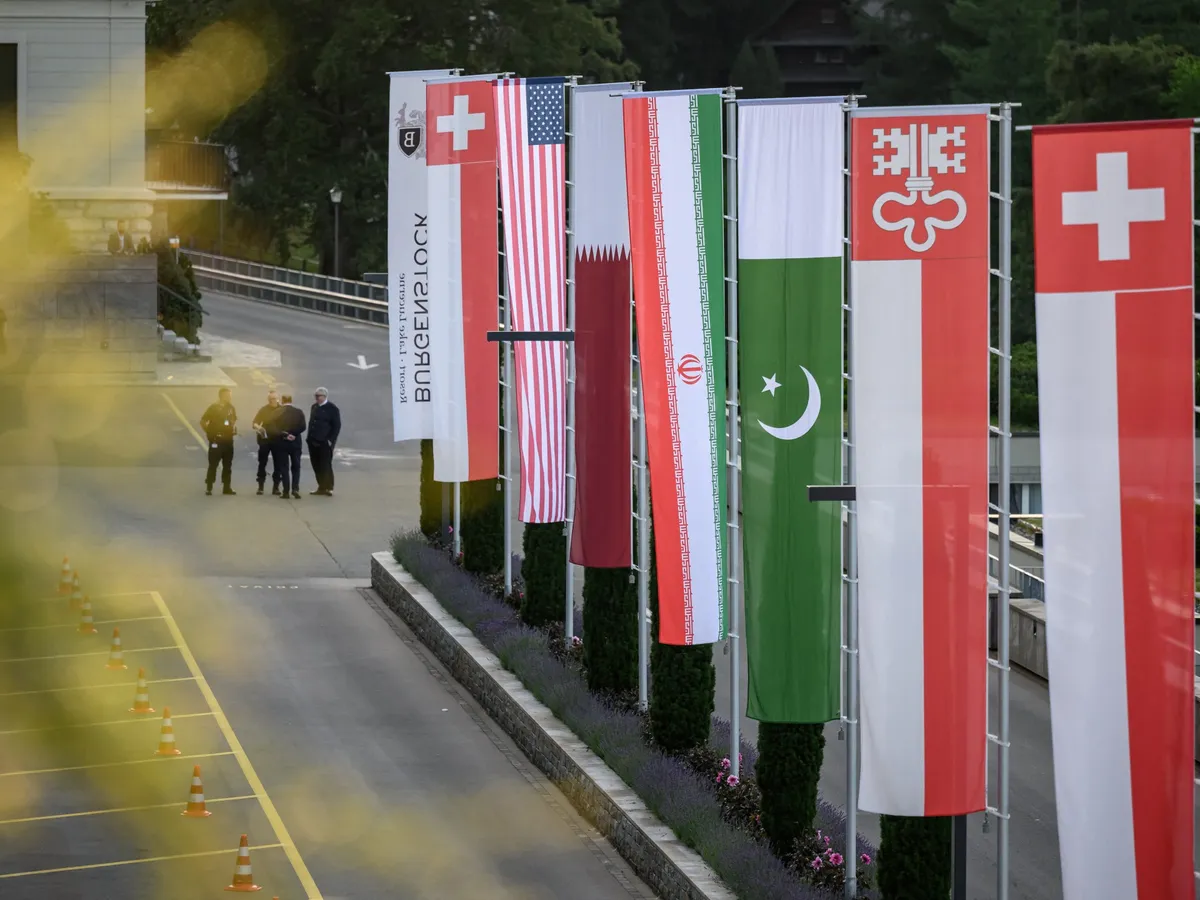
Al JazeeraFIG 01
Reading time
6min
Word count
1 327words
Sources cited
5cited
Entities identified
12entities
Quality score
100%
§ 01
Briefing Summary
AI-generatedNEWSAR · AI
High-level technical talks between the United States and Iran are underway in Switzerland, mediated by Pakistan and Qatar. The primary focus for Iran is to secure US pressure on Israel to cease its attacks in Lebanon, which Iran considers a violation of a recently signed Memorandum of Understanding (MoU). Iran's delegation, led by Parliament Speaker Mohammad Bagher Ghalibaf, aims to ensure the US fulfills its commitments under the MoU, including the termination of military operations in Lebanon and the lifting of sanctions. The US delegation is led by Vice President JD Vance. The talks are expected to address Iran's nuclear program and the conflict in Lebanon, with Iran stating it will not proceed with MoU implementation unless Israel adheres to the ceasefire.
Confidence 0.90Sources 5Claims 5Entities 12
§ 02
Article analysis
Model · rule-basedFraming
Conflict
Diplomatic
Tone
Measured
AI-assessed
CalmNeutralAlarmist
Factuality
0.70 / 1.00
Factual
LowHigh
Sources cited
5
Well sourced
FewMany
§ 03
Key claims
5 extracted01
Iran's delegation will be pressing for implementation of US commitments outlined in the MoU.
quoteEsmaeil Baghaei
Confidence
1.00
02
US Vice President JD Vance hopes to make progress on the nuclear issue and the Lebanon ceasefire issue.
quoteJD Vance
Confidence
1.00
03
The talks are mediated by Pakistan and Qatar.
factual
Confidence
1.00
04
US and Iranian delegations are holding high-level technical talks in Switzerland.
factual
Confidence
1.00
05
Iran claims a deal signed between Tehran and Washington is strained by continued Israeli attacks on Lebanon.
factualIran
Confidence
0.90
§ 04
Full report
6 min read · 1 327 words§ 05
Entities
12 identifiedKey playerOppositionContextPositiveNeutralNegative
People4
Locations7
§ 06
Keywords & salience
9 termslebanon ceasefire
1.00
us-iran talks
1.00
switzerland
0.80
memorandum of understanding (mou)
0.70
nuclear issue
0.60
strait of hormuz
0.50
pakistan
0.40
qatar
0.40
israeli attacks
0.40
§ 07
Topic connections
Interactive graph Network visualization showing 51 related topics
View Full Graph Person Organization Location Event|Click node to navigate|Edge numbers = shared articles