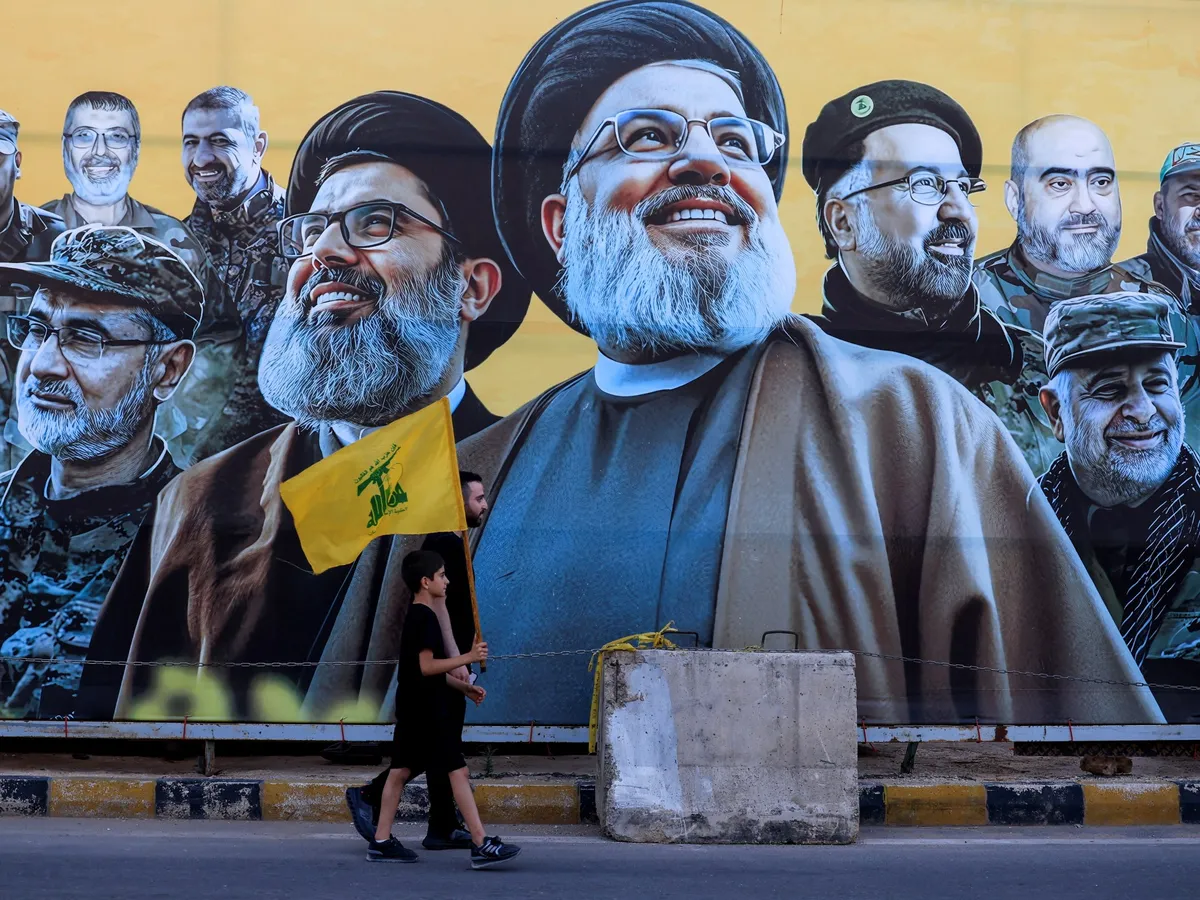
ANALYSISIsraeli escalation in Lebanon threatens to undermine agreement between Tehran and Washington and risks further regional destabilisation, analysts say.A mural on the outskirts of Beirut depicting former Hezbollah leader Hassan Nasrallah and other senior figures on June 17, 2026 [Mohamed Azakir/Reuters]Published On 21 Jun 2026Beirut, Lebanon – The memorandum of understanding (MoU) between the United States and Iran leaves no room for doubt, declaring “the immediate and permanent termination of military operations on all fronts, including Lebanon,” between the two countries and their allies.“The final deal will confirm the permanent termination of the war on all fronts, including in Lebanon,” the interim agreement signed on Wednesday added.Recommended Stories list of 3 itemslist 1 of 3How does Trump’s MOU with Iran compare with Obama’s nuclear pact?list 2 of 3Trump-Netanyahu tensions: Have Israeli and US leaders clashed before?list 3 of 3Israeli strikes kill at least 47 amid intense fighting in southern Lebanonend of listYet Israel appears to either have not received the memo or to be deliberately ignoring it.Israeli attacks on Lebanon have continued in the days since the MoU’s signing, bringing the death toll since the start of Israel’s air and ground offensive on March 2 to more than 4,000. These deadly strikes led to Iran postponing talks with the US that had been planned for Friday in Switzerland.The Lebanese armed group Hezbollah and Lebanon’s government have both demanded a full Israeli withdrawal from Lebanese territory although the former has said that should come by linking Lebanon to the Iran negotiations while the latter prefers direct talks with Israel.“Lebanon is at the beginning of the agreement because the Iranians want to bring home that Lebanon’s territorial integrity is essential to the agreement, the success of the [MoU],” said Michael Young, a Lebanon expert at the Carnegie Middle East Center.Israel to ‘torpedo’ Iran-US dealIsrael and Iran-backed Hezbollah have been fighting since October 2023, but Israel has twice intensified the conflict – in September 2024 and March this year – pummelling Lebanon with bombs and invading its territory.The March intensification came after Hezbollah fired on Israel for the first time in more than a year following the assassination of Iranian Supreme Leader Ali Khamenei and as a response to more than 10,000 Israeli ceasefire violations since late 2024.Since then, Israel has killed at least 4,057 people in Lebanon and wounded more than 12,121. Israel has targeted paramedics and journalists and razed dozens of villages.While the US has tried to declare several ceasefires in Lebanon, the reality on the ground has played out differently.US President Donald Trump has made several statements on Lebanon, including that Israel needs to scale back its operations there, but Israeli officials have repeatedly stated that their ability to continue operations in Lebanon must be protected.“Israel is fighting Hezbollah too long, and too many people are being killed,” Trump said on Tuesday at a G7 summit in France. “And you don’t have to knock down an apartment house every time you’re looking for somebody because there are a lot of people in those apartment houses and they’re not all Hezbollah. That I can tell you.”Trump also said he was “not happy with the way Israel has handled themselves with Lebanon and with Hezbollah. They should have been able to do the job faster. It just goes on forever.”Analysts said they believe the presence of Lebanon in the MoU means that Iran feels strongly about the situation there and the US, which also enjoys positive bilateral relations with the Lebanese government, may be willing to put pressure on Israel to stop its military operations in the country.“The US wants to split out the Lebanon and Iran conflicts,” said David Wood, the International Crisis Group’s senior analyst on Lebanon. “It can help Lebanon by insisting that Israel implement the June 3 proposal for a bilateral ceasefire.”“This approach would give the Lebanese state an opportunity to show that it can assert control over Lebanese soil effectively and defend the country by nonviolent means, as opposed to Hezbollah’s strategy of armed resistance against Israel,” Wood added.But Israel may have other thoughts.Young said Israel “is going to try to torpedo” the MoU and the talks between Iran and the US. “They don’t want these negotiations to succeed, so their way to do so is to basically continue the war in Lebanon,” he added.According to Karim Safieddine, a nonresident fellow at the Tahrir Institute for Middle East Policy, there is “no political, technological, industrial, economic incentive for Israel to stop the war on Lebanon”.What’s Hezbollah’s role?Iran must also decide what it will do if Israel refuses to stop attacking Lebanon and the US is unable or unwilling to pressure the Israeli government.Safieddine said there are divisions inside Iran, including in its state apparatus, about how far it should go to ensure Israeli aggression in Lebanon stops. After renewed Israeli attacks on Lebanon on Saturday despite another declared ceasefire, Iran announced the closure of the economically important Strait of Hormuz once again.With the MoU, many people in Lebanon hope the end of Israel’s war is approaching. But there are still issues that need resolving.In a speech on Wednesday, Hezbollah Secretary-General Naim Qassem praised the movement’s patron.“We … thank the Islamic Republic of Iran for linking Lebanon’s arena as both a resistance movement and a people to a spirit of readiness for sacrifice that compelled” Israel to “halt its aggression”, he said.Israel and Lebanon are due to continue direct negotiations next week, and Hezbollah’s disarmament remains a major issue. The Lebanese government has moved forward with efforts to disarm the group since early 2025, but the second Israeli intensification of the conflict halted these efforts.“Lebanon’s political leadership finds itself in yet another bind under the US-Iran MoU,” Wood said.“On the one hand, Lebanon understandably wants to take charge of its own future, including the path towards a sustainable end to the Israel-Hezbollah war. On the other hand, it is hard to fault President [Joseph] Aoun for welcoming Iran’s insistence on including a Lebanon ceasefire in the MoU, even if it has failed to end the fighting to date,” he added.“Lebanon has very limited agency in addressing the fundamental conflict between Israel and Hezbollah, so inevitably, Beirut will need support from outside in the coming period.”
SRCAl Jazeera
LANGEN
LEANCenter
WORDS1 037
ENT12
SUN · 2026-06-21 · 13:11 GMTBRIEF NSR-2026-0621-86148
NSR-2026-0621-86148Analysis·EN·Conflict
Why Lebanon may make or break the Iran-US deal
An interim agreement between the US and Iran, signed on Wednesday, calls for an immediate and permanent end to military operations on all fronts, including Lebanon. However, Israeli attacks on Lebanon have continued, leading Iran to postpone planned talks with the US.
Justin SalhaniAl JazeeraFiled 2026-06-21 · 13:11 GMTLean · CenterRead · 5 min
Al JazeeraFIG 01
Reading time
5min
Word count
1 037words
Sources cited
2cited
Entities identified
12entities
Quality score
100%
§ 01
Briefing Summary
AI-generatedNEWSAR · AI
An interim agreement between the US and Iran, signed on Wednesday, calls for an immediate and permanent end to military operations on all fronts, including Lebanon. However, Israeli attacks on Lebanon have continued, leading Iran to postpone planned talks with the US. Analysts suggest Israel may be attempting to undermine the agreement by escalating conflict in Lebanon, which Iran considers essential to the deal's success. While the US has expressed dissatisfaction with Israel's operations, Israel maintains its need to continue. The situation in Lebanon could either solidify or derail the broader Iran-US negotiations, depending on whether Israel ceases its military actions and the US can exert pressure.
Confidence 0.90Sources 2Claims 5Entities 12
§ 02
Article analysis
Model · rule-basedFraming
Conflict
Diplomatic
Tone
Mixed Tone
AI-assessed
CalmNeutralAlarmist
Factuality
0.60 / 1.00
Mixed
LowHigh
Sources cited
2
Limited
FewMany
§ 03
Key claims
5 extracted01
Israel has twice intensified the conflict in Lebanon, in September 2024 and March 2026.
factualarticle
Confidence
0.90
02
The US and Iran signed a memorandum of understanding (MoU) declaring the immediate and permanent termination of military operations on all fronts, including Lebanon.
factualarticle
Confidence
0.90
03
Lebanon's territorial integrity is essential to the success of the Iran-US MoU.
quoteMichael Young
Confidence
0.80
04
Israeli attacks on Lebanon have continued since the MoU's signing, with the death toll since March 2 reaching over 4,000.
statisticarticle
Confidence
0.80
05
Israel appears to be deliberately ignoring the MoU or has not received it, as attacks on Lebanon have persisted.
quoteanalysts
Confidence
0.70
§ 04
Full report
5 min read · 1 037 words§ 05
Entities
12 identifiedKey playerOppositionContextPositiveNeutralNegative
People3
Locations5
§ 06
Keywords & salience
8 termsiran-us deal
1.00
lebanon
0.90
israeli escalation
0.80
regional destabilisation
0.70
memorandum of understanding
0.60
hezbollah
0.60
military operations
0.50
territorial integrity
0.40
§ 07
Topic connections
Interactive graph Network visualization showing 51 related topics
View Full Graph Person Organization Location Event|Click node to navigate|Edge numbers = shared articles